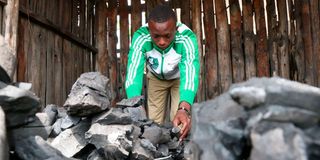
The price of a kilogramme of charcoal has hit a six-year high of Sh99.52 as of September, piling pressure on households already struggling with expensive food, transport and other essentials.
The rise extends a steady increase that has made the traditional cooking fuel increasingly expensive for low-income families.
Official data shows that the current price level marks the highest since January 2020, when a kilogramme retailed at Sh152.25, putting the September reading at an 80-month high.
The rising cost puts pressure on households that depend on charcoal as they cannot afford the upfront expense of switching to cleaner alternatives, leaving them exposed to increases in a commodity they buy frequently.
Alternative cooking fuels
The pressure is compounded as alternative cooking fuels also became costlier over the past year, limiting the relief households can obtain by switching.
The average price of a 13-kilogramme cooking gas cylinder has, for instance, risen 8.5 per cent to Sh3,419.24 as of September, up from Sh3,151.65 in a corresponding month last year.
Kerosene, another alternative used by lower-income households, averaged Sh192.56 per litre, marking a 23.5 per cent jump from the Sh155.96 recorded in September last year.
The latest figures come against a backdrop of rising living costs, with annual inflation accelerating to 6.8 percent in September from 6.6 percent in August, according to KNBS.
Food prices rose 9.5 per cent over the year, while transport costs increased 15.6 per cent, adding to the financial pressure on households that must also meet cooking and other domestic expenses.
The increase in cooking fuel costs comes at a time when a large share of households still depend on smoky fuels despite government efforts to accelerate the transition to cleaner energy.
The 2023/24 Kenya Housing Survey found that most households (65.6 per cent) relied on unclean cooking fuels, mainly firewood and charcoal, compared with 34.4 per cent using cleaner alternatives such as LPG, electricity, biogas and ethanol.
The dependence is more pronounced in rural areas, where access to cleaner cooking alternatives remains limited by availability and affordability, making households vulnerable to increases in biomass fuel prices.
The government's National Cooking Transition Strategy for 2024–2028 identifies the affordability gap as a major obstacle to adoption of cleaner cooking technologies, alongside gaps in supply and public awareness.
Although LPG has become more accessible through wider distribution and tax measures, the cost of acquiring a cylinder and refilling it remains a hurdle for households with irregular incomes.
Unlike charcoal, which traders sell in small quantities, households using LPG generally have to raise thousands of shillings to refill a cylinder, creating a cash-flow challenge even when gas may be more efficient.
The charcoal price rally also revives questions about the country's wood-fuel supply chain and the effectiveness of policies aimed at protecting forests without disrupting access to affordable cooking energy.
A logging moratorium in public forests in 2018 to curb deforestation and protect water catchment areas disrupted supplies and led to high charcoal prices.