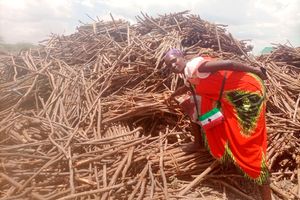
For more than eight years, farmers in Baringo South have watched helplessly as ‘Mathenge’ invaded their farmland, swallowed grazing fields, choked waterways and blocked roads, turning productive land into dense thickets.
Now, the invasive tree that has become a nightmare for farming and pastoral communities could offer a way out of the environmental and economic crisis it created.
The Baringo County Government has authorised commercial harvesting of the invasive Prosopis juliflora for charcoal production, transportation and sale in an initiative aimed at reclaiming farmland while creating income opportunities for affected households.
The permit system allows communities in designated areas to harvest the weed and convert it into charcoal for commercial purposes, marking a shift from years of restrictions to controlled utilisation.
The programme targets settlements around Lake Baringo, including Ilng’arua, Eldume, Kiserian, Salabani and Ng’ambo, where the weed has disrupted farming, livestock keeping and other economic activities.
Launched by the county department of environment, natural resources and wildlife management, the initiative will be implemented through Community Charcoal Producers Associations (CCPAs).
During the launch, Environment Executive Reuben Rutto flagged off three lorries carrying Prosopis charcoal, marking the start of regulated commercial transportation.
For residents who have endured years of restrictions on harvesting the tree, the permits offer hope of recovering land that has become inaccessible and unproductive.
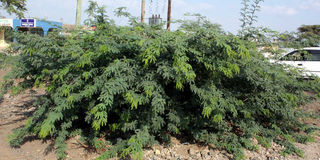
The invasive Prosopis juliflora weed, popularly known as ‘Mathenge’, in Marigat, Baringo County.
Photo credit: File| Nation Media Group
Joel Lekuroito, a resident of Ng’ambo, said the community had waited more than eight years for approval to harvest Mathenge and turn it into charcoal.
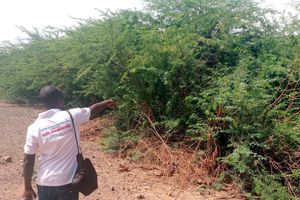
He said the tree had invaded farms, blocked waterways and obstructed roads, making economic activities increasingly difficult.
“By allowing us to fell the tree and burn charcoal from it, we will reclaim our land, reopen waterways and clear roads that have become impassable because of the dense vegetation,” Mr Lekuroito said.
However, he cautioned against using the permits as a licence to destroy indigenous trees, saying village elders and CCPAs would work with authorities to ensure only Prosopis was harvested.
Rongai Leakwara, from Eldume, welcomed the initiative, saying residents planned to establish tree nurseries to replace the invasive species with indigenous and fruit trees.
Residents also blame ‘Mathenge’ for blocking natural drainage channels and worsening flooding during heavy rainfall. They cite the 2024 floods, which displaced more than 10,000 people in the area, as evidence of the need to restore waterways.
Richard Lekachuma, another resident, said the weed had suppressed other vegetation and contributed to the formation of gullies, increasing the area’s vulnerability to flooding.
Mr Rutto described the permit system as a major milestone, saying the county had established a framework to regulate charcoal production and transportation for the first time in eight years.
He said only charcoal produced from ‘Mathenge’ harvested within the county would be authorised for transportation under the initiative.
The county is working with the national government and the Kenya Forest Service (KFS) to en-force the regulations and prevent traders from using the programme to destroy indigenous trees.
KFS will also issue licences alongside the county government to ensure producers and transporters operate within the law.
The new arrangement will replace motorcycles, traditionally used to ferry charcoal, with lorries transporting the commodity in bulk.
Transport permits will specify destinations and validity periods. Those for Nairobi will be valid for two days, while consignments destined for Mombasa will have three days.
The county will collect Sh5,000 for every lorry leaving the region.
Mr Rutto said the government would also provide seedlings to help communities establish alternative tree cover.
The initiative seeks to address the environmental damage associated with indiscriminate tree cutting while turning the invasive species into an economic resource.
Prosopis juliflora, popularly known as ‘Mathenge’, was introduced in Kenya’s arid and semi-arid lands to combat desertification, control soil erosion and provide fuelwood.
Its ability to survive harsh conditions made it attractive, but its rapid growth and aggressive spread have turned it into a major invasive species.
In Baringo, its expansion has had far-reaching consequences for farming and pastoral communities, particularly around Lake Baringo.
Residents also blame the plant for livestock injuries and dental problems among animals that feed on its pods and branches. Its sharp thorns can cause painful injuries and infections.
The weed attracted national attention in 2006 when members of the Ilchamus community moved to the High Court over claims that it was harming their livestock.
In a dramatic illustration of the alleged damage, residents presented a toothless goat as evidence.
Nearly two decades later, affected communities have an opportunity to turn the problem into an economic resource.
For Baringo South residents, however, the initiative’s success will depend on whether ‘Mathenge’ thickets give way to productive farmland, restored waterways and better livelihoods without triggering further destruction of indigenous vegetation.