Kenya’s economy is projected to grow slightly faster and record slower inflation in 2027, offering a more stable economic outlook ahead of the General Election than the country experienced during the 2022 election cycle.
The latest World Economic Outlook by the International Monetary Fund (IMF) projects economic growth of 4.7 per cent next year, up from 4.5 per cent in 2026, while average annual inflation is forecast to ease to 5 per cent from 6 per cent.
The projections suggest households could face less pressure from rising prices even as businesses operate in an economy expanding at a modest pace.
The IMF also expects Kenya’s current account deficit to narrow to 4.1 per cent of gross domestic product in 2027 from a projected 5.4 per cent this year, pointing to a smaller gap between foreign currency inflows and outflows relative to the economy’s size.
A narrower deficit could reduce pressure on the shilling if export earnings, tourism receipts and remittances provide sufficient foreign currency, with the exchange rate also depending on capital flows, debt payments and global financial conditions.
The outlook comes as the country approaches the 2027 elections, when campaign spending, government expenditure decisions and uncertainty among investors could influence economic activity.
The International Monetary Fund Headquarters in Washington, DC.
Photo credit: File | AFP
Economist Churchill Ogutu warned that prolonged geopolitical tensions could trigger another energy price shock, with higher import costs feeding into transport, electricity and production expenses across the economy.
“Also, should El Nino risk materialise, it could derail the agriculture sector. Another big risk being monitored is Ebola,” he observed.
The IMF projections offer a contrast with 2022, when economic growth slowed sharply from 7.6 per cent in 2021 to 4.9 per cent, while inflation accelerated and households faced higher costs for food, fuel and other essentials.
The slowdown in 2022 followed an unusually strong rebound from the Covid-19 pandemic, meaning the economy was moving away from the high growth rates recorded as businesses reopened and activity recovered.
The World Bank attributed the weaker performance to a combination of global commodity price shocks, a prolonged regional drought and uncertainty ahead of the August 2022 election, with agriculture among the sectors weighing on growth.
Inflation worsened from 6.1 per cent in 2021 to 7.66 per cent in 2022, eroding the purchasing power of households whose incomes did not increase at the same pace as the prices of goods and services. Families had to devote more money to necessities such as food, transport and cooking fuel, leaving less for savings or discretionary spending. Drought reduced agricultural output while the war in Ukraine and other global disruptions pushed up international food, fertiliser and energy prices.
According to Mr Ogutu, Kenya’s economic position is more resilient in some respects than it was during the previous election cycle, as earlier commodity shocks and currency instability have eased.
“In the previous election cycle we had the commodity shock (energy and wheat) and currency wobbles, which now have been resolved somewhat heading into 2027 polls,” he said.
Kenya’s year-on-year inflation stood at 6.8 per cent in September, driven largely by increases in food, transport and housing-related costs, according to Kenya National Bureau of Statistics data.
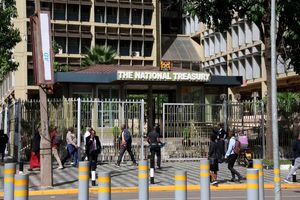
The National Treasury expects the budget deficit to rise to 5.9 per cent of GDP in the 2027/28 fiscal year from 5.5 per cent in 2026/27, underscoring the competing demands on public finances.
Ken Gichinga, chief economist at Mentoria Economics, warned that heavy government borrowing could crowd out private businesses as the government seeks to meet large debt repayment obligations.
“Heavy government borrowing will crowd out the private sector as the government tries to settle nearly Sh1.6 trillion in debt in this fiscal year alone. Rising interest rates will also slow down the flow of credit,” said Gichinga.
“There is a deep sense of anxiety and concern and there will be a big focus on finding leaders who can redirect the economy towards a more productive direction,” he added.