Kenya Pipeline Company (KPC) net profit grew 13 per cent to Sh11.58 billion in the year to June 2026, allowing the firm to pay Sh5.81 billion in dividends.
The firm, which listed on the Nairobi Securities Exchange (NSE) in March, had paid a dividend of Sh5.9 billion to the National Treasury in the previous year, when it was the sole shareholder.
The new dividend of Sh0.32 a share will be paid to shareholders who will be on record as of November 2026. The dividend payment date is yet to be fixed.
KPC’s net profit rose from Sh10.2 billion a year earlier, helped by higher sales.
Turnover grew 8.78 percent to Sh42.98 billion in the review period, mainly due to increased fuel throughput in Kenya and the East African region.
The new dividend represents a payout of 50.1 percent of the net income reported in the review period, down from a distribution rate of 57.6 percent the previous year.
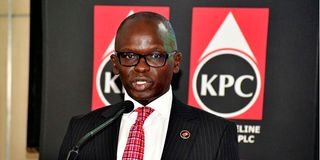
“We are reserving cash for some of the key critical infrastructure projects that we are set to undertake,” KPC acting chief executive officer Pius Mwendwa said on Wednesday.
Top shareholders, led by the Kenyan and Ugandan governments, will pocket the bulk of the dividends.
Uganda will receive Sh1.17 billion on its 3.662 billion shares, while Kenya, through the National Treasury, will get Sh2.035 billion on its 6.36 billion shares.
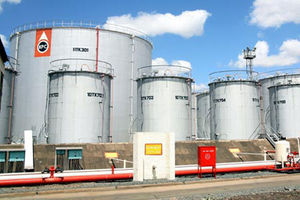
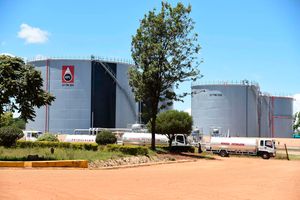
Among the key projects KPC is undertaking are increasing the storage capacity of its tanks at an estimated cost of Sh5 billion and extending the pipeline to Kampala and later to Kigali, Rwanda.
Kenya Pipeline Company headquarters in Nairobi.
Photo credit: File | Nation Media Group
KPC is also set to spend Sh600 million to enter the fixed internet market. The company currently leases wholesale dark fibre along its petroleum pipeline corridors to telecommunications firms, but targets to enter the fixed internet market by February 2026.
The firm’s decision to cut dividend payments comes at a time when its share price at the Nairobi bourse has remained largely unchanged since its listing in March this year.
KPC shares closed at Sh9.04 on Tuesday, compared with the Sh9 at which the Kenyan government offered them to investors during the initial public offering (IPO).
The Kenyan government reduced its ownership to 35 percent from 65 percent, with Uganda and other local government institutions taking up stakes in KPC, in line with the IPO that ended decades of sole government ownership of the company.
Kenya’s National Social Security Fund (NSSF) is the second-biggest shareholder in KPC, with a stake of 22.2 percent, while the Unclaimed Financial Assets Authority (UFAA) bought a stake of 3.06 percent.
KPC said the Sh5.81 billion dividend will be paid to shareholders on the company’s register as at the close of business on November 30, 2026.
The company has significantly reduced dividend payouts over the past five years, with the highest being the Sh8 billion it paid shareholders for the year ended June 2022.
KPC froze dividends for the year to June 2023 but resumed payments the following year, distributing a total of Sh7 billion to the National Treasury.
The latest decision to reduce the payout to shareholders comes as KPC seeks to ward off competition from Tanzania in the race to become the preferred importation point for refined fuel in the East African region.
KPC is the single biggest player in East Africa’s petroleum sector, storing and transporting fuel destined for Uganda, Rwanda and South Sudan, all of which import fuel under government-to-government (G-to-G) deals.
Rwanda had relied on Tanzania for the importation of refined fuel before switching to KPC through a deal signed in June this year.