Kenyan coffee fetched its highest price yet at the Nairobi Coffee Exchange and in the international markets amid a global shortage that pushed up prices, translating into higher earnings for farmers and traders.
The Agriculture and Food Authority (AFA) says the country’s coffee sold at Sh1,025 per kilogramme in September 2025, a 10 per cent rise from Sh930 per kg in August and a 62 per cent increase from Sh633 per kg recorded a year earlier.
The gains followed a global slump in supply after production disruptions in key markets linked to climate change challenges, which lifted prices across international markets.
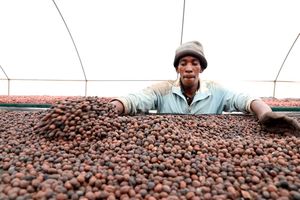
A picture showing Kenyan coffee. Kenyan coffee fetched its highest price yet at the Nairobi Coffee Exchange and in the international market.
In total, the quantity of coffee auctioned rose by 73 per cent to 4,452 tonnes in September 2025 from 2,648 tonnes in September 2024, with the average price of a 50kg bag climbing to $396.32 (Sh51,125) from $245.64 (Sh31,687).
The quarter to September 2025 also recorded improved performance at the auction, with total volumes sold rising to 8,531 tonnes from 6,622 tonnes in a similar period in 2024.
The value more than doubled to $63.4 million (Sh8.2 billion) in the review period from $31.4 million (Sh4 billion) a year earlier, outpacing growth in volumes and signalling better returns for farmers and traders.
Away from the auction, coffee sold directly to overseas buyers also fetched higher prices per 50kg bag, rising to an average of $443.5 (Sh57,211) in the quarter under review from an average of $273.76 (Sh35,315) a year earlier.
AFA attributed the surge to “strategic success in selling a more valuable product mix, accessing higher-paying market segments, or capitalising on vastly improved market conditions for direct sales”. Kenya has benefited from a global downturn in coffee production caused by adverse weather in major producing countries.
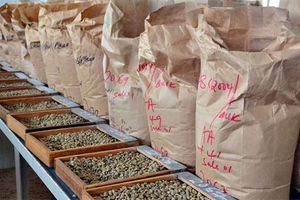
Coffee beans on display for auction at the Nairobi Coffee Exchange.
Photo credit: File | Nation Media Group
While global food commodity prices began easing late last year, the World Bank projects coffee prices will remain elevated due to the supply slump, boosting earnings from one of Kenya’s key exports.
“Although beverage commodity prices have retreated in recent months, prices of coffee remain close to all-time highs reached in early 2025, when weather-related challenges suppressed production,” the World Bank said in its October Commodity Markets Outlook.
Brazil, the world’s leading producer, is expected to record a three to six per cent decline in output, while other top exporters such as Colombia are also forecast to post declines due to adverse weather. Leading African producers including Ethiopia, Uganda and Tanzania have also benefited, with increased production fetching better prices in international markets.