Maize prices have risen sharply across parts of the Rift Valley following poor harvests caused by erratic rainfall, raising fears of further increases and prompting the government to consider fresh imports to avert food shortages.
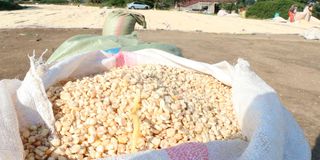
In Nakuru, the price of a 90-kilogram bag of maize has increased from about Sh3,700 two months ago to between Sh4,500 and Sh4,600, reflecting tightening supplies from one of Kenya's key grain-producing regions.
In Narok County, where harvesting has started in parts of Narok South, Narok North and Narok West sub-counties, the same quantity is retailing at between Sh4,000 and Sh4,600.
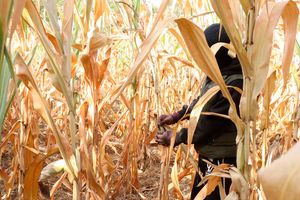
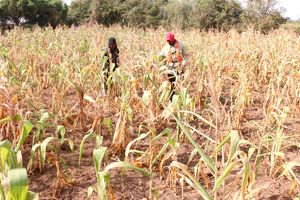
The price increases come as farmers across the Rift Valley report poor yields after crops were hit by prolonged dry spells, uneven rainfall and disease during the critical growing season.
The Kenya Agricultural and Livestock Research Organisation (Kalro) says the weather disruptions have significantly reduced production in many maize-growing areas.
“Most regions have experienced crop failure due to depressed rainfall, while diseases and pests have worsened the situation. This will affect production this season,” Kalro Director-General Patrick K. Ketiema said in Naivasha.
Crop failure has been reported in Njoro, Rongai, Mauche and Elburgon in Nakuru County, while farmers in Uasin Gishu, Trans Nzoia, Nandi, West Pokot and Elgeyo Marakwet have reported stunted maize after rainfall failed during the crop's critical growth stage.
Similar losses have been reported in Trans Mara, particularly in Emurua Dikirr and Kilgoris constituencies.
Farmers inspect their failed maize crop in Mirera, Naivasha, Nakuru County, on July 12, 2026.
Photo credit: Boniface Mwangi| Nation Media Group
Unable to salvage their crops, some have uprooted maize before maturity to prepare their land for replanting when the forecast El Niño rains begin in September and October.
Others have cut the withered crop for livestock feed, while some have opted to plant beans—a shorter-season cropin an effort to recover part of their investment.
“On average, farmers are harvesting between 10 and 15 bags per acre compared with the usual 20 to 27 bags,” said Julius Rotich, a farmer in Katakala.
He accused middlemen of taking advantage of desperate farmers by buying maize directly from farms for between Sh3,500 and Sh3,700 per bag despite the National Cereals and Produce Board (NCPB) offering Sh4,000.
The government has acknowledged the deteriorating situation and warned that maize imports may become necessary if assessments show a significant production shortfall.
Agriculture Principal Secretary Paul Ronoh said a team of scientists had been dispatched to establish the extent of crop failure across the country's main maize-growing regions.
“We have established a team of scientists to assess the crop failure and recommend mitigation measures. If we establish that food security will be affected, the government will allow maize imports,” Dr Ronoh said in Nakuru recently.
Agriculture Principal Secretary Dr Paul Ronoh. He has ordered a probe into the operations of Mîcii Mîkûru tea factory in Meru.
Treasury Cabinet Secretary John Mbadi told Parliament during this year's Budget presentation that maize production had increased from 34 million bags in 2022 to 67 million bags in 2025, reducing imports from 9.9 million bags to 3.3 million bags over the same period.
Farmers are now urging the government to cushion them against mounting losses.
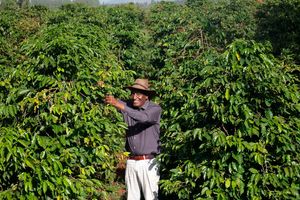
“Coffee farmers are regularly bailed out, but maize farmers receive little attention. Without support, many of us will not afford to plant next season,’ he said.
“Many farmers risk defaulting on loans and losing their property. The government should urgently support affected maize farmers,” she said.
Andrew Maina, a farmer from Kericho, urged the government to subsidise pesticides and certified maize seed, arguing that support should extend beyond fertiliser distribution during planting.
Although the government sells subsidised fertiliser at Sh2,500 per bag, farmers say shortages have enabled cartels to divert the commodity and resell it through private outlets for between Sh5,000 and Sh6,000 during the planting season.
Should imports become necessary, Kenya is expected to source maize mainly from Uganda and Tanzania, although Zambia and other Common Market for Eastern and Southern Africa (Comesa) member states remain alternative suppliers. Brazil, Argentina, Mexico and the United States have also supplied maize to Kenya during periods of acute shortage.