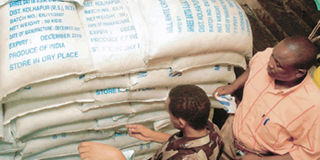
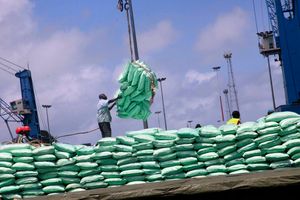
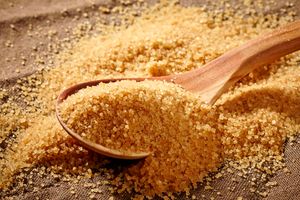
The High Court has certified as urgent a petition by manufacturers challenging a new excise duty on industrial sugar, which increased levy charges from Sh7.50 to Sh40 per kilogramme of the sweetener.
The Kenya Association of Manufacturers (KAM) says the increase, which they claim is about 433 per cent, has imposed an unsustainable burden on an industrial input that Kenya does not produce at commercial scale, with taxes, levies and port charges now consuming about 90 per cent of the cost, insurance and freight (CIF) value of every consignment.
The association is challenging Section 36(a)(vi) of the Finance Act, 2026, which came into force on July 1 and raised the excise duty on industrial sugar from Sh7.50 to Sh40 per kilogramme.
It says the increase is the latest in a series of tax hikes that have pushed the rate from Sh5 to Sh7.50 and now Sh40 per kilogramme, with no impact assessment, evidence or other justification disclosed for the latest increase.
“That application is certified urgent,” the court said.
The court directed KAM to serve the petition on the Attorney-General, the Cabinet Secretary for the National Treasury and the Kenya Revenue Authority.
KAM says the new tax threatens manufacturers, jobs and export markets, arguing that the provision has subjected an industrial input to a heavier fiscal burden than that imposed on the finished goods made from it.
“No manufacturing enterprise in any economy can absorb such a shock,” KAM said.
KAM argues that the tax is imposed at the point of importation, before the ultimate lawful use of the sugar is known, and therefore operates as a punitive burden rather than a corrective excise duty.
The manufacturers say the new levy could strip about Sh6 billion a year from businesses that support the livelihoods of more than 100,000 Kenyans, reduce capacity utilisation by up to 50 per cent and put about 3,000 jobs and more than 300 internship and apprenticeship opportunities at risk.
They say companies already operating below 30 per cent of their installed capacity face possible closure.
KAM further argues that the tax threatens export markets built over decades, particularly in the East African Community, where 90 per cent of Kenya’s exports of the affected products are sold.
According to the association, the affected exports operate on margins of between three and five per cent, while excise duty is not recoverable on exported products such as confectionery.
It says Uganda and Tanzania do not impose excise duty on industrial sugar, putting Kenyan manufacturers at a competitive disadvantage.
“An export market once ceded to a regional competitor is, in commercial reality, never recovered,” the petition states.
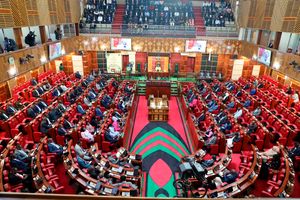
KAM also challenges the manner in which the tax amendment was introduced, saying it was inserted on the floor of the National Assembly rather than appearing in the Bill as published.
The association says it requested the Hansard of the sitting, but it was not provided, arguing that the record could show how the 433 per cent increase came to be imposed.
KAM has also raised an issue of unequal treatment, pointing out that the law exempts sugar imported by registered pharmaceutical manufacturers and raw sugar imported for processing by licensed sugar refineries.
Kenya Association of Manufacturers CEO Tobias Alando makes his remarks during the launch of the Manufacturing Priority Agenda (MPA) 2026 at the Radisson Blu Hotel in Nairobi on February 17, 2026.
Photo credit: Francis Nderitu | Nation Media Group
It argues that its members import the same commodity for use as a manufacturing input but are subjected to the full excise duty.
The association says the exemption effectively protects the input of the domestic sugar industry while imposing a much higher tax on manufacturers who rely on imported industrial sugar, contrary to Article 27 of the Constitution, which guarantees equal protection of the law.
KAM further argues that industrial sugar imported by manufacturers does not threaten the 17 local sugar factories because they produce table sugar and do not manufacture industrial sugar from locally sourced raw sugar.
It says the tax therefore does not protect the local sugar industry as claimed but instead threatens manufacturers that depend on industrial sugar as a production input.
The association says it attempted to resolve the dispute before going to court, engaging the National Treasury, KRA and the Clerk of the National Assembly through correspondence, memoranda, position papers and requests for meetings.
It also proposed a transition period to allow manufacturers to move towards local sourcing, but says its efforts did not yield a solution.
“With the avenue of amicable settlement now exhausted, and the Respondents having declined or failed to act, the daily haemorrhage of jobs, markets, contracts and productive capacity continues unabated, and there remains no forum other than this Honourable Court capable of arresting it,” the petition states.
KAM is asking the court to declare Section 36(a)(vi) of the Finance Act unconstitutional, arguing that the Sh40 per kilogramme excise duty is disproportionate and contrary to the principles of fair taxation under Articles 10(2)(a) and 201(b)(i) of the Constitution.
It also wants the court to quash the amendment and restore the excise duty rate that applied before the Finance Act, 2026 came into force.