The movement of 26,220 bags of suspected harmful sugar from a depot in Mombasa to Nairobi via the Standard Gauge Railway (SGR) has raised eyebrows among Members of Parliament, who have expressed concern that the consignment might already be in circulation.
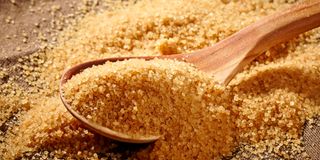
The consignment is part of the 27, 839 metric tonnes of sugar imported by Mombasa sugar refineries in raw form on January 15, 2026, and now MPs want answers from the Kenya Sugar Board on whether it is already in the market or not.
In a meeting with Kenya Sugar Board Acting Chief Executive Officer Jude Chesire, the National Assembly committee on Trade, Industry and Cooperatives, the lawmakers demanded to know how the consignment which was stored in Mombasa made its way to Nairobi.
Mr Chesire failed to provide details on the serial numbers of wagons that allegedly transported the 26,000 bags to Nairobi and the warehouse where they are stored.
“We want these documents as a matter of urgency so that we know the lives of Kenyans are safe,” said the committee chairman, Benard Shinali.
The committee vice chairperson, Marianne Kitany, questioned why the consignment was moved from the Mombasa warehouse to Nairobi.
“The officer is not being sincere; this is how contaminated sugar made its way to the market some years back. Why didn’t the sugar just stay in Mombasa depot until the owner gets clearance?” Asked Ms Kitany
Imported sugar at the port of Mombasa. FILE PHOTO | NMG
Mathare MP Anthony Oluoch said the process of getting harmful products in the market normally starts with such stories of movement from one warehouse to another.
“We have dealt with such stories before whereby we are told the sugar is safely stored, then there is a multi-agency team, before you know it, the toxic product is in the market,” Mr Oluoch said.
Mr Chesire, however, sought to assure MPs that the sugar is not yet in the market and it is safely stored and well-guarded by police officers.
“The sugar was imported in raw form. It has never been diverted nor offered for sale in the country. It is currently securely stacked and stored in a Customs Bonded warehouse inside the Kenya Ports Authority (KPA) in Mombasa pending the conclusion of the customs processes,” Mr Chesire told the committee.
“This sugar was never diverted or distributed in the country. The Sugar was well-secured and kept intact at the Kenya Ports Authority in Mombasa in a Customs bonded warehouse,” he added.
Documents presented before the committee indicate that the Mombasa-based depot obtained customs clearance on April 24, 2026, and the loading commenced on May 2, 2026. The first batch of 19 wagons carrying a total of 26,220 bags arrived in Nairobi on May 3, 2026.
According to Sugar Board, the consignment of the 27,000 metric tonnes in question was imported in raw form and is currently securely stacked and stored in a Customs Bonded warehouse inside the Kenya Ports Authority (KPA) in Mombasa pending the conclusion of the customs processes.
In March 2026, the Cabinet Secretary for National Treasury John Mbadi constituted a multi-Agency Team comprising Kenya Sugar Board, Kenya Revenue Authority (KRA), Kenya Bureau of Standards (Kebs), State Department of Industry (SDI) and the National Police Service (NPS) to develop conditions for release of the consignment and monitoring framework to prevent diversion at any stage and ensure that the sugar is utilised for its intended purpose.
Industrial sugar is not safe for human consumption and is not the same as table sugar. It is a product that is used for manufacturing in bakeries, beverage plants, and large-scale food processors. Importation of white refined sugar for industrial use is strictly restricted to industrial manufacturers only.
“The allegation that a consignment of harmful sugar worth Sh1.5bn has been imported in the country, repackaged and distributed to the domestic market is false,” Mr Chesire told MPs.
“No harmful sugar has been released for human consumption. The Kenya Sugar Board has put in place stringent measures to ensure that industrial sugar is used for the purpose it is imported and repackaged and sold to consumers,” he said.
Kenya produced 472, 773 metric tonnes of sugar in 2023, 815,454 metric tonnes in 2024 and 611,576 metric tonnes in 2025 against consumption of 1,152,205 metric tonnes in 2025 alone.
Consequently, Kenya imported a total of 608,178 metric tonnes, 338,345 metric tonnes and 477,551metric tonnes in 2023, 2024 and 2025, respectively.