The operating losses of Kenya Railways Corporation’s (KRC) legacy business widened by Sh719.6 million in the year ended June 30, derailing the agency’s efforts to turn them around.
An analysis of KRC’s performance shows an operating loss of Sh2.89 billion compared to Sh2.16 billion for the previous year, headlined by the meter-gauge railway (MGR) freight service with an operating loss of Sh2.07 billion up from Sh1.36 billion a year ago.
The MGR passenger service, Mv Uhuru and the Railways Training Institute (RTI) – the other KRC legacy businesses – also recorded operating losses in the year under review, negating the operating profits that the standard gauge railway (SGR) made in the year to June 30.
But SGR’s performance helped undo the impact of losses across the other businesses, helping KRC to post an operating profit of Sh1.63 billion compared to an operating loss of Sh562.47 million a year ago.
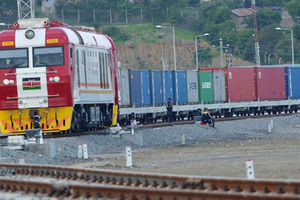
The Madaraka Express at the Mombasa Terminus in Miritini from Nairobi.
Photo credit: File | Nation Media Group
“During the 2025/26 financial year, the corporation transported 942,390 metric tonnes of freight against an annual target of 1,382,928 metric tonnes, achieving 68.2 per cent of the annual target. This represented a decline of 15 per cent compared to the 1.11 million metric tonnes transported in the 2024/25 financial year,” KRC says in a review of its latest performance.
The MGR passenger service’s operating loss marginally dropped to Sh667.98 million at the end of June from Sh712.9 million a year ago, while that for Mv Uhuru grew to Sh108.59 million from Sh61.57 million.
RTI’s operating loss rose to Sh31 million in the year under review from Sh20.27 million a year ago, but that for the cargo and logistics centre narrowed to Sh4.09 million from Sh8.56 million.
The MGR (passenger and freight), RTI, cargo centre and properties have been KRC’s legacy businesses for decades. The SGR (cargo and passenger) became the latest addition following its launch in 2017.
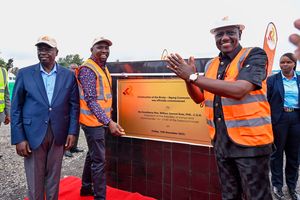
KRC recently kicked off extensive rehabilitation of the MGR to revive idle lines across the country and boost trade, besides linking with the SGR to enable a seamless connection for passengers and freight.
The firm has, in the past few years, rehabilitated the Voi-Taita Taveta line, the Kisumu-Butere line, the Leseru-Kitale line and the Gilgil-Nyahururu line, and opened new stations for this service.
An analysis of KRC’s performance shows an operating loss of Sh2.89 billion compared to Sh2.16 billion for the previous year.
Photo credit: File | Nation Media Group
But while the SGR enjoys a growing demand from Mombasa to Nairobi and further to Naivasha, the MGR’s fortunes have plunged over the years, with the total passenger numbers dropping by nearly half in the past four years.
Mv Uhuru was revived in 2020, ending a 14-year hiatus and boosting the movement of goods from the Port of Kisumu to Port Bell in Uganda. KRC also opened the RTI campus in Kisumu in 2020.
KRC recently said that it is targeting an operating profit of Sh9.09 billion in the year to June 2028 from an operating loss of Sh2.4 billion in the year to June 2023, a target that is now in jeopardy given the struggles of the legacy businesses.