Mombasa-based organisation has moved to court, accusing Kenya Railways Corporation (KRC) of disposing of railway scrap metal and other infrastructure materials in an opaque manner and in breach of the law.
The Centre for Litigation Trust alleges that railway scrap metal, sleepers, rails and other materials have been removed from KRC termini in Kisumu, Eldoret, Naivasha and Mombasa and transported to a designated private yard in Athi River, Machakos County.
The organisation claims the materials are being transported using privately owned vehicles, raising questions about the legal authority for their removal, handling and disposal.
“Kenya Railways Corporation, being a state corporation, cannot lawfully treat public assets as though they are the private property of individual office holders or private persons,” the organisation says in its petition.
The Non-Governmental Organisation (NGO) alleges that the movement of the materials is taking place without transparent disclosure of the relevant authorisations, disposal documents, valuation records, tender documents, sale agreements, delivery notes or inventory records.
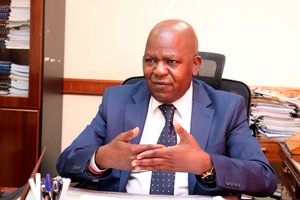
Kenya Railways Corporation Managing Director Philip Mainga before the National Assembly Public Investments Committee on Commercial Affairs and Energy on Tuesday, October 24, 2023.
Photo credit: File
It has sued KRC, its managing director Philip Mainga, the corporation’s board of directors, Muranga Freight Logistics Limited and Abcos Industrial Limited.
The organisation argues that the Public Procurement and Asset Disposal Act, 2015, provides the legal framework for the management and disposal of public assets, requiring public entities to observe transparency, accountability and integrity.
“The Act expressly incorporates constitutional values, principles of integrity, public finance principles and the values and principles of public service into public procurement and asset disposal,” the NGO’s executive director, Julius Ogogoh, says.
Mr Ogogoh further argues that the Scrap Metal Act regulates dealings in scrap metal and imposes obligations concerning its transportation and handling.
He says the law specifically addresses scrap metal of unknown origin and materials obtained from railway infrastructure, prohibiting possession of scrap metal whose origin is unknown and the removal, defacement or destruction of scrap metal from railway infrastructure.
The NGO wants the High Court to issue an interim order compelling KRC to produce documents authorising the removal and disposal of the materials, including valuation reports, tender and auction records, sale agreements and delivery documents.
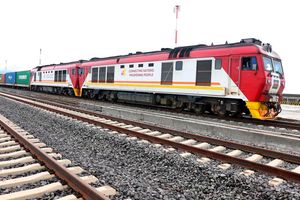
A Nairobi Commuter Rail Service's (NCRS) commuter train travels from the Mutindwa railway station in Embakasi district during a strike by public transport operators driven by rising fuel costs, linked to global supply pressures following the US-Israeli conflict with Iran, in Nairobi, Kenya May 19, 2026.
Photo credit: Thomas Mukoya | Reuters
Court documents indicate that police officers have accompanied or escorted vehicles and trucks transporting the materials.
Mr Ogogoh argues that deploying police officers to escort private vehicles carrying public assets to a private yard raises serious legal and accountability concerns.
He describes the alleged use of armed police escorts to facilitate the transportation of public property to a private yard using private vehicles as a “grotesque manifestation” of a possible breach of the law and abuse of power.
The organisation says it formally sought information from KRC and wrote to the Ethics and Anti-Corruption Commission seeking details of the legal authority for the operation, inventories, valuations, disposal methods, tender and auction documents, contracts, payment records, transport documents and the materials’ destination.
However, it claims that it received no response to its requests.
“Without the requested records, your Petitioner's cannot presently ascertain whether the materials were moved for authorised storage, repair, salvage or lawful disposal, or whether any disposal complied with the applicable asset-disposal framework,” Mr Ogogoh says.
The NGO says there is a reasonable apprehension that unless the court intervenes, the materials could be transported further, sold, transferred, processed, melted, dismantled or concealed, potentially frustrating the proceedings.
“The conduct of the Respondents therefore raises serious questions touching upon the protection of public property, the management and disposal of public assets, accountability of State officers and compliance with the constitutional values of transparency, integrity and accountability,” the petition states.