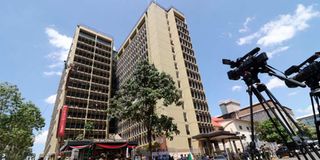
Treasury has revealed a Sh413.81 billion termination or break fee that taxpayers will pay owners of infrastructure projects like the Nairobi Expressway, Rironi-Mau Summit road, and power lines if public-private deals end prematurely.
The exposure covers 13 projects signed or advanced under President William Ruto and his predecessor Uhuru Kenyatta, with contract terms ranging from 10 to 30 years.
Kenya has initiated several Public-Private Partnership (PPP) projects to build roads, energy plants and housing, with investors earning from user fees like tolls.
Private investors in the PPP projects include China Road and Bridge Corporation, the National Social Security Fund, Shandong Road and Bridge International, and Africa50, a unit of the African Development Bank.
Road contracts, largely under Build-Operate-Transfer (BOT) frameworks, account for nearly two-thirds of the exposure for existing and advanced projects, according to the National Treasury’s Draft 2027 Budget Policy Statement.
Road projects carry Sh266.086 billion, or about 64 per cent of the total exposure, led by the two phases of the Rironi–
This represents potential termination payments, not money already owed or a bill the government expects to pay in the 2027/28 financial year, which begins in July, weeks before the August presidential election.
The Treasury says PPP projects can create contingent liabilities when specified contractual events occur, mainly early termination. For projects that have reached financial close, the exposure largely consists of payments due under their respective agreements.
“The likelihood, value and timing of termination payments cannot be determined with certainty in advance, and it is unlikely that all projects would be terminated at the same time,” Treasury officials write in the report, which is currently getting views from the public.
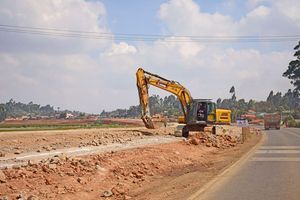
The largest road exposure comes from the Rironi–Naivasha–Gilgil and Rironi–Mai Mahiu–Naivasha sections, being developed by China Road and Bridge Corporation and the National Social Security Fund.
The two sections carry maximum exposure of Sh93.38 billion in FY2027/28, against a combined project value of Sh96.38 billion. Their 30-year contract reached financial close in May 2024, and construction was between 79 and 100 per cent complete, according to the Treasury.
The Gilgil–Nakuru–Mau Summit phase, developed by Shandong Road and Bridge International, adds Sh87.35 billion in potential exposure. Its stated value is Sh86.35 billion under a 30-year contract signed in October 2024.
Construction on the Gilgil–Nakuru–Mau Summit section was under way, but financial close was still pending by the time the Treasury compiled the report it published last week.
The Nairobi Expressway, developed under a 30-year contract, carries the next-largest road exposure at Sh72.04 billion against a project value of Sh86.8 billion. It reached financial close in November 2021, and operations and maintenance began in May 2022.
Three road annuity projects add another Sh13.32 billion. The road from Ngong to Isinya (Lot 33), valued at Sh12.74 billion under a 10-year contract and which reached financial close in February 2018 and began operations in May 2020, carries Sh3.2 billion in exposure.
The road annuity programme under Lot 18, which covers urban access roads in western Kenya, worth Sh6.4 billion, carries Sh4.47 billion, while Lot 15 for urban access roads in Nyeri, Murang'a, Embu, Tharaka Nithi, Kirinyaga and Laikipia, valued at Sh8.09 billion, has an exposure of Sh5.65 billion.
Other existing and advanced projects account for the remaining Sh147.72 billion. The smart driving licences contract carries Sh50.22 billion in exposure against a Sh45 billion project value, under a 21-year agreement signed in June 2026, with construction under way.
The Africa50–PowerGrid transmission-lines project carries Sh41.05 billion in exposure against a Sh41.6 billion value. Its 30-year agreement was signed in 2025, but construction had not started; operations were expected in mid-2028.
Three Menengai geothermal projects—Sosian, Quantum and Orpower 22—together carry Sh38.52 billion in exposure. Each has a 25-year contract, with construction or commercial operations at different stages. Galana-Kulalu food security adds Sh13.31 billion, while KDF residential accommodation carries Sh4.62 billion.