Ms Mary Njeri Chege was optimistic that she would have a good harvest every season when she stopped growing wheat and switched to maize farming, because leasing land in the area was so expensive. Fortunately, she owned a fertile, large-enough farm to enable her to farm without difficulty.
However, after growing maize on her 10-acre plot for over 10 years, she noticed lower yields at the end of the season. This was due to growing the same variety of crop for a long time, which caused soil infertility and increased the cost of farm inputs such as seeds and fertiliser. The market was also dominated by middlemen.
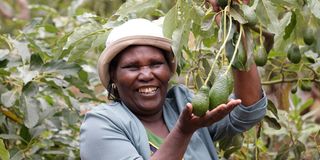
During a recent visit to her farm in the Karunga area of Nyakiambi Farm in Elburgon, Nakuru County, approximately 600 metres off the Elburgon–Njoro road, Ms Chege was tending to her Hass avocado trees. "After growing maize on the farm for a long time, I decided to intercrop with Hass avocados in 2019.
However, three years later, I cleared all the maize when I realised that the cobs were falling onto the leaves and affecting the growth of my new crop," recalls Ms Chege, who by then was running a clothes shop in Elburgon town.
She bought 1,400 certified Hass avocado seedlings from a local dealer at Sh200 each. She dug holes measuring 2 ft squared and spaced them 15 ft apart to allow the roots and branches to spread as they grow. In each hole, she mixed the soil with sheep manure that she had purchased from local farmers.
Ms Chege noted that approximately 900 seedlings died due to climate change and inconsistent rainfall. However, she bought more seedlings and replanted them in the affected area.
One month after planting, she sprayed her crop with a fungicide to control the blight infection, which is common during the cold season, and with a pesticide to kill whiteflies. "One year later, I applied a special fertiliser near the seedling to promote root formation and provide nutrients. Spraying to combat pests that mostly attack the leaves is an ongoing process that I still follow today,” said Ms Chege, adding that she applies the special fertiliser three times a year to boost growth and increase production. She confirmed that no diseases had ever attacked her crop, except for the flies that are conspicuous during the dry season.
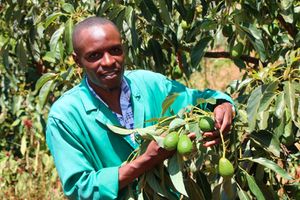
Mary Njeri Chege holds some of the Hass Avocado fruits she grows on her farm at Karunga area in Elburgon, Nakuru County on October 14, 2026.
Photo credit: John Njoroge | Nation Media Group
In 2022, she harvested 10,000 fruits in her first bunch and sold them to brokers for Sh13 each. She added that production increased and the price per fruit rose consecutively in the following years, as demand continued to rise, since many farmers in the area had not invested in avocado farming. Satisfied with her sales, she closed her clothing shop to give herself and her husband more time to manage their fruit business.
Since her first harvest, production has doubled with every harvest as a result of applying foliar fertiliser, which has boosted the growth and nutrients of her fruit. In July of this year, she harvested 200,000 fruits and sold them to a processing company that buys for export at Sh18 per fruit.
Exuding confidence, she said that this was the highest number of fruits she had ever harvested since beginning to plant avocados. She confirmed that well-managed avocado trees can produce between 500 and 1,000 fruits.
Ms Chege attributed her success to adding nutrients, spraying and better management. For the last seven years, she has planted nitrogen-fixing crops such as beans and peas between the rows, but has recently stopped doing so. "Extension officers who visit my farm advised me to leave the rows bare to allow the avocado trees to get the necessary nutrients and to allow aeration.
It also gives enough space for the fruiting branches to spread without being close to each other," says Ms Chege. She adds that she harvests her fruit once a year, which allows her to manage it and increase production for the next harvest.
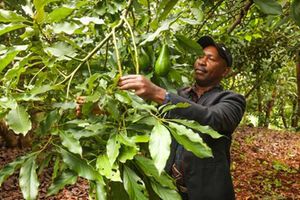
She said that the infected and dried avocado leaves that fall on the farm are collected and burnt three times a week to prevent further infection of the healthy leaves or avocado trees. Eight casual workers are responsible for ensuring the rows are kept clear of unwanted weeds and leaves, which are removed and disposed of, and for carrying out pruning and spraying at the appropriate times, among other management practices.
She plans to harvest one million pieces of fruit after two years, with each tree producing a minimum of 800 pieces. "Due to the shortage of bare land in the region and lack of funds, my vision is to plant Hass avocados on 100,000 acres within the next five years, which I believe is achievable and will help create jobs for young people," said Ms Chege.
She added that she has no regrets about switching to avocado farming, which is labour-intensive but easier to manage than other crops, and which does not involve brokers, unlike maize and potato farming. She said that customers come directly to the farm, thus reducing the chances of middlemen at the market.
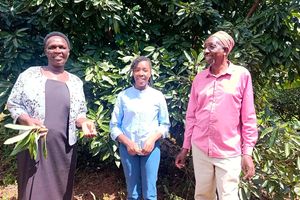
Mary Njeri Chege on her farm where she grows Hass Avocados at Karunga area in Elburgon, Nakuru County on October 14, 2026.
Photo credit: John Njoroge | Nation Media Group
She calls on other farmers to embrace avocado farming, a practice that can be adopted by small-scale farmers provided there is a supply of certified seeds. "With an initial investment of Sh5,000, young people can start avocado farming and begin harvesting after three years.
Buyers have increased in recent months, but many farmers are unable to meet customer demand,” said Ms Chege. She added that her personal records help her to track sales, expenses, and the minimum yield per tree, as well as other important issues required to make the farm progressive and successful.
Interestingly, the farmer revealed that she gets about Sh 100,000 from the sales of her six 20-year-old Fuerte avocado trees in three instalments every year. She says that in the near future, she plans to plant more trees for domestic and commercial use. She plans to become the region's leading avocado farmer, increase production, and create more job opportunities for unemployed young people.
He said that farmers from various places visit her farm to benchmark, and that she plans to train them in the future for a fee. Since 2020, when the Coronavirus pandemic hit, fruit has been grown and consumed in large quantities as it helps boost immunity and fight disease. She called on other farmers to embrace this practice on their own farms, either on a large or small scale, since fruit is a source of income.