As global coffee markets become increasingly competitive, the demand for high quality coffee, sustainability, traceability and responsible production continues to grow. Kenya and the greater East African region are well positioned to benefit from these trends, thanks to their distinctive coffee varieties, experienced producers and improving processing standards. Seeds of Gold writer Richard Maosi spoke to Bernadette Murgor, the chief executive officer of Smart Farmer Africa, on the opportunities within the coffee value chain.
Future of coffee in Kenya is promising, from your experience how does the subsector look like?
It requires the government, producers, co-operatives, exporters, buyers, financiers, researchers, diplomatic missions, development partners, private-sector companies and market institutions to tap into the coffee value chain.
At Smart Farmer Africa, we have documented the work of farmers, producers, innovators and institutions shaping agriculture across the region. Through that work, we have witnessed remarkable achievements in coffee, with farmers working tirelessly to improve quality standards.
We have also encountered co-operatives investing in better processing mechanisms, young people in the technology space bringing new on roasting, value addition and coffee entrepreneurship. Relevant institutions are supporting research, training, finance, trade and market development.
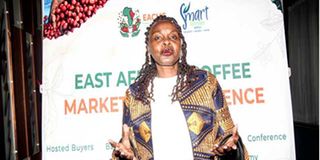
Bernadette Murgor, the chief executive officer of Smart Farmer Africa.
Photo credit: Richard Maosi | Nation Media Group
Our region produces some of the most distinctive coffees in the world, what is still missing?
We have diverse origins, unique flavour profiles, improving processing methods, experienced producers and a growing generation of coffee professionals. However, there is still a need to bridge the gap between quality and opportunity.
A farmer may produce excellent coffee but remain invisible to the market. Co-operative may have strong volumes but lack the right buyer networks, market intelligence or presentation strategies. Potential buyers may be interested in East African coffee but do not know where to source the prime produce.
There are cases where one does not know which producers are reliable or which coffees meet their requirements.
In addition, financial institutions find it difficult to support the sector because they do not have a clear pathway of the commercial opportunities within the value chain.
A diplomatic mission may have strong trade networks, but those networks may not yet be connected to producers and coffee businesses in a structured way.
The East African Coffee Markets Conference (EACMC) 2026 will take place from October 28 to 30, 2026, in Nairobi, bringing together key players from across the coffee value chain under the theme: "From Farm to Flavour: Quality, Transparency and Market Growth."
The theme reflects the complete journey of coffee—from the farm, where quality begins, to the cup, where value is recognised. It emphasises the importance of quality production, efficient processing, transparency, traceability, trade, and sustainable market growth.
EACMC 2026 is building a regional coffee market-access platform that goes beyond a three-day conference. It is designed as a continuous stakeholder engagement process that starts before the conference, creates business opportunities during the event, and continues through long-term partnerships, networking, and knowledge sharing.
At the heart of the platform are interconnected pillars aimed at improving market access for all actors in the coffee sector. The conference will equip producers and cooperative societies with knowledge on changing market requirements, quality standards, and buyer expectations. It will also enable buyers to understand production realities, quality management, logistics, and reliable supply systems.
Financial institutions will gain insights into financing gaps within the coffee value chain, while governments and sector institutions will engage on policy and regulatory barriers affecting trade, competitiveness, and investment.
The conference will provide a platform for meaningful dialogue on coffee markets, quality assurance, pricing, finance, sustainability, traceability, logistics, technology, value addition, and regional trade. More importantly, it will bring together producers, buyers, industry experts, institutions, development partners, and policymakers not only to discuss the challenges facing the coffee sector but also to develop practical and lasting solutions that strengthen East Africa's position in the global coffee market.
Another pillar structured during the event is The Flavours of East Africa (FOEA). Why does it count?
FOEA will be a curated showcase of distinctive coffees from across East Africa, celebrating the region's diversity in quality, origin, flavour and producer stories. It is designed to help international buyers, roasters, traders and coffee professionals discover exceptional coffees and connect directly with the people behind them.
FOEA is not intended to exclude producers whose coffees are not selected for the curated showcase. All participating producers, co-operatives and coffee enterprises will have the opportunity to exhibit, engage with buyers, build business relationships and participate in conference activities.
The curated showcase simply provides an additional platform where selected coffees can be professionally presented, cupped, evaluated and discussed in a focused environment, highlighting excellence while promoting the wider regional coffee industry.
Beyond coffee producers, the exhibition will also feature technology providers, equipment manufacturers, financial institutions, certification bodies, development organisations, government agencies, research institutions and coffee service providers. These exhibitors will showcase innovations, products and services that strengthen every stage of the coffee value chain.
FOEA aims to reflect the complete journey of coffee—from the farm where quality begins, through processing, logistics, marketing and trade, to the final cup where value is realised. It will be a meeting point for innovation, investment, partnerships and market access, reinforcing East Africa's position as a leading source of high quality, sustainable coffees for the global market.
The Coffee Academy will be the practical learning and solutions hub of East African Coffee Market and Conference EACMC.
It will provide a space where farmers, co-operatives and coffee enterprises can engage directly with experts and organizations working in production, processing, quality management, climate resilience, finance, insurance, traceability, compliance, logistics, technology and value addition.
The Academy will include practical learning, expert clinics, demonstrations and direct engagement with solution providers.
It begins with the farmer’s ability to produce consistent quality. To manage risk, meet standards, understand the market, prepare coffee properly and to communicate clearly with potential buyers.
How are you integrating technology to support buyer and seller discovery, matchmaking, meeting coordination and commercial follow-up?
The relationship between a producer and a buyer may take weeks or months to develop, samples may need to be sent, additional information may be requested, pricing may need to be discussed, logistics to be arranged and documentation supplied for future reference.
The innovation Trade Connect is intended to help maintain that continuity and keep the conversation moving beyond the physical event. It provides knowledge and market intelligence.
Since the exhibition brings together the wider coffee ecosystem, the Coffee Academy provides practical learning and solutions.
Sensory experiences connect the market conversation to the cup and Trade Connect supports continued engagement.
The Nairobi Coffee Exchange has an established role in coffee trading, market processes and price discovery.
The Kenya Coffee Platform provides an important space for sector dialogue, co-ordination and collaboration.
Government institutions, co-operative organisations, research bodies and other sector actors each have their own mandates and responsibilities.
Where technology and service providers can present practical solutions, partnerships can begin.
We strongly believe that diplomatic missions and trade offices can open doors into international markets.
Government and export-promotion institutions can support regional participation and trade facilitation. Development partners can support producer and co-operative readiness.
Financial institutions have a role to develop solutions that respond to the realities of coffee production, aggregation, processing, exporting and working capital.
Sector institutions also strengthen quality, market preparation and participation, and private-sector companies can bring technology, logistics, equipment, knowledge and investment.
Buyers and roasters can help us understand what the market actually wants, not what we assume it wants.