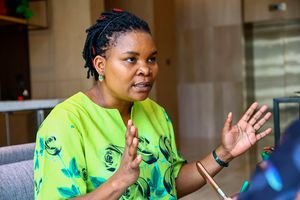
Women account for a significant proportion of Kenya's smallholder farmers and play a critical role in sustaining local food value chains. However, their contribution often comes with a heavy workload across production, processing and marketing. 'Seeds of Gold' spoke to Elizabeth Imbo, Project Manager at Sustainable Agriculture Foundation (SAF), on efforts to empower smallholder farmers, particularly women and youth, through sustainable agriculture, nutrition and food systems.
What is the role of Sustainable Agriculture Foundation (SAF) in transforming smallholder farmers in Kenya?
We mainly work with smallholder farmers because our intention is to reach a larger percentage of them, not only in Kenya but also across the region. We work in Kenya, Tanzania and Rwanda, with some projects in South Sudan and Zambia.
Smallholder farmers are at the core of food production. We therefore build their capacity to produce better, access markets and, as a result, create sustainable jobs and livelihoods for themselves.
Most of our smallholder farmers are women. How does your farmer app model address key areas of intervention?
When working with farmers, we normally target groups because working with an individual farmer may not be cost-effective.
We use a farmer app model centred on one agripreneur who connects growers to markets, data and financial tools. One agripreneur can reach about 200 farmers or more.
This is achieved through capacity building, which puts farmers in a better position to improve production.
Within our farmer hubs, we ensure farmers have the correct knowledge on production and observe certain standards.
For instance, we are concerned about the overuse of spray chemicals and farmers failing to adhere to recommended guidelines on the use of these products in food production.
The farmer hubs also provide an avenue for farmers to self-regulate and promote food safety while reducing food loss and waste.
We also have an advisory component. Farmers within the network can link with financial institutions to access support for their production activities.
How is the partnership between government, the private sector and research institutions beneficial?
Government is the foundation because it provides the framework and enabling environment within which initiatives can thrive, particularly through policy.
Whenever we start an innovation, we engage government offices to establish how our agenda links with the government's priorities on food security.
Most of the value chains we have selected have also been guided by the Ministry of Agriculture and Livestock Development.
The private sector is important because it includes off-takers who purchase farmers’ products and take them to the market.
Financial institutions are also linked to our farmers and participate in conversations to help farmers understand what to produce.
Digital inclusion and artificial intelligence are emerging areas that can also help connect farmers with information on how they are producing and accessing markets.
Through a Multi-Stakeholder Food Systems approach, we encourage systems thinking and collaboration.
Development partners are also important because they help us avoid duplication of roles and strengthen interventions across the value chain.
NICE is an initiative funded by the Swiss Government through the Swiss Agency for Development and Cooperation (SDC).
Its main objective is to improve health, nutrition and incomes among communities, with a special focus on women and youth.
There have been challenges in society that have slowed down the involvement of women in agriculture.
The project is, therefore, particular about ensuring that women and young people are meaningfully included.
The first is food system governance. In Busia and Bungoma, we want local women and youth to be part of the systems and processes that inform the food sector.
Food system governance involves the rules, processes and power dynamics through which societies determine how food is produced, processed, distributed and consumed.
This includes regenerative agriculture and the adoption of traditional production practices that help preserve the environment.
Commercialised production of crops such as maize, wheat, rice and potatoes has, in some areas, made it difficult for other crops to thrive.
We are therefore promoting local value chains involving African nightshade, spider plant and other indigenous vegetables. These crops are often better adapted to local environments and can reduce dependence on inorganic inputs.
We also promote organic composting, vermiculture, local crop varieties and intercropping.
Even within local eateries, people should have access to safe and clean food. Once food is produced, the market also needs to be sensitised about its nutritional value.
We use social and behaviour change approaches to encourage healthier food consumption, particularly because of the growing concern over non-communicable diseases, some of which are diet-related.
Through the Mizizi Afya Campaign, we sensitise communities on recipes that use locally available ingredients and encourage people to appreciate indigenous foods.
The fourth component is knowledge generation, synthesis and dissemination.
This enables us to document experiences and share evidence that can inform policymakers. Some of the knowledge generated has also been published in journals to support contextual learning.
Since 2021, we have reached about 10,000 farmers, of whom 60 per cent are women.
We have supported farmers in vegetable production and assisted 15 women groups that had initiatives and innovations with potential for scaling up.
Most of these groups received between Sh100,000 and Sh250,000 to scale up their agro-enterprises.
We have also supported women- and youth-led enterprises and linked them to institutions such as the Kenya Industrial Research and Development Institute (KIRDI) and the Kenya Bureau of Standards (KEBS).
It is not sufficient for farmers to produce and sell among themselves. They need to access wider markets, while consumers must also be protected through proper safety and quality standards.
On matters of policy, what have you done to secure food supply and stabilise markets?
We have collaborated with the government to develop policies. For instance, in Bungoma, we supported the county government in developing policies that have now progressed into a Bill.
This was important because Bungoma is close to a porous border, where food traceability can sometimes be a challenge.
The food safety policy was aimed at giving public health authorities a stronger mandate to enforce food testing and address issues such as aflatoxin contamination.
We have also supported both counties to develop County Nutrition Action Plans, which provide a framework for integrating nutrition into sectors such as schools and hospitals.
We have supported the school meals policy as well as the implementation framework for agri-nutrition.
When working with farmers, there are often high expectations. Some farmers initially think that a project such as NICE is coming to do the work for them.
At the beginning of a project, there may be many farmers, but the number tends to decline towards the end. We are therefore gradually trying to inculcate the idea that farming can be an attractive and sustainable venture.
Another challenge is changes in government. New administrations may come with different priorities, which can affect how programmes are implemented.
One key lesson we have learnt is the importance of strengthening the capacity of technical staff at the grassroots level.
You must also co-create interventions with all stakeholders across the value chain and establish effective feedback mechanisms.
That way, farmers, government, private-sector players, researchers and development partners can work together towards a food system that is productive, sustainable and inclusive.