Reforms in the tea sector have granted 10 Kenya Tea Development Agency (KTDA) managed factories autonomy from their parent companies, a move expected to improve governance and efficiency while boosting earnings for farmers.
Seven more factories are expected to be granted autonomy by the industry regulator Tea Board of Kenya (TBK) within the next two months. The reforms are being implemented in a sector that supports more than 700,000 smallholder farmers.
Agriculture Principal Secretary Paul Kipronoh Ronoh said most of the factories that had unsuccessfully sought autonomy for years were in the West of Rift Valley region, particularly Bomet, Kericho, Nakuru, Nandi and Nyamira counties.
“Motigo, Tirkaga, Olenguruone, Chelal, Litein, Kapkatet, Tebesonik, Tegat, Toror and Kapkoros have been granted autonomy while Mogogosiek, Boito, Rorok and Kapset are expected to be granted autonomy from their parent companies in the next two months,” Dr Ronoh said.
The entrance to Mogogosiek tea factory in Bomet county where one person was killed on Wednesday and two seriously injured in a clash with police officers during a protest over low payment of annual tea bonus, in this photo taken on July 26,2024.
Photo credit: Vitalis Kimutai | Nation Media Group
Dr Ronoh, who spoke at the weekend at Kapkoros Tea Factory in Bomet County in the company of Parliamentary Affairs Principal Secretary Aurelia Rono, said the reforms are aimed at ensuring farmers benefit more from the tea industry.
The autonomy gives the factories greater control over their finances and allows them to process and market tea independently. Shareholders will also elect their own zonal directors following a review and confirmation of new factory boundaries.
KTDA has 77 factories registered as 54 units with most of the amalgamated factories located in the West of Rift Valley region, which produces the highest volume of tea in the country.
Some of the factories have sought autonomy for more than 30 years but only succeeded this year, as the government seeks to reduce costs, encourage quality production and help factories develop new market niches.
The government has also been working with industry players to expand export markets for Kenyan tea, with a focus on value addition and branding.
Despite the turmoil in the Middle East, including the war involving Iran and the United States, Kenya’s tea exports have not been adversely affected, according to the government.
Kenya has instead sought new markets in Africa, Europe and Asia to compensate for disruptions in some traditional destinations.
China has emerged as the biggest new market for Kenyan tea in recent months, with the government securing duty free access for the commodity. The development is expected to increase returns to farmers.
South Africa has also emerged as a new market in Africa as the government seeks to open more outlets for Kenyan tea, while encouraging value addition before the product reaches consumers. The strategy is expected to create jobs and improve earnings for farmers and other players in the industry.
China and South Africa are among the markets being developed to compensate for disruptions in traditional destinations such as Sudan and Iran, which have been important export markets for tea produced in the Rift Valley, Western, South Nyanza, Mount Kenya East and Mount Kenya West regions.
Dr Ronoh said Kenya was seeking to take full advantage of opportunities in China by promoting high-quality green-leaf plucking, upgrading production lines in KTDA factories and embracing value addition.
KTDA Holdings vice-chairperson Menjo Mosonik said the agency was working to improve the quality of tea from the farm to the factory to enable the country to access more lucrative global markets.
“KTDA is working with the government and players in the industry to expand the market destination for our teas, with a key focus being value addition to feed into the growing global demand and ensure farmers are paid higher in the short and long term,” Engineer Mosonik said.
He said KTDA was also working with the government to modernise processing units, reduce losses, increase farmers’ earnings and create employment opportunities while stimulating local economies.
The tea sector posted a record Sh218.79 billion in market value last year while Kenya’s export footprint expanded from 96 to 100 markets according to industry data.
In 2025, tea export earnings rose to Sh186.91 billion from Sh181.69 billion in 2024, representing growth of 2.87 per cent, or an increase of Sh5.22 billion, according to the Tea Industry Performance Report by TBK.
“Kenyan tea enjoys zero tariffs in the China market, with a number of companies having set up shop and been issued export licences to export the produce,” PS Ronoh said.
He was speaking while handing over a Sh51.9 million government grant to the management of Kapkoros Tea Factory to upgrade its production lines.
The government has identified China, South Africa, Ghana, Nigeria, Morocco, Australia and Iran as new or expanding markets for Kenyan tea.
Photo credit: Joseph Kanyi | Nation Media Group
Dr Ronoh said China’s population of about 1.4 billion offered a huge market for Kenyan tea and other agricultural products and could help balance trade between the two countries.
The government has identified China, South Africa, Ghana, Nigeria, Morocco, Australia and Iran as new or expanding markets, while the United Kingdom, Pakistan, Egypt, Poland, Sudan and Russia remain traditional destinations for Kenyan tea.
“The government has released Sh4.5 billion for the upgrade of production units in KTDA-managed factories to ensure that quality tea is produced that can compete in the export market,” Dr Ronoh said.
He noted that some factories had not upgraded their production lines for up to 60 years, resulting in high maintenance costs and lower-quality tea.
“Fortunately, Kenyan tea is produced and processed without chemicals being used on the farms or in the factories. We have one of the best climates in the world for tea production,” Dr Ronoh said.
Industry players have also been urged to take advantage of the government’s zero-rating of taxes on packaging materials used in tea value addition to create jobs and target niche markets locally and abroad.
“Value addition will boost Kenyan tea’s global competitiveness, drive expansion and investments in the industry, create employment opportunities and enhance access to international markets,” Dr Ronoh said.
He said there was no glut at the Mombasa Tea Auction despite the conflict in the Middle East and political instability in some countries that have traditionally provided major markets for Kenyan tea.
High production costs, particularly electricity, are also being addressed through hydroelectric projects in tea-growing areas being implemented by KTDA.
KTDA is implementing two hydropower projects, Chemosit and Kipsonoi, through Sette Power Generation Company, which was incorporated on October 13, 2010, with equal shareholding among seven parent factories: Kapkoros, Mogogosiek, Kapset, Momul, Litein, Tegat and Kapkatet.
Kapkoros Tea Factory PLC chairman Leonard Cheruiyot and zonal directors Kipkorir Chepkwony (Chesoen), Kipngeno Rono (Kabusare), Paul Too (Segutiet), Evans Cheruiyot (Mogoiywet) and Jackson Kipngetich (Sibayan) said modernising KTDA factories would improve production levels and the quality of Kenyan tea.
“Farmers have been sensitised on the need to adopt good crop husbandry and pluck quality leaves, which will translate into higher-value produce and improved pay for their supplies,” Mr Cheruiyot said.
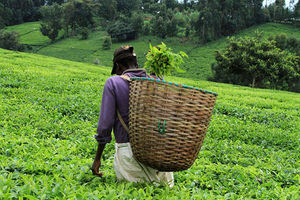
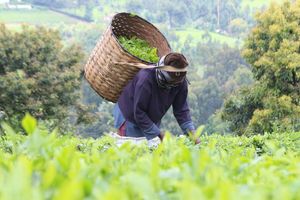
Tea Board of Kenya chief executive Willy Mutai said farmers had increasingly embraced high-quality green-leaf plucking, commonly referred to as “two leaves and a bud”, resulting in improved tea quality.
“Tea hawking has been banned, with KTDA factories directed to pay farmers an average of Sh26 per kilogramme of green leaf supplied, up from Sh23. The reforms initiated by the government will also see the release of monthly and annual payments to growers fast-tracked,” Mr Mutai said.
He said the proposed 0.8 per cent levy on exported tea would be paid by exporters rather than farmers, with half of the proceeds from the Stabilisation Fund specifically earmarked to protect and enhance farmers’ incomes.
The Tea Amendment Bill, 2023, currently before Parliament, proposes a 0.8 per cent levy on tea export sales, with the proceeds going towards a Stabilisation Fund, research and infrastructure development in tea-growing areas.
“The Tea Fund established under Section 54 of the Tea Act is a dedicated, ring-fenced fund. All collected funds will legally be apportioned as follows: 50 per cent to the Stabilisation Fund, 20 per cent to the Tea Research Institute research fund, 15 per cent to TBK and 15 per cent to county infrastructure,” Mr Mutai said.
The funds, he added, would be subjected to Public Finance Management (PFM) rules and audits as required by law to ensure accountability.
He said the Tea Act, 2020, had also introduced governance safeguards, digital monitoring through the Integrated Management Information System (IMIS) and multi-stakeholder oversight to curb the mismanagement witnessed in the past.