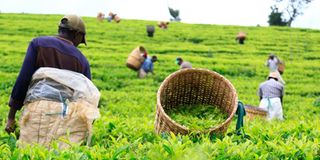
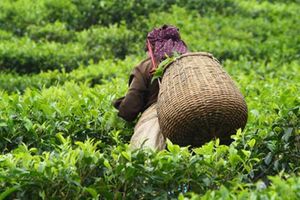
Senators are pushing for the Kenya Tea Development Agency (KTDA) to adopt a scientific method of determining tea quality to address disparities in payments to tea farmers by factories in the country.
The development follows widespread complaints of inequalities in payment of tea bonuses to tea farmers, especially those from the western part of Kenya.
Senators from the affected region have accused KTDA of favouring factories from Mt Kenya region, raising questions about transparency of KTDA's pricing system.
The lawmakers wondered why a section of the 77 factories managed by KTDA paid farmers as high as Sh50 per kilogramme, while others got a paltry Sh12 per kilo.
Consequently, Kericho Senator Aaron Cheruiyot said it is time KTDA adopts a scientific method of determining tea quality, which is critical in setting prices for buyers.
He said that unless the pricing issue is addressed, tea farmers will not be satisfied and the disparities in bonus payments will persist.
Kericho Senator Aaron Cheruiyot.
Photo credit: Lucy Wanjiru | Nation Media Group
The Senate majority leader said that despite national earnings from tea improving, tea farmers from the west of the Rift, the largest tea-producing region, are not reaping commensurate benefits.
“There was an increase in earnings from Sh138 billion to Sh215 billion, but the only way it can make sense is if the ordinary farmer from deep down in the villages, from where we come from, can see that and record it as an improvement of earning, particularly from both KTDA and the other privately run factories as well, so that they earn better,” said Mr Cheruiyot.
Nyamira Senator Okong’o Omogeni also complained of sharp decline in earnings by tea farmers from Nyamira County wondering why export earnings grew yet the farmers took home paltry payments.
“If our export earnings rose, the way it was said, from Sh138 billion to Sh215 billion, my question is, where did those earnings go? I say this because the payment of bonuses to our farmers declined drastically. There was a sharp decline in earnings,” said Mr Omogeni.
Nyamira Senator Okong’o Omogeni.
Photo credit: Dennis Onsongo | Nation Media Group
“In Nyamira, the average earning of a tea farmer was between Sh10 to Sh12. The question we should ask is; if the export earnings went up, then who stole our money? That is what we need to be told,” he added.
Nominated senator Esther Okenyuri questioned why farmers from Mt Kenya region received substantial bonuses compared to other areas in the bonus rates for the financial year ended June 30, 2025 by KTDA.
She gave an example of farmers in Kisii and Nyamira counties who have been affected by the low rates, questioning the glaring disparities.
The legislator said the low payments have not only caused deep frustration, but also triggered anger among farmers who feel shortchanged and discriminated against despite producing tea that is sold in the same international markets.
Livelihood for millions of families
“The disgruntled farmers in Kisii and Nyamira counties have begun destroying tea collection centres in protest and disillusionment, believing their sweat and toil is not being fairly rewarded,” said Ms Okenyuri.
The senator said tea remains one of Kenya's leading foreign exchange earners, and also the livelihood for millions of families across the country stating that the growing sense of inequity risks destabilising the critical sector if urgent interventions are not put in place.
“I would like to call on KTDA and relevant stakeholders, to urgently review the disparities and take decisive measures to restore fairness, equity and the confidence of farmers in Kisii, Nyamira, and all other affected regions,” she said.
Kisii Senator Richard Onyonka said farmers from Western Kenya are being told that their tea is of poor quality because either they have dilapidated the soil content.
Kisii Senator Richard Onyonka.
Photo credit: Dennis Onsongo | Nation Media Group
“Our farmers are tired of being told the same narrative for years. Even when I was an MP some 10 years ago, tea bonuses have always been a matter of contention,” said Mr Onyonka.
Nandi Senator Samson Cherargei said farmers in Kinoro in Mount Kenya were paid Sh48.10 while those in Mudete Tea factory in Vihiga County received Sh10 per kilo.
Those in Chebut were paid Sh12, in Kapsara Sh10 while in Nyansiongo they got Sh12 and Sh24 per kilo in Momul, while in Tergat they were getting Sh14 per kilo.
“This is a great travesty and injustice against tea farmers in the country. If this matter is not addressed by KTDA, we are going to uproot our tea,” said Mr Cherargei.
Busia Senator Okiya Omtatah said there is need for some regulatory regime to ensure all tea-growing areas enjoy equal treatment.
“KTDA should spread its wings to other parts of the country the way it has done in Central,” said Mr Omtatah.
However, Meru Senator Kathuri Murungi said the bonus disparities on managerial issues, arguing that receiving low or high bonuses depend on the directors elected by the farmers to manage their produce.
Meru Senator Kathuri Murungi.
Photo credit: Dennis Onsongo | Nation Media Group
He observed that the issue does not squarely lie with KTDA, dispelling the notion that the agency is deliberately favouring factories from the Eastern bloc of the country.
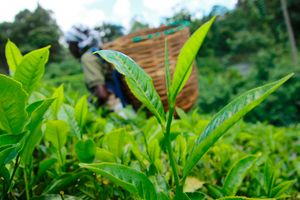
“The management of the factories that have low prices should tell us why it is so. There are many factors that are considered before payment when you take your tea to the market and one is the quality of tea. In some factories, they pluck four leaves and a bud, in the eastern side, we pluck two leaves and a bud,” said Mr Murungi.
Nonetheless, Elgeyo Marakwet Senator William Kisang said it is important KTDA ensures there is equitable allocation of bonuses across the country and it was worth noting that the quality of tea is different in each area and that some areas might be given more bonus because of the quality.
Nominated Senator Joyce Korir pointed out that tea is one of the cash crops in this country and that it was high time the Agriculture ministry sat with the relevant stakeholders and gave a lasting solution, saying it is not making sense for such a disparity to exist.