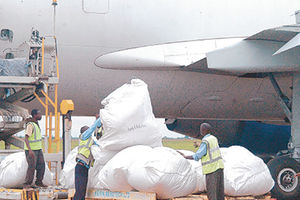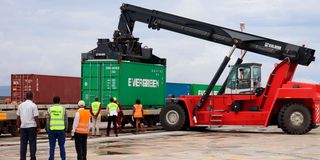
Cargo being offloaded at the Naivasha Inland Container Depot on January 17, 2022.

Traders are locked in a scramble to complete transactions on the Kenya Revenue Authority (KRA) cargo clearance system, which is scheduled to go offline for scheduled maintenance this weekend, barely a month after a similar shutdown triggered massive disruptions at the Mombasa port.
The taxman’s Integrated Customs Management System (iCMS)-- which is a crucial platform for clearance of import and export cargo--is scheduled to go offline from Saturday, April 4, 2026, at 6 pm until Monday, April 6, 2026, at 6 am to allow for maintenance.
The iCMS involves submitting export or import documents into a single-window system and provides an efficient interface with the customs management systems of the EAC neighbours.
The scheduled maintenance has triggered a scramble among traders and clearing agents who were only last month hit by a shutdown of the system, which resulted in massive traffic gridlock at the gateway.
“The upcoming maintenance of the iCMS has triggered some rush because cargo owners and clearing agents are worried about disruptions to their businesses, given the experience they had in some previous incidents,” an insider at KRA told Nation.
KRA Commissioner for Customs and Border Control, Lilian Nyawanda, urged traders and clearing agents to submit urgent declarations, complete payments, and clear cargo before the scheduled downtime to cut operational disruptions.
“Prioritise clearance of perishable and time-sensitive consignments in advance,” she said.

Kenya Revenue Authority Commissioner, Customs and Border Control, Ms Lilian Nyawanda.
The downtime in February affected various users of the iCMS platform, including importers, exporters, clearing and forwarding agents, shipping lines, and some government agencies.
Before the disruption, Mombasa port was already dealing with congestion due to high container volumes and previous system bottlenecks. This prompted the KRA and the Kenya Ports Authority to implement urgent measures, including moving cargo that had stayed at the port for over 21 days to Container Freight Stations and transferring transit cargo to Naivasha Inland Container Depot for clearance.
As part of efforts to decongest the port, KPA also suspended the direct loading of empty cargo containers onto ships at Mombasa Port as part of desperate measures to help deal with rising congestion at the key gateway.
The port manager directed that all empty containers be held in intermediate storage depots for a mandatory 72 hours before being allowed into the port for loading onto ships to help deal with worsening congestion at the Mombasa facility.
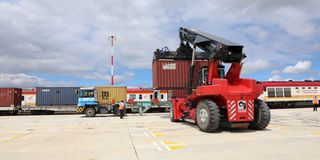
Cargo at the Naivasha Inland Container Depot.
Usually, logistics teams are allowed to directly load empty cargo containers onto ships from storage depots to the terminal crane area for immediate loading, sidestepping the lengthy process of intermediate storage at the port.
Additionally, KPA allocated empty container space per berth, capped at 2,000-2,500 containers except Berth No. 20. For exporters, the agents were ordered to ferry the consignment into the Port 36 hours before berthing of the carrier vessel, and no vessel were planned for berthing unless the discharge list, export full loading list, and empty container loading list had been submitted and approved.
In the push to curb congestion, KPA also allowed empty containers delivered ex-Inland Container Depot for loading to stay up to a maximum dwell time of 24 hours at the Port Reitz offloading zone, and those exceeding the allocated dwell time were relocated at the full cost of the respective shipping line.
Follow our WhatsApp channel for breaking news updates and more stories like this.