Immediately after independence in 1963, the government's core agenda was to achieve rapid economic growth, establish indigenous participation in the economy, reduce dependence on imported goods, and create high-income employment.
The state invested heavily in transitioning from a colonial, settler-dominated agrarian economy to a self-reliant industrial economy.
Towards this end, the government developed several key policies. The import substitution policy was aimed at encouraging local production of consumer goods by imposing high tariffs and quotas on foreign manufactured products.
To fully entrench this policy, the government developed Sessional Paper No. 10 of 1965 titled African Socialism and its Application to Planning in Kenya. This blueprint established state-led capitalism, directing public investments into major industrial projects while protecting private property.
Besides, the government created parastatals and development finance institutions such as the Industrial and Commercial Development Corporation and Development Bank of Kenya to provide equity and loans to new industrial enterprises. These deliberate pro-industrialisation policies created Kenya's economic "golden decade" (1963-1973). In the same decade, Kenya recorded a stellar annual GDP growth rate of approximately 6.6 per cent.
The manufacturing sector expanded rapidly, growing at about eight per cent, driven by growing domestic demand. Towards the end of the decade, however, the limits of import substitution-driven industrialisation began to show.
New industries were heavily reliant on imported raw materials and machinery, causing early balance of payment pressures when the 1973 global oil crisis struck. It is noteworthy that the oil shock hit most African nations especially hard, triggering an economic crisis that lasted into the 1980s.
With surging debt and drained export reserves, countries such as Kenya turned to the IMF and the World Bank for aid to boost growth. The so-called "Washington Consensus" was activated as a pre-condition for fiscal and balance of payments support.
Nonetheless, the import substitution policy is credited with creating a diverse mix of consumer and agro-processing industries, including EA Breweries, Mumias Sugar Company, Kenya Wine Agencies Limited, Rivatex, KICOMI, and Raymond Textiles. Others were Bamburi Cement, EA Portland Cement, Associated Vehicle Assemblers, Kenya Vehicle Manufacturers, EA Industries, and Pan-African Paper Mills, among others.
As Kenya was almost taking a turn toward industrial take-off in the late 1980s, the World Bank and IMF arrived with Structural Adjustment Programs (SAPs) as a condition for multilateral loans. The impact of SAPs on Kenya's nascent industrialisation was devastating.
The premature liberalisation led to the abrupt removal of import tariffs and quotas. This exposed fledgling domestic industries to highly subsidised imported goods, grossly undermining their competitiveness in the domestic market.
Within a short time, local industries lost their market shares to cheap imports. The influx of mitumba clothes led to the collapse of major textile companies like KICOMI and Rivatex, occasioning stagnation of the manufacturing sector's contribution to GDP.
At the same time, the state significantly reduced funding of parastatals, causing massive job losses, and shifting the focus away from state-sponsored industrialisation. In the last two decades, Kenya has had mixed fortunes with respect to its membership of the EAC. As the most industrialised nation in the bloc, Kenya has historically enjoyed a massive trade surplus arising from exports of manufactured products such as chemicals, metals, edible oils and plastics, to Uganda, Rwanda, Burundi and South Sudan.
This market share has, however, declined recently as Tanzania and Uganda expanded their own manufacturing capacities. It is noteworthy that among the factors that have contributed to Kenya's waning market share in the region are relatively high electricity and transport costs, which have led to increased production overheads.
In addition, there are simmering intra-EAC tax alignment disputes, including misclassification of goods from member states as regular imports, and hitting them with discriminatory taxes. This leads to retaliatory actions such as counter tariffs or administrative blocks on Kenyan exports.
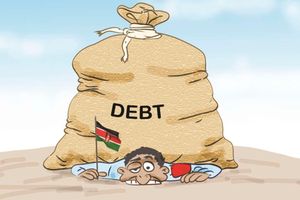
With slowed down industrialisation, Kenya misses out on job creation, export earnings, conversion of idle resources into products, and GDP expansion. Consequently, the capacity of the economy to generate adequate tax revenues is grossly undermined, leading to fiscal gaps and increased indebtedness. The current share of manufacturing to GDP is about 7.1 per cent, reflecting a 2.9 percentage points drop from the average of 10 per cent recorded in the first decade after independence.
It also reflects a drop from 7.3 per cent in 2024, driven primarily by heavy operating overheads, high electricity tariffs, and unpredictable tax policy. Despite this lower overall share, manufacturing remains a core pillar under the government's Bottom-Up Economic Transformation Agenda, with an ambitious national strategy goal to scale up its total economic footprint to 30 per cent by 2030.
To revitalise its industrialisation agenda, Kenya needs to take bold steps. First, reduce the cost of production by lowering electricity tariffs, and shift to cheaper green energy such as geothermal and solar.
Second, pivot towards value addition so as to fetch more foreign exchange, and create more jobs. Third, fully operationalise and expand Special Economic Zones and industrial parks to attract foreign manufacturers. Fourth, streamline domestic tax regimes to create a predictable fiscal landscape.
Professor Ongore is a Public Finance and Corporate Governance Scholar based at the Technical University of Kenya.