In recent weeks, weather has dominated conversations, with many Kenyans anxiously following updates and asking the same questions: Has it rained in your area? When are the rains coming? The questions have become almost routine, even for the weatherman.
Meteorologists had predicted an enhanced October-November-December (OND) short rains season, partly driven by the El Niño phenomenon, which was forecast to be the strongest on record.
The Kenya Meteorological Services Authority (KMSA) confirms that many parts of the country have received rainfall in the past few days, with the rains expected to intensify and peak this month.
The monthly weather outlook issued on October 31 shows that November is the key month of the October–
November–December short rains season, with “rainfall playing an important role in supporting agricultural activities, replenishing water resources and sustaining livelihoods across the country.”
Across 44 counties, above-average rainfall is expected. These include Baringo, Bomet, Bungoma, Busia, Elgeyo Marakwet, Embu, Garissa, Homa Bay, Isiolo, Kajiado, Kakamega, Kericho, Kiambu, Kilifi, Kirinyaga, Kisii, Kisumu, Kitui, Kwale, Laikipia, Lamu, Machakos, Makueni, Mandera, Meru, Migori, Mombasa, Murang'a, Nairobi, Nakuru, Nandi, Narok, Nyamira, Nyandarua, Nyeri, Siaya, Taita Taveta, Tana River, Tharaka-Nithi, Trans Nzoia, Uasin Gishu, Vihiga and Wajir, as well as much of West Pokot, Samburu and Marsabit counties.
Near-average to above-average rainfall is also likely in parts of Turkana, West Pokot, Samburu, Baringo and Marsabit counties.
Despite the expected rainfall, temperatures are forecast to remain warmer than average across the country.
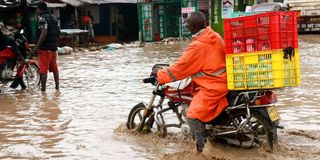
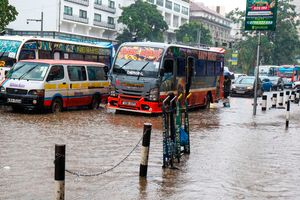
Mombasa residents pass through a flooded section of the road at Bamburi Mwisho Area after a heavy downpour on Saturday, October 10, 2026.
Photo credit: Kevin Odit | Nation
With many parts of the country having received rainfall in the last few days, does this signal the onset of the season?
Franklin Komolkori, Principal Meteorologist at KMSA clarifies that the onset has been achieved over many parts of the country. So, it's now like a continuation for the season because it's the second month of the season.
“It's only like the distribution is the one which was not good. But towards the end of the month, it became better. The heaviest rainfall over most parts of the country was reported on the last day of the month, which is October 31,” he said.
Earlier in October, some weather stations, including Marsabit, had recorded above-average rainfall. This refers to higher amounts of rainfall than it usually receives in a given time, usually a month or season.
However, the temporal distribution was poor, with most of the rainfall, 133.3mm to be precise, recorded in a single day.
KMSA explained that rainfall onset refers to the beginning of a season's rains that are sufficient to sustain the germination of crops. For an area to be declared to have experienced onset, it must meet specific criteria.
The area must receive at least 20mm of cumulative rainfall over three consecutive days, followed by no dry spell lasting more than seven days over the subsequent three weeks.
Komolkori said the rainfall distribution is expected to improve in November, as the country heads into the peak of the short rains season.
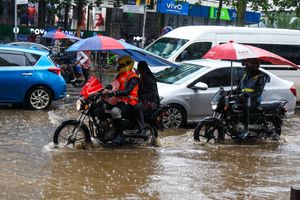
Boda boda operators ferry passengers on a flooded road in Junda area following a heavy downpour in Mombasa on April 22, 2026.
Photo credit: File | Nation Media Group
KMSA explained that precipitation is spread across space (spatial distribution) and time (temporal distribution). When rainfall is received over a few days and the rest of the days remain generally dry, then the area has a poor temporal distribution. When some parts in one county or region receive rainfall and other areas close by do not receive rainfall, then we say such a county/region has a poor spatial distribution.
The enhanced November rainfall is expected to improve soil moisture, support crop development, regenerate pasture and replenish water sources, offering relief to farmers and livestock keepers, particularly in arid and semi-arid areas.
However, the KMSA warned that heavier rainfall could also bring a range of challenges across key sectors. In agriculture, these include waterlogging, crop pests and diseases, while poor road conditions could disrupt the transportation of farm produce and access to essential services.
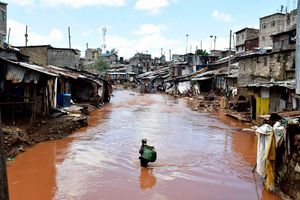
The rain could also increase the risk of flash floods, riverine flooding and landslides, particularly in flood-prone areas, urban centres with poor drainage and steep highland regions. In the health sector, stagnant water and contaminated water sources could heighten the risk of malaria and water-borne diseases such as cholera, typhoid and diarrheal infections.
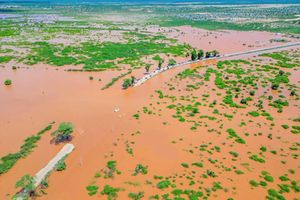
While increased rainfall is expected to replenish dams, rivers and groundwater reserves, the authority cautioned that heavy downpours could also trigger localised flooding and threaten lives, property and livelihoods.