Reptiles are increasingly becoming endangered in Kenya as commercial export trade rises sharply, raising concern among conservationists and animal welfare groups who warn that the trend threatens biodiversity and the country’s wildlife tourism economy worth billions of shillings annually.
A new report by World Animal Protection (WAP) shows that the export of live reptiles from Kenya increased more than tenfold between 2013 and 2023, despite the enactment of the Wildlife Conservation and Management Act, 2013, which regulates wildlife use, trade and captive breeding in the country.
The report, released in Nairobi on Thursday, May 14, indicates that annual exports of live reptiles rose from 8,151 individuals in 2013 to 86,330 in 2023.
Reptiles accounted for more than 81 per cent of all wildlife trade records reported by Kenya under the Convention on International Trade in Endangered Species of Wild Fauna and Flora (CITES). The United States (US), Germany, Spain, Japan, Hong Kong, Taiwan, Indonesia, Thailand, Singapore and South Korea were identified as some of the leading importers of reptiles and reptile products from Kenya.
The ten-year study analysed CITES data from 2013 to 2023 and found that tortoises, chameleons and crocodiles are among the most traded reptile species exported from Kenya mainly for the exotic pet industry, leather trade and captive breeding operations.
Speaking during the official unveiling of the report, Dr Patrick Muinde, World Animal Protection’s Research and Planning lead, said the findings reveal a growing and poorly monitored wildlife trade industry that poses conservation, welfare and biosecurity risks.
“In total, Kenya reported 886 individual records of captive-bred and ranched CITES-listed specimens between 2013 and 2023, and most of those records, about 81 percent, involved reptiles,” Dr Muinde said.
The report states that the mean annual number of export records was about 80, translating to nearly seven wildlife exports every month. By 2023, Kenya had recorded 110 export records compared to 53 in 2013, showing that the trade has more than doubled within the study period.
According to the findings, reptiles dominated the live animal exports, comprising more than 86 per cent of live trade records. A total of 871,073 live animals were traded within only 17 records analysed in the study.
Among the most endangered reptiles identified in the report is the pancake tortoise, a species found in Kenya and Tanzania and highly sought after in international exotic pet markets. The commercial trade of pancake tortoises is prohibited globally after the species was uplisted to CITES Appendix I in 2019 because of declining wild populations.
Dr Muinde said the pancake tortoise has gradually moved from the “least concern” conservation category to critically endangered because of overexploitation through wildlife trade.
“This species was once categorized as least concern, but because of increasing wildlife trade and habitat pressure, it moved to near threatened, vulnerable, endangered and is now critically endangered,” he explained.
The study found that despite the ban on commercial trade, illegal trafficking of pancake tortoises continues in Kenya. Last year, traffickers were arrested in Marimanti, Tharaka Nithi County while transporting live pancake tortoises believed to have been destined for export markets.
Researchers note that tortoises are slow-growing animals that take years to mature and occupy limited geographical ranges, making them highly vulnerable to overharvesting from the wild.
Apart from tortoises, chameleons emerged among the most exported reptiles from Kenya. The report identified species such as the Taita blade-horned chameleon and the Jackson’s chameleon among the heavily traded reptiles.
The study by the international activist body showed that over 17,000 individuals of one chameleon species were exported from Kenya during the study period, while another species recorded exports exceeding 100,000 individuals.
The report also documented large-scale export of Nile crocodile skins. Researchers found that Kenya exported more than 80,000 crocodile skins between 2013 and 2023, mainly to Singapore and the Republic of Korea, countries with major leather industries.
“If every skin represents one individual crocodile, then that means over 80,000 crocodiles were slaughtered for their skins within ten years,” Dr Muinde stated.
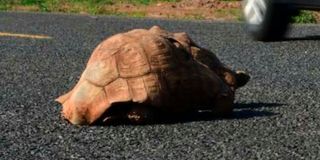
A leopard tortoise crosses the Nakuru-Marigat road in Baringo County.
Photo credit: File | Nation Media Group
According to the study, 43 countries imported wildlife specimens from Kenya during the ten-year period under review. The findings also revealed major discrepancies between exporter-reported and importer-reported figures in the CITES database, raising concerns over transparency and possible laundering of wild-caught animals through licensed captive breeding facilities.
For example, the discrepancy involving leopard tortoises stood at 84,000 individuals between figures reported by Kenya and those reported by importing countries.
“That level of mismatch is alarming and raises serious questions about the reporting system and whether some wildlife could be entering international markets through illegal channels,” Muinde noted.
The report further questioned the welfare conditions in some licensed captive breeding facilities. Images presented during the launch showed reptiles crowded in small containers and crocodiles kept in poor conditions. Investigators also documented cases where tortoises collected from local communities were allegedly delivered to export facilities and later declared as captive-bred animals.
Some local collectors are paid between Sh50 and Sh200 for tortoises, yet the same animals fetch thousands of shillings in international markets.
The Wildlife Conservation and Management Act, 2013, permits captive breeding and ranching of species such as crocodiles, tortoises, chameleons, snakes, lizards, ostriches, butterflies and guinea fowls under regulated licensing.
However, animal welfare groups argue that weak oversight and poor monitoring have created loopholes that facilitate exploitation and illegal wildlife laundering.
Kenya’s wildlife tourism industry contributes more than 10 percent of the country’s Gross Domestic Product, according to data from the Ministry of Tourism and Wildlife, Kenya Wildlife Service (KWS), the World Travel and Tourism Council and the Kenya National Bureau of Statistics (KNBS).
Wildlife tourism generates more than Dollars 1 billion annually and accounts for nearly 75 percent of tourism activities in the country.
Although reptiles are not among the country’s major wildlife attractions compared to lions and elephants, they contribute significantly to niche tourism through crocodile farms, snake parks and reptile centres such as the Mamba Village, in Nairobi.
Efforts to obtain a comment from the Kenya Wildlife Service regarding the status of the reptile export trade business were unsuccessful, despite the ranches mentioned being operated under its oversight. However, World Animal Protection did not disclose the identities of the ranches, though it acknowledged engaging the country’s wildlife conservator during the preparation of the report.
The report warns that continued exploitation of reptiles could eventually undermine biodiversity conservation and damage Kenya’s global reputation as a wildlife tourism destination.
World Animal Protection is now calling for stricter regulation of captive breeding operations, routine welfare audits and stronger biosecurity measures to prevent exploitation of reptiles and possible spread of zoonotic diseases.
“The exploitation of wildlife animals should stop. They need to be protected and accorded better living conditions. If we do not reverse the situation, we risk destroying our biodiversity and tourism as a country and as the African continent at large,” cautioned Tennyson Williams.
The regional director, however, warned that the export trade in wildlife animals, particularly the nearly extinct reptiles, not only has economic implications but also raises serious public health concerns.
“Captive breeding poses public health risks. About 70 per cent of human diseases are zoonotic. Wildlife is not only a conservation issue, but also a public health concern. We cannot conserve animals if we continue extracting them from their natural habitats,” Mr Williams explained.
He emphasized that regulation alone is not sufficient, adding that animal welfare and sustainability must remain central in wildlife conservation efforts.
The animal welfare organisation is also pushing for the integration of animal welfare standards into wildlife licensing procedures and a long-term transition away from the commercial exploitation of wild animals.
Dr Muinde further warned that the rapid growth in reptile exports could undermine ecological balance because reptiles play an important role in controlling pests, maintaining food chains and supporting healthy ecosystems.
Snakes, for example, help control rodent populations, while tortoises and crocodiles contribute to ecosystem stability in forests, wetlands and rivers.
The researchers said Kenya must strengthen monitoring systems, improve coordination between enforcement agencies and enhance transparency in wildlife trade reporting to ensure the country does not lose vulnerable species through commercial exploitation disguised as legal captive breeding.