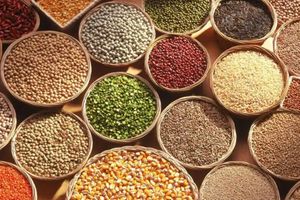
Farmers, seed custodians, activists and other players in indigenous seed systems are pushing for clear laws that allow them to buy and sell traditional seeds, saying the absence of a clear legal framework continues to leave small-scale traders operating in fear despite a landmark court victory.
The calls come amid renewed efforts to strengthen farmer-managed seed systems, which stakeholders say are critical to food security, biodiversity conservation and climate resilience across Eastern Africa.
The push follows the November 27, 2025 landmark ruling by the High Court in Machakos in a case filed by smallholder farmers and their supporters against the Kenya Plant Health Inspectorate Service (KEPHIS) and another respondent.
Lady Justice Rhoda Rutto declared unconstitutional key provisions of the Seeds and Plant Varieties Act that criminalised traditional seed practices.
While farmers, seed custodians, activists and other players in indigenous seed systems continue hailing the judgment, they say it did not completely resolve the challenges facing indigenous seed systems, particularly the question of commercialisation.
David Wanjama, the Seed Savers Network CEO and executive director, said farmers and seed sellers still fear victimisation because of the uncertainty surrounding the buying and selling of indigenous seeds.
He said the situation has resulted in farmers and seed sellers treating indigenous seeds almost like contraband. “A lot of people who sell seeds in many African open-air markets across the continent do it like people who are selling contraband, like people who are selling drugs that are illegal,” Wanjama stated.
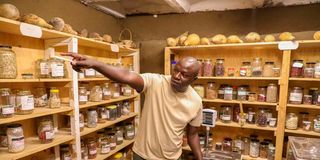
Daniel Wanjama, Seed Savers Network Coordinator, speaks during an interview at the institution in Gilgil, Nakuru County, on Friday, October 24, 2025.
Photo credit: Dennis Onsongo| Nation Media Group
He noted that women in markets hide seeds under sacks and use spoons, bottle tops and glasses to measure them, while avoiding labelling them as seeds, even when buyers and sellers know exactly what is being traded.
Mr Wanjama said the restrictive environment has prevented indigenous seed markets from expanding and becoming professionalised, arguing that existing laws have historically favoured the commercial certified seed sector at the expense of small-scale farmers and seed custodians.
“The laws are made to protect the commercial seed sector, to protect other people’s businesses at the expense of the small players,” he explained.
He said the court ruling was an important step but farmers now need clarity on how indigenous seeds can be commercialised without exposing them to victimisation.
He said Seed Savers Network, one of the petitioners in the case, is working on proposals for legal reforms that would recognise the commercialisation of traditional seeds while also protecting indigenous knowledge associated with their conservation and use.
The High Court ruling effectively decriminalised the saving, sharing and exchange of indigenous, unregistered seeds among smallholder farmers. The court also found fault with provisions that gave seed inspectors extensive powers over farmer-managed seed systems and restricted farmers from dealing in seeds that had not gone through the formal certification system.
The judgment was hailed by farmers and food sovereignty advocates as a major victory because the previous legal framework exposed those dealing in unregistered seeds to criminal sanctions, including imprisonment and hefty fines.
The State, through the Attorney General’s office, filed notices challenging the decision after the ruling, arguing that the legislative framework was intended to protect the agricultural sector from poor-quality and diseased crop varieties.
However, in March 2026, the Court of Appeal rejected the government’s bid to suspend the High Court judgment pending the hearing and determination of the main appeal.
According to farmers, the debate is not simply about selling seeds. It is also about ensuring that the varieties and knowledge they have conserved for generations are not lost.
Francis Ngiri, an agroecology practitioner and farmer from Gilgil in Nakuru County and one of the petitioners in the case, said the fight was about protecting biodiversity and knowledge built by farming communities over generations.
Ngiri said he and other farmers began conserving indigenous seeds after a commercial seed production arrangement failed because some varieties did not perform well under the climatic conditions in their area.
“When we started working with Seed Savers Network, our group had only 14 indigenous varieties. Through seed fairs, exchanges and interaction with other communities, the number grew to about 124 varieties by around 2019,” he revealed.
He said the farmers became concerned when the law appeared to threaten their seed bank and expose them to possible inspections, seizure of seeds and arrest. “We found that all the work we had been doing of conserving 124 varieties and looking for 124 varieties and the seed bank we had been maintaining was at stake,” Mr Ngiri said.
He said farmers should be allowed to sustain the seed systems because conserving indigenous varieties is both an environmental and economic activity.
Commercialisation, he added, could give farmers an incentive to continue conserving varieties instead of abandoning them.
Mohamed Muhudin Ali, a representative from Somalia and director at the Center for Climate Adaptation and Environmental Resilience, said the protection of indigenous seeds must also include protection of information and knowledge about them.
He called for publicly accessible data on indigenous seeds, saying documentation and digitisation can help communities know what varieties exist, where they are found and the knowledge associated with them. “Seed knowledge becomes data. Seed sovereignty must include a sovereignty of information and knowledge connected to farmers' seeds,” Mr Muhudin noted.
He said documenting indigenous seed resources would also help address concerns around biopiracy and ensure that communities are recognised when their genetic resources and traditional knowledge are used.
Biopiracy is the unauthorised commercial exploitation of native biological materials and traditional indigenous knowledge such as medicinal plants or genetic resources, usually by foreign corporations or researchers who secure patents without giving fair compensation or credit to the local communities.
According to indigenous seed custodians, data should not expose farmers and communities to exploitation. Instead, they want systems that recognise ownership and the contribution of communities that have conserved the resources over generations.
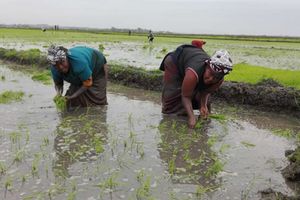
A controversial law prohibits farmers from selling or sharing indigenous seeds.
Photo credit: Pool
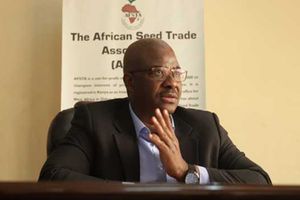
They made the calls during a Seed Savers Network and organising partners’ virtual meeting held on August 20, 2026, ahead of the first Eastern Africa Indigenous Seed Conference.
The meeting, dubbed Seeds, Systems & Sovereignty: Shaping Eastern Africa’s Food Future, brought together farmers, researchers, civil society, policymakers and development actors to examine the critical role of seed sovereignty, agrobiodiversity and resilient food systems in shaping Eastern Africa’s food future.
The inaugural Eastern Africa Indigenous Seed Conference will take place in Nairobi from November 17 to 20, 2026, under the theme “Realizing the Right to Food through Seed Sovereignty.”
The conference is expected to provide a platform for farmers and other stakeholders to discuss policies and practices affecting farmer-managed seed systems and explore ways of strengthening indigenous seed conservation, access and use across the region.
The push is being driven by the argument that farmer-managed seed systems are central to food security in Kenya and across Africa, where smallholder farmers depend heavily on locally adapted varieties.
Stakeholders at the meeting noted that about 80 percent of seeds used by farmers in the region come from farmer-managed seed systems, while more than 80 percent of farmers are smallholders.
They said the diversity of crops and varieties maintained by farmers is particularly important in responding to climate change because commercial seed systems cannot provide the wide range of seeds required by smallholder farmers in different ecological zones.
Indigenous seeds are often selected and conserved over generations under specific local conditions, making them an important resource as farmers contend with drought, changing rainfall patterns, pests and other climate-related shocks.
Across the country, particularly in major agricultural-producing regions such as Central Kenya, the Rift Valley, Eastern region, Western Kenya and Nyanza, among others, farmers run community seed banks to conserve indigenous varieties, while others are managed by state agencies such as the Kenya Agricultural and Livestock Research Organisation (KALRO).
Through its Genetic Resources Research Institute (GeRRI) in Muguga, KALRO operates a national genebank and seed bank that conserves more than 50,000 plant genetic accessions, helping safeguard Kenya’s agricultural biodiversity and future food security.
Mr Wanjama said Africa cannot achieve food security and food sovereignty without seed sovereignty, particularly when millions of smallholder farmers depend on farmer-managed seed systems. “Policies need to reflect the realities of African agriculture instead of relying on regulatory approaches designed for highly commercialised and large-scale farming systems elsewhere,” he emphasised.
The stakeholders now want the government to build on the High Court ruling by developing clear regulations that distinguish farmer-managed indigenous seed systems from the formal commercial certified seed industry.
They argue that such recognition would allow farmers to openly buy, sell, save and exchange indigenous varieties, while creating room for seed custodians to earn livelihoods from conservation.
They also want indigenous knowledge to be recognised and protected, alongside public documentation of the country's diverse seed resources.