Sh4.5b billion hub to cut horticulture losses, emissions
Kenya is seeking new markets for its horticultural products including flowers.

Kenya’s horticultural exporters could cut transportation costs by 25 per cent and carbon emissions by more than 90 per cent under a €30 million (about Sh4.5 billion) cold-chain hub planned for Naivasha, as the Netherlands and the European Union (EU) seek to strengthen East Africa’s access to European markets amid growing climate-related risks to fresh produce.
The Northern Corridor Cool Logistics project will establish a facility to consolidate flowers, avocados, fruits and vegetables from Kenya, Uganda, Rwanda and the Democratic Republic of Congo (DRC) before transporting the produce by rail to Mombasa for shipment to Europe. Financial closure is targeted for 2027, with construction expected to begin in 2028.
The investment aims to improve the handling and transportation of perishable produce, reduce post-harvest losses and ensure more reliable supplies to international buyers.


Netherlands Global Gateway Ambassador Marchel Gerrmann said the project was critical in addressing challenges facing horticultural producers as climate change increases pressure on agricultural production and supply chains. Unpredictable rainfall, prolonged dry spells, rising temperatures and flooding threaten crop yields, produce quality and farmers’ incomes.
“Prolonged dry spells can increase irrigation costs and constraints production, while intense rainfall and flooding can damage crops, disrupt harvesting and delay deliveries. Higher temperatures can also accelerate the deterioration of perishable produce, increasing the need for reliable cooling, careful handling and faster movement from farms to consumers,” Mr Gerrmann said.

From left: Netherlands Ambassador Henk Jan Bakker, Water CS Eric Mugaa, Nakuru Governor Susan Kihika and Water as Leverage Program Manager Sandra Scoof display the signed Memorandum of Understanding for Water as Leverage Nakuru for a resilient sponge city at Midlands Hotel in Nakuru Town on September 18, 2024.
Dutch Ambassador to Kenya Henk Jan Bakker said the initiative would create opportunities for companies involved in cold storage, rail and port services, digital systems, energy supply and food processing. The hub is expected to improve coordination between growers, exporters, transport operators and European buyers.
The investment is particularly significant for flowers, fresh vegetables and fruits, which require carefully managed temperatures and handling to maintain quality. Avocados, for instance, must be harvested at the appropriate maturity and transported under suitable conditions to preserve quality through packing houses, storage facilities, ports and distribution centres.
A stronger cold chain could reduce avoidable losses and improve delivery reliability. However, its effectiveness will depend on access to electricity, efficient transport from farms to collection centres, appropriate temperature management and coordination between exporters and buyers. Rail and sea transport could also lower emissions compared with some air-freight operations, although the benefits will vary by product and route.
According to the Ministry of Agriculture, Kenya loses between 30 and 40 per cent of its agricultural produce to post-harvest losses, largely because of inadequate infrastructure and poor handling during harvesting, transportation and storage, as well as food waste in markets and households. The proposed hub could help address some of these losses by improving storage and transportation for export-bound produce.
Horticulture remains a major source of income and a significant contributor to Kenya’s economy. According to the Kenya National Bureau of Statistics (KNBS) Economic Survey 2026, earnings from horticultural exports rose by 6.3 per cent to Sh216.48 billion in 2025, up from Sh203.64 billion in 2024. Cut flowers accounted for Sh103.25 billion, while fruits and vegetables generated a combined Sh99.78 billion.
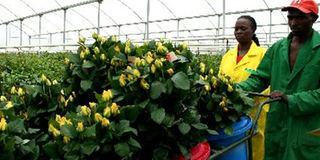
Earnings for horticultural exports fell for the third consecutive year in 2013 as growth in the agriculture sector slowed due to erratic weather conditions.
However, data from the Agriculture and Food Authority’s Horticultural Crops Directorate (HCD) show that exports of fresh flowers, fruits and vegetables declined in volume and value in 2024. Kenya exported 402,195 tonnes worth Sh136.57 billion, compared with 468,438 tonnes valued at Sh156.69 billion in 2023.
The decline was particularly pronounced in vegetables, whose export volumes fell from approximately 164,100 tonnes in 2023 to 66,643 tonnes in 2024. Earnings dropped from Sh41.28 billion to Sh18.79 billion. Fruit exports increased from 188,102 tonnes to 225,415 tonnes, with earnings rising from Sh32.37 billion to Sh41.03 billion. Flower export volumes declined from 116,272 tonnes to 102,476 tonnes, while earnings fell from Sh73.45 billion to Sh72.09 billion.
Although these figures do not establish climate change as the cause of the decline, they underline the importance of protecting production and improving the movement of perishable commodities. Cargo constraints, transportation costs, regulatory requirements and international shipping disruptions also affect export performance.
Water shortages can constrain avocado orchard development and vegetable farming, while irregular rainfall makes it difficult for growers to plan planting, irrigation and harvesting. Excessive rainfall can cause waterlogging, erosion and crop damage, while higher temperatures increase water demand and can shorten the shelf life of harvested produce.
Small-scale farmers are particularly vulnerable when they lack irrigation infrastructure, reliable weather information, suitable storage and affordable market access. When harvesting coincides with transport delays or produce fails to meet export quality standards, farmers risk losing income after investing in labour, water, fertiliser and other inputs.
The Netherlands and EU-backed project seeks to address some of these vulnerabilities after harvesting. By consolidating produce in Naivasha and linking it to rail transport to Mombasa, the initiative aims to improve export-chain efficiency and reduce the carbon footprint of moving goods. Mr Gerrmann said the targeted 25 per cent reduction in transportation costs could ease pressure on exporters, although the benefits reaching farmers will depend on collection arrangements, service charges and prices paid for their produce.
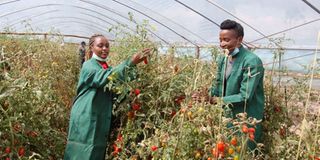
A horticulture farm in Naivasha.
The Netherlands is already an important destination for Kenyan horticultural exports. World Bank World Integrated Trade Solution data cited in the project brief show that Kenya exported cut flowers worth approximately $290 million to the Dutch market in 2024, while avocado exports reached about $50.5 million.
TradeMark Africa and Invest International are working with Dutch and EU partners on the initiative, with complementary facilities envisaged in Uganda and Rwanda. Leon Taljaard, Invest International’s head of Global Gateway, Infrastructure Finance and Development, said feasibility studies and consultations had indicated the potential for commercially viable infrastructure.
Climate resilience and agricultural productivity were also prominent themes at the Agriculture and Food Systems Transformation Summit 2026, held at the Agricultural Society of Kenya (ASK) Showgrounds at Jamhuri Park in Nairobi from October 7 to 9. President William Ruto, speaking during an engagement with farmers, highlighted the challenges of depending on rainfall for agricultural production amid uncertainty surrounding the timing and intensity of anticipated El Niño rains.
“Most of our country is arid and semi-arid (ASAL). We cannot continue to depend on rain to feed our country. We must invest in water, dams and irrigation so that our farmers can produce consistently,” President Ruto said.
The President outlined plans to expand irrigation to 2.5 million acres through investments in dams and other water infrastructure. For horticultural growers, reliable irrigation could reduce dependence on rainfall, particularly in areas suitable for fruit production and high-value crops. The benefits will depend on affordable water, efficient irrigation systems, reliable energy and sustainable water management.
The proposed hub would complement these interventions by addressing challenges that arise after harvesting. Better cold storage, coordinated collection and more efficient transportation could help prevent produce from deteriorating during weather-related disruptions. Energy-efficient refrigeration and renewable power would also be important in ensuring that emissions savings are not offset by the energy required for cooling.
Ambassador Bakker said more than 150 Dutch companies were active in Kenya and encouraged businesses to participate as suppliers, investors or users of the corridor.
The project could strengthen Kenya’s position in European horticultural markets, but its contribution to climate resilience will depend on whether farmers and exporters can access its services at affordable rates.
Follow our WhatsApp channel for breaking news updates and more stories like this.