While many smallholder farmers across East Africa labour to achieve good field yields, raw agricultural commodities fetch the lowest margins in the supply chain. Post-harvest losses, seasonal oversupply and strict market standards often turn hard earned harvests into financial strain. Dr Bernard Odhiambo Oloo, a lecturer of Food Science and Technology at Egerton University, food risk assessment expert, and former industrial quality assurance manager, speaks to 'Seeds of Gold.
Farmers often hear the phrase “value addition” thrown around, but it can sound capital-intensive. What does value addition actually mean for a smallholder?
Value addition is simply any process that enhances the market value, shelf life, or usability of a raw agricultural commodity. It does not always require multi-million-shilling stainless steel machinery.
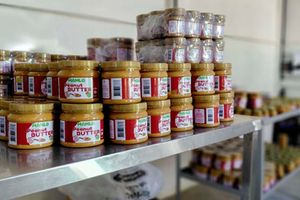
It begins with changing the physical state, form, or presentation of produce to meet specific consumer needs. It can be as simple as sorting, grading, solar-drying, or pulping fruits. It can mean converting orange-fleshed sweet potatoes into flour or purees for baked goods, or fermenting fresh milk into high-margin yoghurt and sour milk. The goal is to move the farmer away from being a passive price-taker selling highly perishable raw goods during peak harvest gluts, to becoming a food processor who controls product timing, pricing, and market destination.
The most critical mistake is treating food processing purely as a cooking or packaging exercise while ignoring food safety risk assessment. When you transform a raw crop into a processed food product, you change its chemical structure, moisture content, and microbial environment.
If you attempt to dry fruits or grains without controlling moisture levels, or if you process indigenous poultry or dairy without hygienic controls, you do not create a higher-value product, but a public health hazard. Farmers often invest heavily in branding and fancy packaging before establishing basic hygienic protocols, Hazard Analysis Critical Control Point (HACCP) principles, or understanding standard quality requirements. Value addition without stringent food safety is simply accelerated risk.
From a risk assessment perspective, what invisible hazards threaten farm-level processing?
The most insidious hazards in tropical environments are biological and chemical contaminants that you cannot see, smell, or taste. A prime example is mycotoxins — specifically aflatoxins in maize, groundnuts, and sorghum. A farmer might turn aflatoxin-contaminated grain into flour or animal feed, thinking they have saved the crop, but they have merely concentrated a dangerous chemical hazard and severe economic losses.
In the dairy, meat, and poultry value chains, the primary threats are bacterial pathogens such as Salmonella, E. coli, and Listeria, along with antibiotic residues. In horticulture, pesticide residues and heavy metals pose severe risks. A proper risk assessment evaluates every single step from harvesting, washing, and water quality to personnel hygiene and storage temperature. If the raw material is unsafe, no amount of processing will make the end product safe.
How can smallholder processors protect their products against aflatoxin and microbial contamination without expensive lab equipment?
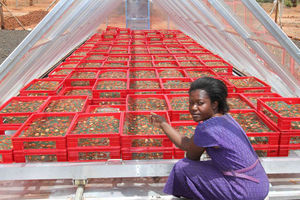
Prevention at the pre-harvest and immediate post-harvest stages is far cheaper than testing or cure. For grains and nuts, moisture control is the single most effective defence against Aspergillus mould growth. Farmers must move away from drying produce directly on bare ground, which introduces soil-borne microbes and moisture, and adopt raised drying racks or low-cost solar dryers. Using simple tools like moisture meters before storage or processing is essential.
For fresh produce and animal value chains, water quality is non-negotiable. Washing fruits or dairy equipment with contaminated water guarantees batch failure. Implementing basic Good Agricultural Practices (GAP) and Good Hygienic Practices (GHP) — such as personal sanitation, clean contact surfaces, and timely cold-chain or thermal management — eliminates over 80 per cent of routine microbial risks.
You have conducted extensive research on commodities like sweet potatoes, dairy, and indigenous chicken. What are some low-hanging opportunities for value addition?
There is immense, untapped value in indigenous food crops and traditional livestock value chains. Take orange-fleshed sweet potato (OFSP), for instance. It is rich in beta-carotene (Vitamin A), but highly perishable. Through controlled lactic acid fermentation or pureeing, we can preserve that critical nutrient while creating functional food bases for juices, bakery products, and baby foods with extended shelf life.
In the indigenous chicken value chain, moving from selling live birds at low prices in informal markets to hygienic, standardised cottage slaughter, chilling, cut-up processing, and vacuum packaging doubles or triples profit margins. Similarly, in dairy, transforming surplus morning milk into fermented products like mala or yoghurt using simple starter cultures provides built-in preservation while tapping into lucrative urban retail markets.
Many smallholder products fail to reach supermarket shelves due to regulatory and certification hurdles. How should farmers overcome this?
Certification by bodies like the Kenya Bureau of Standards (KEBS) should not be viewed as an unexpected obstacle, but should be built into the business design from day one. Standard compliance is actually a structured guide on how to produce safely and consistently.
Farmers should work in groups, cooperatives, or producer organisations. Grouping allows smallholders to pool resources to build a shared, compliant cottage processing facility that meets structural requirements — such as washable surfaces, proper drainage, zoned processing areas, and clean water access. Cooperatives also make the cost of batch testing, barcoding, and certification registration manageable per unit produced.
In standard agriculture, “waste” is simply a resource in the wrong place. A circular food system purposes to capture every bit of organic material and keep it within the economic loop. When processing fruits, the peels, seeds, and pulp residue can be processed into pectin, essential oils, natural colourants, or high-protein animal feeds. In coconut or cassava processing, by-products that are mostly dumped to rot — causing environmental pollution and generating greenhouse gases — can be converted into bio-char, growing media, or secondary feed ingredients. Circularity lowers disposal costs, creates secondary income streams, and builds a more sustainable food system.
What advice would you give a young agricultural graduate or entrepreneur looking to start a food processing enterprise today?
First, ground your enterprise in character, integrity, and scientific truth. Food processing relies entirely on trust, as consumers ingest what you produce, and safety must never be sacrificed to lower costs.
Second, start small, pinpoint an unmet market need, and master a single commodity value chain before diversifying. Understand the science behind the commodity — its water activity, pH, shelf-life characteristics, and vulnerability to spoilage. When you combine deep scientific knowledge with strict food safety practices and sound business management, you build a sustainable enterprise that creates real wealth for farmers and protects public health.