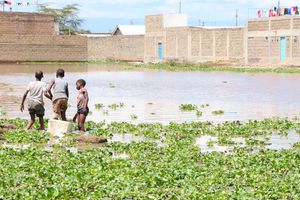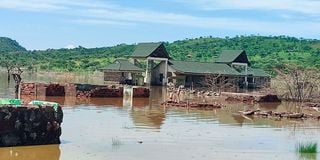
A main gate leading to the Lake Bogoria National Reserve that has been submerged in water after the Lake broke its banks.

Rising water levels in Lakes Baringo and Bogoria over the past decade have devastated Baringo County’s tourism sector, submerging major hotels, tourist sites and community infrastructure.
The gradual build-up, documented since 2010, has led to extensive loss of property, grazing land and riparian areas, with hoteliers and conservationists warning that the situation continues to worsen.
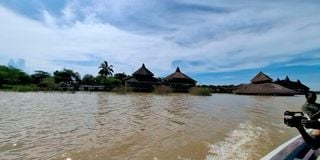
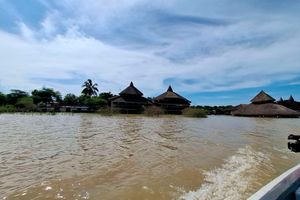
Some of the structures at Soi Safari Lodge on the shores of Lake Baringo have been submerged due to the rising water level of the lake.
Lake Baringo has expanded from 178km² to more than 260km², displacing wildlife and swallowing prominent establishments including Soi Safari Lodge, Roberts Camp, Lake Breeze and the once-renowned Block Hotel.
Senior warden Jackson Komen said hundreds of rooms, cottages and conference facilities were lost as water steadily advanced.
Many facilities were gradually engulfed. "Some, like Soi, have resorted to building flyovers to access the few remaining rooms, but most of the hotel is inside the lake,” he said.
Fallen sharply
Tourism numbers have fallen sharply as accommodation and conference facilities vanished.
Flooding also cut off access routes such as the Loruk–Chemolingot road, previously used by tourists from Laikipia and Samburu.
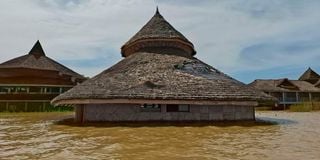
Some of the structures at Soi Safari Lodge on the shores of Lake Baringo that have been submerged due to the rising water level of the lake.
Long’icharo Island, once home to the endangered Rothschild giraffes, has been submerged, forcing a relocation of the animals.
Roberts Camp, which generated more than Sh20 million annually, was completely destroyed, leaving 20 workers jobless.
At Soi Safari Lodge, more than 50 rooms and key facilities were lost, with dozens of employees laid off. Manager Peter Chebii said the lodge previously hosted 40–60 tourists daily, with weekends drawing over 100.
“Now, more than 50 rooms are underwater,” he said. Lake Bogoria has recorded a similar rise, expanding from 34km² in 2019 to more than 45km².
Senior warden James Kimaru said flooding has displaced families, submerged the main gate, roads, homesteads and 90 per cent of the geysers, cutting off popular sites.
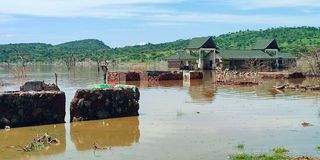
The main gate to Lake Bogoria National Reserve that has been submerged after the lake broke it's banks.
“Since flooding began in 2013, we have diverted roads six times. Campsites, curio shops and projects worth more than Sh57 million have been lost,” he said.
Tourist numbers—especially school groups visiting the hot springs—have plummeted, while revenue dropped from Sh100 million annually to Sh2 million in 2021, with only partial recovery last year.
More than 10,000 people around the lakes were displaced in 2020.
A joint Kenyan Government–UNDP study attributed the rising waters to climate change, siltation and geological activity, with climate change identified as the main driver due to increased runoff from land-use changes.
Follow our WhatsApp channel for breaking news updates and more stories like this.