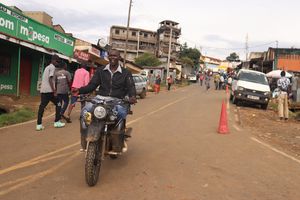
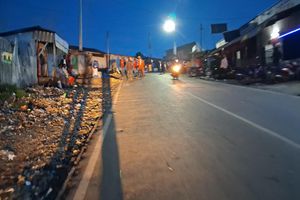
The narrow footpaths in Sesia village fall silent when dusk approaches.
Mothers hurriedly usher their children indoors, businesses shut, and residents avoid walking alone, gripped by the fear of encountering drunken youths and criminals who have transformed the once-peaceful settlement into a hotspot of insecurity.
For many families in the villages on the border of Baringo Central and Baringo South sub-counties, life has become a struggle against crime and poverty.
Residents say alcoholism and drug abuse have fuelled violence that has claimed more than 10 lives in the last three years.
Many have been robbed, assaulted or left nursing injuries.
The fear is most evident in children who trek long distances to and from school on footpaths cutting across thickets and bushes.
Children set off for school every morning, with anxiety written across their faces, while parents remain restless until they return home in the evening.
Women say they no longer feel safe moving around. Alcoholism is driving more families deeper into poverty and forcing some to live in dilapidated houses.
It is this growing sense of fear and frustration that saw dozens of women from several villages in Sesia sub-location hold a protest march two weeks ago. They carried twigs and demanded an end to insecurity in the area.
According to the women, consumption of illicit alcohol and widespread drug abuse have led to crime and killings.
Dozens of women on the border of Baringo South and Baringo Central sub-counties protest at Sesia village on June 13,2026 over rising cases of insecurity.
Photo credit: Florah Koech | Nation Media Group
They also blamed years of neglect and marginalisation for the worsening crisis, saying the villages have been overlooked by leaders and the government.
Ms Benadine Kibet said the increasing cases of alcohol and drug abuse have instilled fear in residents, especially women and children.
She added that businesses close early for fear of attacks by gangs, which have taken advantage of the deteriorating situation.
“It is becoming unbearable. Many people are afraid of moving around, especially in the evening and at night. Criminals and drunkards have now ruled some areas, and residents live in fear,” Ms Kibet said.
“Children from the other villages use routes that have been taken over by the criminal gangs and drunkards. We are worried whenever children leave for school in the morning or return home in the evening.”
She added that women living without spouses have resorted to having pangas next to their beds to fight intruders.
“Our nights are no longer peaceful. Every sound outside the house is a reason for panic. Women are sleeping with pangas because we have to be prepared to defend ourselves should anyone break into our houses,” she said.
Baringo County Police Commander Macharia Wanjau says the rugged terrain makes it difficult for security officers to respond in time to an incident in Sesia.
Mr Wanjau says though there are no licensed bars in the villages, sellers of illicit liquor have come up with new ways of conducting business.
He says they sell the alcohol deep inside thickets, making it difficult for police to find and arrest them.
“Some of these villages are far from Marigat police station, which is responsible for the area. We have contained the problem in Kabarnet and its environs and are planning an operation involving officers from Kabarnet and Marigat police stations in the affected villages to restore order. The days of those peddling drugs and illicit liquor are numbered,” Mr Wanjau said.
Mr Wanjau said police vehicles provided cannot navigate the rough terrain, forcing officers to patrol on foot, a situation that has hampered efforts to pursue criminals.
Meanwhile, residents want quick action and not mere words from the police.
Ms Josephine Kipkechem said some sections of the area are now known for the sale and consumption of illicit drugs and alcohol, often operating openly.
According to Ms Kipkechem, though police occasionally conduct raids in the area, the vice and insecurity still thrive.
She accuses police and government administrators of doing little to address the problem, saying the vast area and its location on the border of two sub-counties have contributed to neglect.
A signage of the insecurity prone Sesia village in Baringo Central.
Photo credit: Florah Koech | Nation Media Group
“We have been marginalised for many decades. Our chief is in Seretunin, more than 20 kilometres away, and many residents rarely see government officials,” she said.
“No meaningful barazas have been called to address these issues despite lives being lost. Many wrong things are happening here, but nobody seems to care.”
She asked security agencies to move into the villages and fight crime. Ms Kipkechem said her family has been a victim of violence. Her son was attacked by a drunkard a year ago.
“My son suffered serious injuries and was left for dead. We were fortunate to get him to hospital in time,” she told the Saturday Nation.
“Sadly, some of our neighbours who were attacked were not that lucky.”
Her 76-year-old grandmother, who lived alone, was killed in her house in 2024.
“My grandmother was strangled. Her body was discovered several days later when neighbours became concerned about her whereabouts,” Ms Kipchumba said.
“We found her decomposing body hanging from the door. It was heartbreaking. This village is no longer safe. Crime continues to thrive because of alcoholism and drug abuse. Things will only get worse if authorities don’t take action.”
She said her husband, a police officer stationed in Seretunin, had returned home for the weekend in 2019 when he encountered intoxicated young men on the road.
Concerned by their behaviour, he demanded to know why they spent all their time drinking and idling.
“When he asked them why they were drunk, one of them picked a stone and struck him on the head,” Ms Chemitei said.
“He was badly injured and was in and out of hospital for years. In January 2024, he died due to complications developed from the injury. My husband became another statistic of attacks carried out by criminals hiding behind alcoholism.”
She demands the intervention of the government and security agencies, saying the situation is out of control.
According to the women, marginalisation and little or no government presence in the area have allowed crime to thrive.
“No public meetings have been held to tackle these challenges, and we feel abandoned. The government needs to post a chief in this locality for us to get the necessary services,” Ms Chemitei said.
“We would, especially, welcome a female chief because women understand the challenges we face and have borne the worst brunt of the insecurity affecting this community.