It is July 31, 2026, and darkness has settled over Sinoko village in Bungoma County; however, at the homestead of Juma Wanjala, the night is only beginning.
Motorcycles rumble through the narrow paths, carrying relatives and friends into the quarter-acre compound. Some arrive with more than two passengers, their voices rising above the engines as they sing traditional Luhya songs. At one corner of the compound, men beat drums while others pluck an eight-string traditional lyre, filling the night with music.
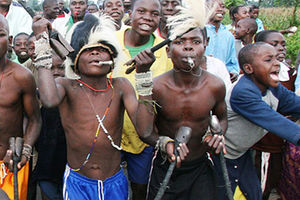
Joseph Sinino (in traditional headgear), chairperson of the Ngaribas, poses for a group photograph with fellow traditional circumcisers in Bungoma on August 1, 2026.
Photo credit: Alex Odhiambo| Nation Media Group
The smell of roasted meat hangs in the air. Earlier, a bull was slaughtered for the occasion, and guests feast as the celebrations gather momentum. In one room, more than a dozen men sit together, passing around long yellow straws as they sip busaa, the traditional brew, while listening to a radio and singing along to Luhya tunes. At the centre of the homestead lies an unusual object concealed beneath banana leaves — the stomach sack of the slaughtered bull, part of the traditional preparations taking place that night.
But behind the noise and celebration, inside one of the rooms, sits the most important person in the homestead. Fourteen-year-old Moses Wanjala is the evening’s VIP.
The celebration is about him. He is preparing to cross the threshold from childhood into adulthood through the traditional circumcision ceremony of the Bukusu, one of the Luhya communities. Known variously as Khuminya, Khuluyia , the act of being publicly circumcised, or Khukhwingila, meaning “to enter” manhood, the ceremony forms part of the wider cultural season commonly known as Imbalu . Earlier in the day, he had travelled to his maternal uncle’s home, where he was presented with a gift of a bull, a symbolic gift expressing the family’s pride and acknowledging his transition into the next stage of life.
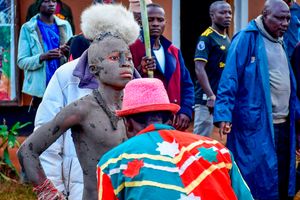
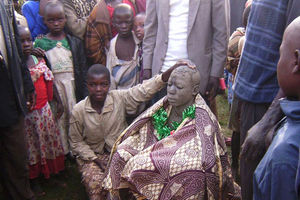
A Bukusu initiate receives instructions from elders during traditional preparations ahead of his circumcision ceremony in Bungoma County on the night of July 31, 2026. The guidance forms part of the cultural teachings that prepare initiates for the rite of passage into adulthood.
Photo credit: Alex Odhiambo| Nation Media Group
When he returned home at about 6pm, he was bare-chested and in khaki shorts, with beads all over his neck and smeared with ash and other substances. Relatives welcomed him with songs and dance accompanied by ululations and traditional rituals before giving him two hours to rest. At around 10pm, Wanjala was subjected to a series of traditional preparations, including the use of parts of the slaughtered bull referred to as Lisombo and the application of material believed by the community to prepare and strengthen him for the circumcision ritual. All this time, he is not allowed to smile; he is to put on a brave face ahead of the biggest day of his life. A special traditional song was performed to prepare him mentally and emotionally for the moment he would face the circumciser’s knife, commonly known as Lukhembe .
“All this is to prepare him for his big moment. He has to be protected through the night and focus on the cut the following morning. He is not allowed to wander away during this time,” said Fredrick Nyongesa, the initiate’s uncle, who was overseeing the process.
The celebrations continued late into the night, with the initiate, known as an Omusinde , participating in traditional dances and songs as relatives, friends and members of the community gathered to celebrate the important milestone. The festivities, known as Khuminya , continued for several hours, with some participants enjoying traditional brew before the initiate was allowed to rest. At around 5am, the initiate was awakened and taken to a nearby river spring known as Esitosi , where another important cultural ritual was performed.
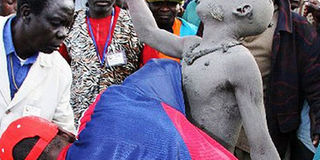
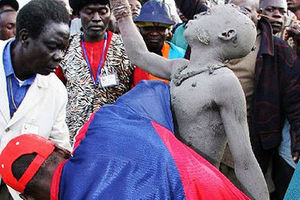
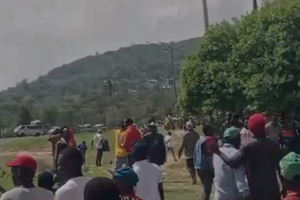
At the site, the initiate is traditionally smeared with mud while naked, a practice believed to form part of the community’s preparation for circumcision. Women and young girls are prohibited from approaching the site, with those who violate the rule facing penalties imposed by the community. The mud is believed to help numb the body and lessen the pain during circumcision. Sioyaya is performed to summon courage and prepare the initiate for the moment everyone has been anticipating. Wanjala faces the circumciser, known locally as an Omokhebi . The procedure is remarkably brief. In less than six seconds, the experienced hand of the circumciser completes the cut. The Tachoni community also observes a similar traditional circumcision ceremony, although some rituals and practices differ. On the streets, the mood is evident. We met hundreds of people singing and dancing while accompanying some of the initiates who have already gone through the cut.
A Bukusu initiate undergoes traditional circumcision in Bungoma County on August 1, 2026. The ceremony marks the culmination of the biennial initiation rites through which boys transition into adulthood in the Bukusu community.
Photo credit: Alex Odhiambo| Nation Media Group
About 40 kilometres away, at the Bukusu Cultural Centre in Kamukuywa , another three initiates are going through the same cultural rite as hundreds of people witness. However, despite the strong attachment to traditional circumcision, modern lifestyles and changing attitudes are increasingly influencing how families prepare their children for the rite of passage. Many parents now prefer hospital circumcision, citing safety, hygiene and professional medical care.
Mr Chrispinus Barasa, Bungoma County Executive Committee Member for Health, acknowledges the growing interest among parents in taking their boys to hospitals. He, however, decried challenges due to the ongoing medics’ strike.
“Majority of operations in our public medical facilities have been shut down because of the ongoing nurses’ strike. However, private facilities are advantaged at the moment, and they are circumcising many boys,” said Mr Barasa.
At the Bungoma Children’s Hospital, a private facility, there is a long queue of parents and their sons waiting to undergo voluntary male circumcision. According to the management, the facility performs approximately 25 circumcisions every day, an indication of the growing preference for medical circumcision.
Bukusu initiates receive gifts from family members and well-wishers after undergoing traditional circumcision in Bungoma on August 1, 2026. The presentation of gifts is part of the celebrations marking the initiates' transition into adulthood during the biennial rite of passage.
Photo credit: Alex Odhiambo| Nation Media Group
“We are in the peak of the circumcision period, and we value both traditional and the medical way of the procedures. Currently, we are receiving around 20 to 28 clients a day. We want to reduce the incidence of infections or complications that come as a result of a procedure not carried out well,” said Mr Herbert Kipyego, the hospital’s administrator.
He said they have increased the number of surgeons to deal with the surge in numbers during this period. The debate between traditional and medical circumcision has, however, been clouded by misconceptions on both sides.
Some traditional circumcisers claim that hospital circumcision can affect the sexual strength of boys, while medical practitioners dismiss such claims as unfounded. Health professionals have raised concerns about traditional circumcision practices where hygiene and safety standards may not be adequately observed, warning that poorly performed procedures can result in excessive bleeding, infections and other potentially serious complications.
Dr Isaac Manje, who was one of the people who brought his nephews to the facility, demystifies the myths and misconceptions, saying the procedure is the same.
“I opted to bring my nephew to the hospital because of what we went through as teenagers. We do not feel there are enough measures in place to ensure the traditional circumcisers do it safely,” said Dr Manje.
He added that the current generation opts for hospitals because of the stories they hear in schools about what went wrong and the dangers that the traditional option exposes them to.
However, the medical procedure doesn’t offer the boy the cultural feel and value imparted to initiates, who are usually secluded for a while and taught ‘How to Be a Man’.
But Dr Manje says this missing ingredient has to be given to the boys by him and the male figures in the family.
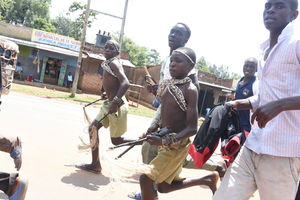
Ngaribas (traditional circumcisers) heat the Lukembe, the ceremonial circumcision knife, over a fire as part of its preparation ahead of the Bukusu male circumcision season in Bungoma County on August 1, 2026. The knife is heated to sterilize it before the biennial initiation rites that mark the transition of boys into manhood.
Photo credit: Alex Odhiambo| Nation Media Group
“We had a very long talk with the boy just to make it clear that whether the traditional or medical option, the essence is that you are transitioning from childhood to adulthood. The hospital simply provides a safer option and does not mean that they are less courageous or less of a man. So that is the hard talk we had,” said Dr Manje.
With traditional circumcision remaining an important part of Bukusu and Tachoni culture, elders and traditional circumcisers are calling for greater government support to preserve the practice while ensuring that it is conducted safely.
They want the government to increase funding to departments dealing with culture and heritage to support the preservation of indigenous traditions and cultural sites.
At the same time, health practitioners maintain that parents should prioritise the safety and wellbeing of their children by ensuring that circumcision, whether conducted traditionally or medically, meets appropriate health and safety standards.
The traditional circumcisers further appealed to the government to incorporate indigenous culture into the Competency-Based Curriculum (CBC), arguing that this would help preserve Kenya’s cultural heritage for future generations.
"Our traditions are slowly being eroded by modern technology and changing lifestyles. Teaching culture in schools will help ensure future generations do not lose their identity," said Mr Siminu Wekesa, Chairman of the Bungoma County Traditional Circumcisers Association.
Meanwhile, as the traditional circumcision season gains momentum, elders and traditional circumcisers have raised concerns over the deterioration of some sacred springs used during the ceremonies.
They say the springs traditionally reserved for circumcision rituals — known among the Bukusu as Sitosti and among the Tachoni as Sitabicha — are increasingly being polluted and neglected.
They have called on residents living near the springs to protect and preserve them, warning that continued destruction could eventually threaten the survival of the cultural practices associated with the sites.