For the next five months, Western Kenya will enter the traditional circumcision season. For traditional circumcisers, known in Swahili as Ngaribas or Bakhebi and as Omukhebi in the Bukusu language, ordinary life gives way to an unwritten code that governs every aspect of the sacred rite.
For these traditional circumcisers, the season is more than a physical rite of passage. It is a period of discipline, personal sacrifice and profound responsibility as they guide boys into manhood.
The rules are demanding. No sex. No smoking or drugs. No alcohol. No funerals. And, above all, no breaking the sacred code surrounding the knife, Lukhembe.
Break the code, practitioners believe, and the cut can fail from the outset.
Veteran circumciser Siminu Wekesa says the restrictions are intended to protect the spiritual integrity of the rite, uphold community values and safeguard the boys undergoing initiation.
“During the period in which we take the boys through the cut, we are not allowed to engage in any sexual activity until the boys start healing in October because it is like going to battle. If you resume or break this code, it will take longer for the children to heal as expected,” Mr Wekesa says.
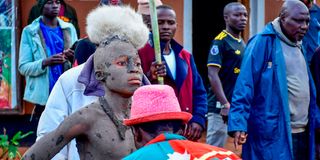
Joseph Sinino (in traditional headgear), chairperson of the Ngaribas, poses for a group photograph with fellow traditional circumcisers in Bungoma on August 1, 2026.
Photo credit: Alex Odhiambo| Nation Media Group
The abstinence extends to men who handle Busaa, the traditional brew often associated with cultural ceremonies.
Death, too, carries consequences. A circumciser who loses a close family member, particularly a spouse, must withdraw from the season and undergo cleansing rites before returning to the practice the following year.
Smoking cigarettes and using other drugs are similarly forbidden during the season. Circumcisers say the restrictions are partly intended to protect the boys from infections and other complications.
Rajab Kituyi, who began practising in 1982, says alcohol is also prohibited because the procedure demands steady hands, concentration and clear vision.
“We are not allowed to partake of alcohol, lest your vision or grip of the blade be impaired during the procedure,” he says.
The Omukhebi is expected to perform the cut with precision. A botched procedure can bring shame and social stigma to both the circumciser and the initiate, while traditional beliefs also attach spiritual consequences to mistakes made during the rite.
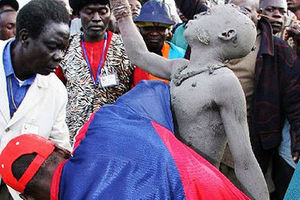
A Bukusu initiate undergoes traditional circumcision in Bungoma County on August 1, 2026. The ceremony marks the culmination of the biennial initiation rites through which boys transition into adulthood in the Bukusu community.
Photo credit: Alex Odhiambo| Nation Media Group
The rules extend beyond the actual cutting. A man who underwent circumcision and later became a circumciser is not permitted to perform the procedure on the sons of the person who circumcised him. The restriction is intended to preserve mutual respect between generations of practitioners.
Then there is Lukhembe, the sacred blade used during the procedure.
According to Mr Wekesa, dropping the blade, whether accidentally or deliberately, is considered a serious breach of the code. The circumciser must immediately stop working and wait until the following season.
“If you happen to drop the blade, just suspend your operations until the following season. If you ignore this and continue with the cut, you will bring some form of misfortune,” says Mr Wekesa.
The circumciser is expected to leave quietly and avoid explaining what has happened to anyone on the way home. According to Mr Wekesa, questions should be met only with the word “Ahoro”.
Circumcisers are expected to be men of high moral standing, disciplined and upright role models in their communities, and free from any criminal history.
Bukusu initiates receive gifts from family members and well-wishers after undergoing traditional circumcision in Bungoma on August 1, 2026. The presentation of gifts is part of the celebrations marking the initiates' transition into adulthood during the biennial rite of passage.
Photo credit: Alex Odhiambo| Nation Media Group
The Bukusu believe that the character of the person handling the initiate can influence the boy being ushered into adulthood.
Anger and confrontation are also discouraged. During the cultural practice season, circumcisers are expected to avoid quarrels and arguments, maintaining their composure even when provoked.
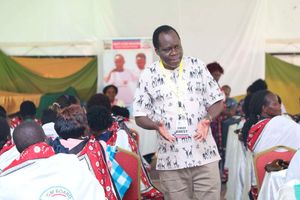
Mr Wekesa, who chairs the Bungoma County Traditional Circumcisers Association, says parents should ensure that anyone hired to perform the procedure has been trained and certified by the government.
“Cleanliness is non-negotiable during circumcision. Only certified circumcisers will be allowed to perform the exercise, and anyone operating without certification will face legal action,” says Mr Wekesa.
Circumcisers are expected to maintain personal hygiene, keep their nails short, dress neatly and ensure that the environment and equipment used during the procedure are clean.
A Bukusu initiate receives instructions from elders during traditional preparations ahead of his circumcision ceremony in Bungoma County on the night of July 31, 2026. The guidance forms part of the cultural teachings that prepare initiates for the rite of passage into adulthood.
Photo credit: Alex Odhiambo| Nation Media Group
Passing the knife to a new generation
Gabriel Wafula says signs of potential can sometimes emerge during a boy’s first encounter with the knife.
On August 1, while administering a circumcision at the Bukusu Cultural Centre in Kamukuywa, he says he noticed something unusual in one initiate.
“Immediately I administered the cut, the boy was trembling, but after I gave him the knife to hold, he was calm and the shivering stopped immediately. This boy will eventually join the ranks of the Bakhebi. After about two years, he will start accompanying us to ceremonies as part of his training,” says Mr Wafula.
Ngaribas (traditional circumcisers) heat the Lukembe, the ceremonial circumcision knife, over a fire as part of its preparation ahead of the Bukusu male circumcision season in Bungoma County on August 1, 2026. The knife is heated to sterilize it before the biennial initiation rites that mark the transition of boys into manhood.
Photo credit: Alex Odhiambo| Nation Media Group
For the practitioners, preserving the tradition also means preparing for its future.
They are calling on the government to formally recognise their contribution to preserving the cultural practice while equipping them with basic first aid skills and medical supplies.
Their greatest concern is dealing with emergencies, particularly excessive bleeding during circumcision, when immediate intervention can make the difference between life and death.
“We need first aid skills and equipment to help us manage emergencies, especially cases of excessive bleeding during the circumcision process,” they said.
As the season unfolds, the men behind the knife will continue to observe a demanding code that blends tradition, spirituality, discipline and modern expectations of safety.
They are also collecting data on traditional circumcisers across Bungoma County, an effort they hope will bring greater organisation and recognition to a practice carried from one generation to the next.
For five months, their lives will be governed by rules that are rarely written but deeply understood — a quiet covenant between the circumciser, the blade, the community and the generation being ushered into adulthood.