The High Court in Nairobi has acquitted a businessman accused of killing a police officer at the Busia border, ruling that glaring forensic gaps and mishandled evidence fatally weakened the prosecution’s case.
Glaring discrepancies in firearm serial numbers, conflicting investigator testimony, and a broken chain of custody exposed critical gaps that ultimately undermined the prosecution’s case.
In its judgment, the court found that investigators failed to conclusively link the fatal gunshots that killed Police Constable Benson Moracha to any firearm tied to businessman Nasor Mbaruk.
The case stemmed from a dramatic night patrol on November 11, 2014, along the Malaba–Bungoma highway at Koteko. Officers from Malaba Police Station had stopped a convoy of trucks suspected of being involved in irregular number plate changes.
The patrol team, led by Police Constable Moracha and colleague Stephen Malele, had spotted three tipper trucks and a pick-up parked by the roadside with about seven men fixing freshly issued number plates.
On closer inspection, the officers discovered mismatched registration numbers, loose plates scattered on the ground, and bundles of number plates tied with sisal ropes inside one of the vehicles, raising suspicion of a coordinated number plate swapping scheme.
As constable Malele began collecting the plates as exhibits and documenting the discrepancies, the situation escalated abruptly when one of the men—later identified as Nasor Mbaruk—shouted and opened fire, sparking the deadly confrontation.
Constable Malele, who survived the attack, told the court that Mbaruk shot him and then turned the gun on Moracha. He said Moracha was felled by multiple shots and later found lying in a pool of blood.
Malele sustained gunshot wounds to the shoulder and thigh. But despite the eyewitness account, the court ruled that the prosecution’s case collapsed on a critical requirement of proving that the gun used in the fatal shooting belonged to, or was handled by, the accused.
The court said the evidence presented was riddled with contradictions about the identity of the firearm.
“One piece indicates that the accused was arrested while possessing a gun serial number HKP30L 213-6V8658, which was never presented for forensics,” the court said.
It continued: “The other piece indicates that another firearm, HK-P30L S/No. 213-008658, which those who arrested the accused did not recover from him, was presented for forensics, and it was asserted, by the prosecution to be the one that was used to fatally injure Moracha.”
It stated that ought to create a doubt, or a gap, in the evidence, which ought to break the chain of causation.
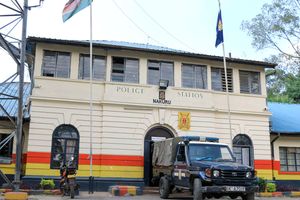
Police officers who arrested Mbaruk in Mariakani, Mombasa, said they recovered a pistol with one serial number. However, a different serial number appeared in documents submitted for ballistic analysis in Nairobi.
The firearm examined by experts was confirmed to have fired the bullets recovered at the scene. But the court found no reliable evidence connecting that specific weapon to Mbaruk.
“Certainly, what was tested was not the firearm that was recovered from the accused,” Justice William Musyoka ruled, stating that the accused could not be convicted based on a piece of evidence that could not be tied to him.
“Was there a switch of the firearm, between when it was recovered by the police at Mariakani, and when or after it was handed over to the police from Malaba?,” he asked.
The inconsistencies did not end there. The court pointed to conflicting testimony from investigators, including one officer who changed his account of the firearm’s serial number during the trial. Key officers who handled the exhibits also failed to testify.
An inventory of items allegedly recovered from Mbaruk was also questioned. The court noted it was prepared two days after the arrest by an officer who was not present during the recovery.
“It would be difficult to understand the circumstances, under which an inventory, of what was recovered from the accused, upon his arrest, at Mariakani, could be recorded by an officer who was not party to that arrest and recovery, and who was, in any event, at another police station, nearly 1,000 kilometres away. Such an inventory would be of little probative value,” the court said.
The document was not signed by Mbaruk and appeared to be a handover note between officers, raising further doubts about its reliability.
The court also flagged gaps in the chain of custody. It was unclear how the firearm sent for forensic testing moved between different police units, including officers in Kaloleni and Teso.
Justice Musyoka said the prosecution failed to explain whether the firearm recovered at the arrest was the same one examined by the ballistic experts.
“Not enough evidence was adduced to connect the accused person to the firearm which discharged the missiles that caused the fatal injuries,” the judge said.
The court emphasised that in criminal trials, the burden of proof rests entirely on the prosecution and must be met beyond a reasonable doubt.
Any gaps or inconsistencies, the judge said, must be resolved in favour of the accused.
While the court accepted that Moracha died from gunshot wounds and that the shooting was intentional, it found no conclusive proof that Mbaruk was the gunman.
Malele’s testimony placed Mbaruk at the centre of the shooting. But the court held that eyewitness evidence alone was insufficient without forensic confirmation linking the injuries to a weapon tied to the accused.
“There must be a connection between the injury and a gun traced to the accused person. In this case, there is no such linkage,” the court ruled.
Mbaruk had denied the charges, saying he was at the scene but did not fire any shots. He told the court he had a licensed firearm, but maintained it was never used in the attack.
The court found that his defence raised a reasonable doubt, especially in light of the prosecution’s evidentiary gaps.
In the end, the court acquitted Mbaruk of both murder and attempted murder charges.