Private financial technology (fintech) firms are earning millions of shillings from county governments through contracts to automate revenue collection, even as audits show many systems remain incomplete, ineffective and vulnerable to leakages.
Reports by Auditor-General Nancy Gathungu and the Commission on Revenue Allocation (CRA), seen by the Nation, show fintech firms are earning millions in installation fees and commissions of between four and 15 per cent on revenue collected through automated platforms.
This is even as audits found collections have stagnated because of incomplete automation, weak oversight, manual processes and loopholes that, in some counties, leave governments paying service providers more than they collect. In several counties, only a fraction of revenue streams have been automated, leaving the rest to be collected manually.
In Nakuru County, the Auditor-General’s report for the year ended June 30, 2025 says the county contracted a private firm on December 1, 2020 to install, configure and commission an Integrated Revenue Collection Management System for Sh34.5 million, with the vendor also entitled to 4.3 per cent of monthly revenue collected through the platform to help maximise collections, but an audit found no significant improvement after its installation. “During the year under review, the vendor was paid a total of Sh42.8 million, being 4.3 per cent of the total revenue collected per month for the period. This happened despite the fact that revenue collection remained stagnant,” the report says.
In Trans Nzoia County, the audit found that, despite the administration signing a Sh27 million contract on December 21, 2023, for the delivery, development, installation, deployment, testing and maintenance of a fully automated County Revenue Collection and Debt Management System, with an annual recurring cost of Sh7.8 million, the system remained incomplete and ineffective.
“Although the contract sum was fully paid to the vendor, modules such as Agricultural Cess, Royalties and Public Health had not been configured and automated in line with the contract agreement, hence the possibility of loss of revenue from the streams,” the report says, adding that delays in automating building plan approvals, building approval fees, house rent and land rates may have prevented the county from fully optimising revenue collection.
The Auditor-General also found that the system had not been integrated with the Integrated Financial Management Information System (IFMIS). Instead, revenue data was prepared manually, exposing it to manipulation and leakages.
In Uasin Gishu County, the audit found that the county had paid a local firm Sh43 million—about 90 per cent of the Sh47.8 million contract price—for the delivery, installation, testing and commissioning of an Integrated Revenue Management System. However, the report says the system remained incomplete and ineffective.
Elgeyo-Marakwet County also paid millions for a County Revenue Management System that auditors found was yet to be fully operational. The county contracted a private firm to design, deploy and operationalise the system at a cost of Sh27.8 million payable in three phases. By the time of the audit, it had paid Sh17.5 million, including Sh1.3 million representing four per cent of revenue collected between August 2024 and May 2025.
However, auditors found the system was incomplete, limiting the county’s ability to oversee revenue collection and reporting from hundreds of health facilities.
In Vihiga County, auditors found payments to the vendor had reached 89 per cent of the Sh58.8 million contract for a Revenue Automation System.
Despite the payments, key deliverables—including full automation, system handover and integration with county systems and IFMIS—had not been completed.
The Auditor-General also found that the vendor continued to host the county’s revenue data on its cloud infrastructure, limiting the county government’s control of the information.
“Despite the county spending millions on the installation of the system, it remains incomplete, ineffective and exposed to revenue leakages because the county executive does not have full control of the revenue collection system,” the report states.
In Kisii County, the audit shows the Revenue Management System service provider received Sh4.8 million in administrative costs on Sh89.8 million collected between January 26 and March 31, 2024.
However, a review of records at the County Revenue Department found no revenue had been collected through the automated system during the period.
Auditors also established that key revenue streams, including land rates, had not been integrated into the platform.
In Nairobi City County, Ms Gathungu questioned whether taxpayers were receiving value for money from the Nairobi Pay revenue collection system.
The audit notes that although the county invested heavily in supporting infrastructure, it signed an agreement in December 2024 allowing a national government-linked vendor to operate the platform and earn 4.5 per cent of all revenue collected.
According to the Auditor-General, the arrangement could earn the vendor about Sh540 million annually, or roughly Sh2.7 billion over five years. The audit further found that a Tier One server room built at a cost of Sh850 million remained underutilised even as the county continued to incur additional costs to host, support and maintain the revenue collection platform.
The Auditor-General’s findings mirror those of the Commission on Revenue Allocation (CRA), which says several counties have invested heavily in revenue automation systems without realising the expected gains.
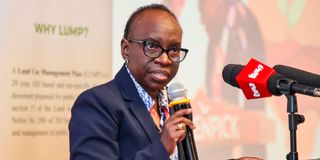
A report tabled in the Senate last year by CRA chairperson Mary Chebukati shows Kakamega County spent Sh7 million on the Public Sector Revenue Management System to automate revenue collection. However, the commission found that inadequate infrastructure at the sub-county level had undermined its rollout. “Lack of requisite infrastructure at the sub-county level continues to undermine the system rollout and poses a major challenge,” Ms Chebukati said.
Commission on Revenue Allocation chairperson Mary Wanyonyi Chebukati during an Intergovernmental Budget and Economic Council meeting on January 29, 2024.
Photo credit: Evans Habil | Nation Media Group
Turkana County spent Sh35.93 million to contract Sense Networks to automate revenue collection. The firm charged five, 10 and 15 per cent of revenue collected during the first three years. However, the CRA said poor network coverage, insecurity, unreliable electricity supply and weak enforcement limited the system’s effectiveness.
The CRA urged counties to conduct proper needs assessments before procuring automation systems and comply with the National Treasury’s revenue automation guidelines and procurement laws.
“Some counties have been adopting off-the-shelf systems without proper needs assessment, resulting in systems that do not meet their specific revenue enhancement needs,” the commission said.
Public Finance Management Act
The findings come as senators push to amend the Public Finance Management Act, 2012, to empower the Auditor-General to audit private firms managing county revenue collection systems.
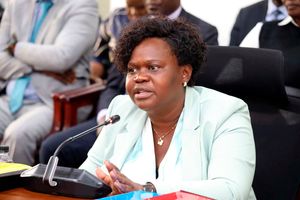
Senate County Public Investments and Special Funds Committee chairperson Godfrey Osotsi said the changes would allow the Auditor-General to scrutinise the firms and systems, which lawmakers believe contain loopholes through which billions of shillings are lost.
Vihiga Senator Godfrey Osotsi.
Photo credit: File | Nation Media Group
“This is absolutely important. We want the Auditor-General to audit the firms and the revenue collection systems in place. Most counties have not achieved their own-source revenue targets due to corruption and related governance issues,” said Mr Osotsi, adding that the expanded mandate would help seal revenue leakages and improve local collections. “We want to ensure that whatever they declare as money collected is indeed the exact amount collected from taxpayers. There are many loopholes in the management of own-source revenue in the counties, and it is time the same is fixed,” he said.
Most of the 47 county governments have consistently failed to meet their own-source revenue targets since devolution in 2013, with weak revenue management systems and leakages blamed for the poor performance. Although counties have the potential to raise about Sh260 billion annually, they collect less than Sh80 billion.
The Ethics and Anti-Corruption Commission (EACC) has also warned that automation alone cannot eliminate corruption in county revenue collection.
In a corruption risk assessment covering 27 counties, the EACC cited Nairobi, Narok, Kajiado, Machakos, Kericho and Kilifi as counties where revenue collection systems had been tampered with, exposing public funds to significant losses. It found that some private service providers retained extensive control of automated platforms, while some county officials had superuser access, allowing them to alter or delete revenue records, creating opportunities for diversion.
The commission also flagged the use of multiple bank accounts for revenue collection, saying the practice undermines the integrity of automated systems.
The EACC further warned of an emerging pattern of automated looting of public funds through collusion involving county executives, senior officials and proxy companies, with some revenue management contracts allegedly designed with “inbuilt corruption”.