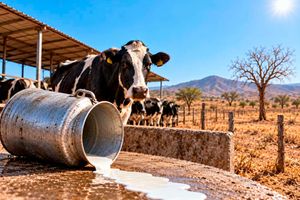
Kenya’s dairy map is expanding beyond its traditional high-production counties, with arid and semi-arid land (ASAL) areas emerging as new frontiers for milk production as the country grapples with persistent shortages and a widening gap between supply and demand.
Elgeyo-Marakwet, Kajiado, Narok and Taita Taveta are among the counties attracting attention for their potential to contribute more milk, supported by livestock breeds suited to harsh climatic conditions and alternative feeding resources.
The shift comes as Kenya produces between 5.2 billion and 5.76 billion litres of milk annually against an estimated demand of 12.76 billion litres, leaving a deficit of about 7 billion litres.
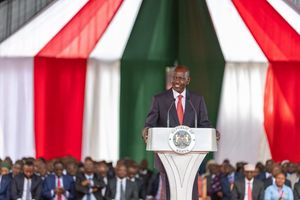
The emerging opportunities and structural weaknesses in the dairy industry are outlined in a new report by Heifer International Kenya, Beyond the Milk Shortage: Why Feed and Fodder Security Matters for Kenya’s Food Systems , released in Nairobi on Thursday, November 19, 2026.
The analysis examined the dairy value chain in 11 counties, with in-depth assessments in Nyandarua, Embu and Elgeyo-Marakwet, representing mature, transitional and emerging dairy markets. The study involved 54 engagements with smallholder farmers, county officials, cooperative managers, processors, input suppliers and other service providers.
It examined why milk production and commercialisation remain below potential despite years of investment, identifying feed and fodder shortages, weak market systems, limited financing and inadequate extension services as major constraints.
Wairimu Munyinyi-Wahome, Country Director of Heifer International Kenya, said the analysis was commissioned to identify evidence-based interventions that can improve smallholder livelihoods, strengthen food security and support sustainable living incomes.
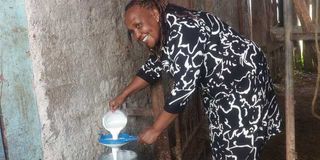
She also drew attention to the unequal distribution of benefits in the dairy value chain, where women provide much of the labour but frequently lack control over the income generated. “The moment there is a level of effort that generates income, then you find that men as key decision-makers…will then take over,” she said. “Women have access, they do not have control.”
Farmers gesture after delivering raw milk in containers to Brookside Dairy's mobile cooler at Kilibwoni, near Kapsabet in Nandi County.
Photo credit: Francis Mureithi | Nation Media Group
The report estimates that women undertake about 80 per cent of dairy-related labour, including feeding, cleaning, milking and managing animals, but their contribution does not translate into an equivalent share of earnings or decision-making power.
The report’s findings point to a geographical shift, although the scale of production from the drylands remains contested. The Kenya Dairy Board (KDB) estimates that arid and semi-arid lands (ASALs) contribute about 30 per cent of national milk output, while the Kenya Agricultural and Livestock Research Organization (Kalro)’s dairy department puts their contribution at 1 per cent. The differing estimates underline the need for consistent data, particularly where milk is consumed locally or sold informally.
KalroDairy Research Institute forage expert Dr Simon Kuria said climate-resilient livestock, including Boran cattle, are helping farmers maintain production in dry areas. “The animals are better adapted to harsh conditions than specialised dairy breeds, while feed resources are being explored to sustain them during difficult seasons,” said the expert.
Dr Kuria said Kalro had tested the pods and found they contain protein and sugar, making them a potential supplementary feed when managed well. “There is no problem using these pods when properly managed,” he said, advising farmers to harvest them before the seeds fall.
Farmers can also plant forage legumes such as lablab, cowpea and dolichos (a genus of flowering plants in the legume family) in drier areas, while desmodium and lucerne are options in wetter zones. “The biggest problem is on the feed,” Dr Kuria said, noting that farmers often underfeed animals and rely on poor-quality Napier grass and crop residues.
Kalro is promoting improved grasses and legumes, alongside better harvesting and silage-making, to improve the protein and energy available to livestock.
The national feed deficit remains a major barrier. Kenya has an estimated 25 million tonnes of dry matter available against demand of 55 million tonnes, leaving a shortfall of 30 million tonnes.
Feed and fodder account for about 70 per cent of dairy production costs, making commercial fodder production, mechanisation and irrigation critical to stabilising milk supply.
At the established end of the dairy market, KDB Director of Regulatory Services Paul Ndung’u said formal processor intake rose from 74 million litres in September to 76 million litres in October 2026, an improvement he linked partly to better pasture and fodder conditions. “The situation is improving. We have seen the intakes by the formal sector increasing,” he said, adding that favourable weather could support recovery.
The Heifer International Kenya report on the status of dairy sector in the country says only 50 to 70 per cent of milk produced enters formal markets, limiting the amount available to processors and consumers through established supply chains.
Mr Ndung’u, in an interview with Nation said established dairy counties have been better able to withstand dry conditions because farmers increasingly purchase feed and conserve fodder.
“Cooperatives, milk coolers and improved breeding services are important to production,” he cited, while calling for stronger investment in mechanisation and forage development in emerging areas.
Heifer’s analysis argues that closing the milk gap will require more than increasing animal numbers. It calls for stronger feed markets, extension services, cooperative-based services, affordable finance and better opportunities for women and young people to own and manage dairy enterprises.
The report notes that for new milk-producing frontiers to become reliable suppliers, climate adaptation and available resources must translate into consistent production.