Landowners affected by the Sh2.2 trillion Dangote East Africa Petroleum Refinery project in Lamu are set to be resettled after the Treasury allocated Sh4.7 billion for settlement of landless Kenyans in the financial year starting July 1, 2027.
Lands Principal Secretary Nixon Korir says the 2027 Budget Policy Statement (BPS) provides Sh4.723 billion that will be utilised for settlement of the landless in various parts of the country.
Mr Korir told the National Assembly’s committee on Lands that the allocation will also be utilised for the accelerated programme of issuance of title deeds in adjudication sections that have been completed countrywide.
“The allocation will also be utilised for the…purchase of land for resettlement of project affected persons (PAPs) affected by the Dangote East Africa Petroleum Refinery project in Lamu, purchase of land for settlement of squatters in Coast region and other parts of the country and payment of Sh1 billion due on purchase of CIS/Mara/Ilmotiok/54 Narok county (Chelayat farm),” Mr Korir said.
Mr Korir did not provide the breakdown of how the Sh4.72 billion will be split between the land purchase for the Dangote Petroleum Refinery project and other settlement schemes to be purchased for settlement of the landless across the country.
The PS also failed to disclose the number of individuals who will be resettled from the land that Dangote refinery will occupy.
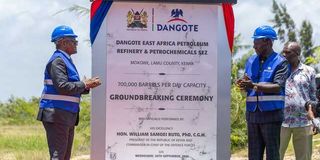
Residents of Lamu protested over land and compensation issues linked to the planned Dangote East Africa Oil Refinery, with tensions escalating ahead of the scheduled ground breaking on September 30, 2026.
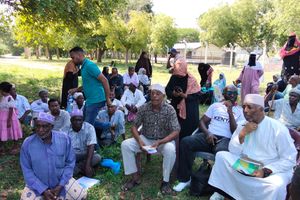
About 130 residents in the Chandavai area, including pastoralists and farmers, have been demanding clear recognition of their land rights, timely compensation, and a resettlement plan for families whose ancestral land is affected.
The residents argued that parts of Land Reference No. 13061 in the Hindi/Manda Magogoni area, which is home to farms, livestock grazing land, mosques, shrines and family graves, is being acquired for the refinery without adequate consultation or pay.
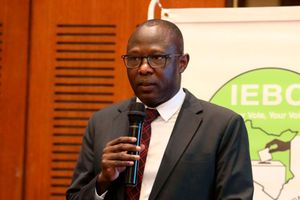
Lands and Physical Planning Principal Secretary Nixon Korir.
Photo credit: Lucy Wanjiru | Nation Media Group
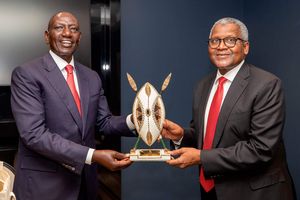
President William Ruto and Nigerian billionaire Aliko Dangote launched the multi trillion shillings refinery that is expected to process 700,000 barrels of crude oil per day.
The refinery targets to source crude oil from the Lokichar basin where commercial production of crude oil is expected to start next month.
Mr Dangote is planning to pump Sh2.2 trillion (US$17 billion) in the construction of East Africa’s biggest crude oil refinery.
Dr Ruto has billed the investment as a transformative investment, but opposition leaders have warned it risks eroding livelihoods and land rights without safeguards.
Mr Korir told the committee chaired by North MP Joash Nyamoko that the State Department for Lands require Sh66.48 billion for settlement of the landless but Sh25.76 billion had cumulatively been spent as at September 31, 2026.
He said the budgetary allocation for financial year 2026/27 is Sh9.42 billion and the projected allocation for financial year 2027/28 is Sh4.72 billion.
The Treasury in the 2027 BPS has projects to allocate Sh6.588 billion and Sh130 million for settlement of the landless in the financial years 2028/29 and 2029/30 respectively.
Mr Korir told the committee that the Sh4.72 billion allocation for settlement of the landless will be utilised in the counties of Mombasa, Tana River, Kilifi, Lamu, Nakuru, Trans Nzoia, Makueni, Nandi, Machakos and Muranga.
He said the Treasury in the 2027 BPS has allocated the Agriculture and Rural-Urban Development Sector (ARUD) Sh108.59 billion out of which the State Department for Lands and Physical Planning has been allocated of Sh14.8 billion.
Out of the Sh14.8 billion, recurrent vote will consume Sh3.944 billion while development spending will cost Sh8.86 billion.
The committee is scrutinising the BPS for the entire Agriculture and Rural-Urban Development Sector (ARUD) before presenting its findings to the Budget and Appropriations Committee (BAC) for consideration.