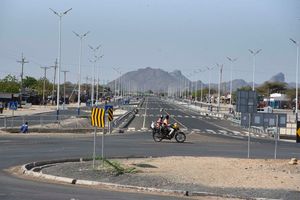
The National Treasury has approved the initial proposal to upgrade the Athi River–Namanga road into a dual carriageway, raising hopes of relief for Kitengela motorists who spend at least two hours covering five kilometres.
The project, to be delivered through a public-private partnership (PPP), received the nod on Thursday last week, following approval of its concept note in September. The 136-kilometre road, known as the A2 corridor, runs from the Athi River interchange through Kitengela, Isinya, Kajiado and Ilbisil towns to the Namanga One-Stop Border Post (OSBP). The dualling is expected to spur growth in Kajiado County’s peri-urban centres, increasingly preferred by Nairobi’s working population for their proximity to the capital. Expectations of a boom are highest in Kitengela, elevated to municipal status four years ago and among the country’s fastest-growing urban centres for over a decade. Census data show its population doubled between 2009 and 2019. Congestion is Kitengela’s biggest headache. Motorists can spend at least two hours covering the five-kilometre stretch from the Athi River interchange on Mombasa Road to the town, especially in the evenings and at weekends.
Traffic officers from Kitengela and Athi River often struggle to contain motorists who overtake illegally on both sides, creating extra lanes. Two service lanes recently resurfaced by the Kenya National Highways Authority (KeNHA) are frequently overwhelmed. Motorist Susan Kirote told the Nation the expansion was long overdue, especially since the expressway’s completion a few years ago. “Kitengela has been a bedroom to Nairobi. A big fraction of middle-class earners resides in the metropolitan part of Nairobi, with Kitengela being one of the preferred destinations. The road is a nightmare over the weekend. On a bad day, you can spend the night on the road,” said Kirote.
Aerial view of Kitengela town.
Photo credit: Stanley Ngotho | Nation Media Group
Mr John Omingo, a homeowner, said dualling would stem the exodus of homeowners who settled in Kitengela in the early 1990s, when the population was still low. He said some neighbours had relocated and surrendered their palatial homes to tenants because of congestion at the Athi River interchange. “Expanding the road is a multifaceted investment, both for locals and the two levels of government,” he said. Kajiado East MP Kakuta Mai Mai described the road as a “gem” that would ease traffic and spur growth in the county’s peri-urban centres. He said local leaders’ lobbying efforts were bearing fruit and urged constituents to seize the opportunities. The highway traverses Kajiado East Constituency through Kitengela, Kisaju and Isinya before extending into Kajiado Central Constituency. “We (residents) are waiting for the road with bated breath. It will not only facelift the town and ease traffic, but it will be a springboard for development,” said Mai Mai.
A section of Nairobi-Namanga Highway (A109)on July 29,2020 .
Photo credit: File | Nation Media Group
He urged the government to fast-track construction, describing infrastructure development as a key pillar of any growing economy. “No country can grow without enhanced infrastructure. Let the government fast-track the construction of these major roads that will boost cross-border trade with other East African countries, including Tanzania,” he added. Mr Lawrence Kiambi, a director at Lawsavic Property Management Company, told the Nation that land values were expected to appreciate after the dualling, while house rents could rise by nearly double-digit percentages. “After expanding the road, motorists will possibly be spending less than 30 minutes travelling to Kitengela from Westland. We expect real estate investors to flood both Athi River and Kitengela and their outskirts. We expect the value of land to shoot up due to high demand,” said Kiambi.
In the 1980s, Kitengela was little more than a trading centre with a single shop. By the 1990s, served by a two-lane road, it had become a bustling settlement attracting investors in large numbers. It has since emerged as an alternative nightlife destination for Nairobi residents, and its proximity to the Nairobi Expressway has further accelerated growth. Kenya’s imports from Tanzania totalled Sh50.47 billion (about $384.91 million) in 2025, according to Kenya National Bureau of Statistics (KNBS) data.
Many imports, including cereals, perishables and flowers, are hauled in trailers through the highway and the Namanga OSBP. The road also supports cross-border tourism, with Kenya and Tanzania sharing wildlife ecosystems and views of Mount Kilimanjaro.
Trucks parked in various parts of Kitengela town.
Photo credit: Stanley Ngotho | Nation Media Group

The road is also expected to stimulate economic activity in Kajiado town, which hosts the county government headquarters and regional national government offices. In Ilbisil, residents expect a boost for the nyama choma trade, with travellers to Namanga or Amboseli frequently stopping for Maasai-style roasted meat and wet fry at roadside butcheries. The town, on the Nairobi–Namanga Highway, also hosts one of the region’s largest livestock markets. Mr Joel Nkoyo, a herder, said the town supplies meat to Nairobi, with traders from the capital buying livestock in bulk for slaughterhouses and meat markets such as Burma Market. “We saw it in the media that the road will be expanded. We expect to bring more customers from Nairobi to taste our roasted ribs,” said Nkoyo.