On Monday, December 1, 2025, around 2pm, Ms Jane Wangui, a trader at New Kitengela retail market, sits in the corner of her makeshift stall in total darkness, with only the flicker of her mobile phone torchlight marking her presence.
This has been her plight for the last two months since Kenya Power Company disconnected electricity over unpaid utility bills totalling Sh400,000.
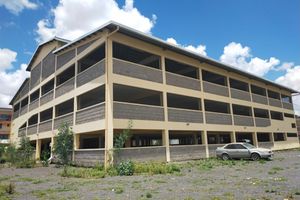
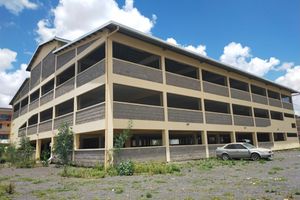
The Sh60 million taxpayer-funded market has been mired in controversy since its inception in 2019. The two-storey modern market, which took six years to complete and another three years to open to traders, was officially launched by Governor Joseph ole Lenku in March 2025.
Jane Wangui, a trader at Kitengela retail market, uses phone's torch to illuminate her clothes stall on December 01, 2025. The Kenya Power disconnected electricity at the market two months ago.
Photo credit: Stanley Ngotho | Nation Media Group
Delays in settling traders had earlier led to heavy vandalism. Initially, the project was to be funded over three financial years but dragged on an extra three years.
About 2,000 traders, including the original 1,448 relocated from the old market, were allocated slots. Foodstuff traders were placed on the ground floor, while clothes and assorted household items occupied the first and second floors. Dozens of hawkers missed out and returned to designated street vending.
A spot check by the Daily Nation this week revealed an eerie silence. Only a few makeshift stalls on the first floor surrounded by pitch darkness. Activity was limited to dejected traders waiting for customers.
The entire second floor was deserted except for two middle-aged men smoking cigarettes and one man napping in an abandoned stall. Dust-covered stalls and dirt indicated months of neglect, denying the devolved unit vital Own Source Revenue (OSR).
A man takes a nap in an abandoned makeshift stall in Kitengela retail market in Kajiado County on December 01, 2025.
Photo credit: Stanley Ngotho | Nation Media Group
Ms Wangui explained that while clothes traders were allocated the second floor, most have moved out due to poor customer turnout; some relocated to the first floor, renting slots from original allottees. The electricity disconnection dealt another blow.
"For the last two months since the electricity was disconnected, we hardly make sales. We use our mobile torches to light the stalls for the few customers who brave the dark corridors,” she said. “Most customers worry about safety but we still have to pay the daily cess fee."
Due to the darkness, traders have to close their businesses by 6pm each day despite the county government’s promise to transform the rapidly growing town into a 24-hour economy since its elevation to municipality status two years ago.
Traders, who spoke in confidence for fear of reprisals, said the market design failed to address natural lighting and rainwater issues.
"In layman's terms, engineers should have included more natural light during the day. Also, rainwater flows to the ground floor through open metal rails on the second floor during rainy seasons,” said one trader.
Utensils trader James Ngwatha said many traders have leased spaces elsewhere for better business opportunities.
"The market faced a false start when outsiders occupied spaces, aiming to lease them to genuine traders. Economic hardships are causing many businesses to crumble. Small-scale traders cannot afford leases, leaving many slots vacant,” he explained.
Power disconnection has also affected beauty shops, water outlets, and a daily cooperative within the market.
Trade Investment and Enterprise Development County Executive Committee member Leah Marias told Daily Nation the high electricity costs led to disconnection and that the county is pursuing green energy solutions.
An aerial view of Kitengela retail market in Kajiado County on December 01, 2025. Stanley Ngotho | Nation Media Group
Photo credit: Stanley Ngotho | Nation Media Group
"The monthly utility bills are untenable for the county. We have engaged a contractor to install solar panels,” she said, without specifying a timeline.
Beyond Kitengela, the county struggles with high electricity bills for other retail markets, leading to frequent power cuts.
The Sh700 million Ngong ultra-modern market has experienced darkness for the past three months over Sh1.4 million in unpaid county bills.
Currently, traders rely on candles to light their stalls.
"Since January 2025, electricity has been inconsistently available, disrupting our businesses. It’s a circus between the county and Kenya Power,” said trader James Musau.
The ultra-modern market, boasting 2,300 stalls, an IT-enabled department, and modern offices, was funded by the World Bank alongside the Kajiado county government.
Kajiado North Sub-County Administrator Samuel Muchiri said Kenya Power is demanding a massive unpaid bill not just for the market but also for devolved unit offices.
"We are actively working to restore electricity at Ngong market. The main issue isn’t Ngong market itself, but unpaid electricity bills owed by the county government elsewhere,” he said.
Ngong Ward MCA Mwaura Mbiriri said the county owes Kenya Power over Sh100 million for street lights and government entities, including markets, urging the county to seek an amicable solution.