Detectives in Kilifi County are investigating whether a suspected cult uncovered over the weekend in the Binzaro area is linked to the infamous Shakahola cult, which led to the deaths of over 400 people.
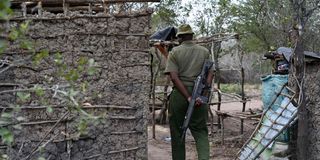
A visit to the homestead in the vast Chakama location—where one man was found dead and four others were rescued in a frail condition on Saturday—revealed what at first appeared to be a remote, rural settlement.
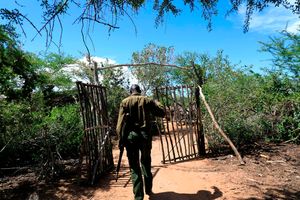
The property is surrounded by thorny shrubs and has a single main entrance. It lies about seven kilometres off the Malindi–Sala Gate highway.
Inside the compound are three mud-walled houses with iron sheet roofs but no windows. Other features include an incomplete water pan, a makeshift chicken coop and an outdoor cooking area.
Though on a smaller scale, the setup bore disturbing similarities to the Shakahola tragedy where Paul Mackenzie and his followers had created a similar environment.
The homestead also contained dozens of 20-litre jerry cans and solar lamps. There were no beds, indicating that the occupants likely slept on the ground. A rudimentary toilet, hidden in the thickets near the entrance, hinted at the isolation and harsh conditions endured by the residents.
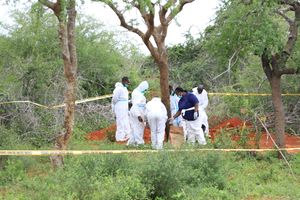
Sections of the ground appeared disturbed, raising suspicions of unmarked graves. Police are currently working to confirm this.
Kilifi County Commissioner Josephat Biwott.
Photo credit: Wachira Mwangi| Nation Media Group
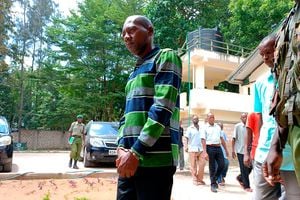
County Commissioner Josephat Biwott said the female suspect whose identity has not been made public was arrested in Kisauni, Mombasa County bringing the total number of people in custody to 11.
These include the four individuals rescued from the homestead, four others arrested in Kisauni, and three people believed to have sold land to the main suspect.
“They are in the custody of the DCI (Directorate of Criminal Investigations) for ongoing investigations. The DCI is moving to court to seek conservatory orders to secure the site and obtain time for further investigations and potential exhumations,” Mr Biwott said.
The administrator added that those rescued will be required to shed light on the fate of children who were reportedly living with them at the homestead.
Residents of Binzaro village described the homestead’s owner as a stranger who had recently been scouting for land. In March, she approached a local villager seeking to purchase property.
Ms Sara Thoya, a resident, recounted how her husband sold a portion of their five-acre plot for Sh18,000 to the woman.
“I was at home when my husband called to tell me about a woman who wanted to buy land and asked if he could sell part of my share. I told him to sell his portion. We offered her lunch, but she declined saying she was fasting,” she said.
M Kanze Kenga, another villager, recalled an encounter with Mr Jairus Otieno, a man who turned out to be a victim of the cult. He had come to her home on Friday to borrow a phone and contact his family, an act that exposed the hidden tragedy behind the thorny shrubs.
Mr Otieno, who had been reported missing in Siaya County in April, had moved to Binzaro with his wife and six children. The whereabouts of the children remain unknown.
“He dialed two numbers, but they didn’t go through. The third one connected and he managed to speak to someone,” Ms Kenga said adding she grew concerned about Mr Otieno's distressed demeanor.
“He said he was coming from the forest and was waiting for his brother to pick him up. He was emaciated. I gave him food, but he refused to eat,” she added.
Mr Otieno’s brother later called Ms Kenga’s phone and she says the conversation deeply unsettled her.
“His brother asked, ‘Is Jairus still there or has he left?’ I said he had left. He then said, ‘He was in serious trouble, but did not tell me.’ When I asked what kind of trouble, he said people were chasing him from Shakahola,” she explained.
The phone call triggered a swift community responsewith residents detaining two women who later confessed they had escaped from the suspect’s homestead.
Mr Kahindi Beja, a local elder, said the community had long suspected mysterious deaths in the area’s nearby forest.
“We always thought the people were killed by elephants, but we were wrong,” he said.
“It was his youngest child that made him seek help. He said the child was taken at night and he feared he would be killed. The child cried out for his father as he was dragged into the forest. When he followed, men blocked his path. He has not seen the child since,” Mr Beja said.
Residents now suspect the forest behind the land may hold more dark secrets. As of Monday, access to the area was restricted to authorised security personnel only.
Detectives later confirmed that the body found at the site belonged to a 50-year-old man whose legs were tied with rope and covered with a mattress. The Chakama homestead has now officially been declared a suspected cult crime scene possibly linked to a broader network of religious extremism and death.
Mr Biwott said the government is strategising on how to address the security risks tied to the 50,000-acre Chakama area. Paul Mackenzie had also previously purchased land within this expanse, allegedly subdividing it among his followers.
“The land has been idle for a long time, and as a government, we believe it poses serious risks. Chakama is not community land—it is privately owned, and the title deeds exist,” he said.