For decades, Africa has been trapped in a bizarre economic loop of exporting its premium crude oil only to buy it back as an expensive, refined product from abroad.
That dynamic is shattering.
The Dangote Petroleum Refinery in Nigeria has crossed a staggering operational milestone, ramping up processing to 700,000 barrels per day (bpd).
Meanwhile, the conglomerate is on Wednesday breaking ground on another Sh2 trillion, 700,000 bpd East African Refinery in Lamu.
But what do these massive numbers actually mean? The Nation interviewed Mr Joseph Otieno, the Commissioner for Petroleum, responsible for the overall coordination of the Petroleum function in the country, as well as Dr Silvester Kasuku, the Presidential Advisor, Governance on Infrastructure, Industrialisation and Metropolis Systems, about what the 700,000 daily barrels exactly means:
What does 700,000 barrels per day mean?
It refers to the amount of crude oil a refinery needs every day to run at full capacity. Crude oil is the raw material. Once processed, it becomes the familiar petroleum products of LPG, petrol, diesel, jet fuel, heavy fuel oil, and bitumen.
A refinery designed for 700,000 barrels per day (bpd) requires that volume of crude to operate optimally. A barrel is a standard unit of measure for petroleum. One standard oil barrel is equivalent to approximately 42 US gallons or 159 liters.
It therefore means 700,000 barrels of crude will be processed per day, further meaning that 700,000 barrels of crude oil will be used as feedstock in the refinery to generate refined petroleum products such as LPG, naphtha, which is used as feedstock for Super Petrol, Jet A1, illuminating kerosene, Diesel, heavy fuel oil and bitumen.
All these products are used in day-to-day activities such as road, air, and marine transport, road construction and thermal power plants for electricity generation.
How much oil is 700,000 barrels?
One barrel is equal to 159 litres, converting this literally means times 700,000 which, therefore, would equal 111,291,106.45 litres of crude oil per day to run the refinery at full capacity.
Does it mean 700,000 barrels of petrol?
No, it does not. The 700,000 barrels refer to crude oil input, not petrol. Petrol is only one of the refined products that come out after crude is processed through distillation, cracking, treating, and blending.
The refining yield is dependent on various factors such as the type of crude and the complexity of the refining equipment where a more complex refinery yields more products, as it has conversion units that break down heavy molecules into lighter and more valuable products.
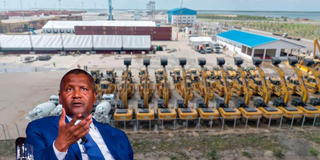
Equipment on site at the Lamu Port on September 28, 2026 ahead of the Dangote East Africa Refinery groundbreaking ceremony set for September 30.
Photo credit: Pool
How big is that compared to Kenya’s fuel market?
It is big, noting that the daily demand for East Africa is roughly 450,000 barrels per day and therefore the refinery will help towards supporting security of supply of refined petroleum products.
The investor is also eyeing the Ethiopian market, which will contribute greatly to the offtake.
What is the current fuel consumption market capability per day?
Kenya and the regional markets served by Kenyan Oil Marketing Companies such as the DRC consume about 21 million litres of fuel per day (combined petrol, diesel and Jet fuel).
How can such a consumption be boosted and sustained by the presence of the East African Refinery in Lamu?
A refinery processing 700,000 barrels of crude produces over 100 million litres of combined petrol, diesel and Jet fuel. This means the East African Refinery in Lamu can fully meet Kenya’s demand and still supply large volumes to regional markets.
Why would Kenya need a refinery that size?
Kenya is the gateway to East and Central Africa, with a robust infrastructure to support countries in the region. Improvements in the economy as well as an increase in the population result in increased demand for petroleum products in Kenya and the region. The refinery would cushion the region from the volatile and unpredictable shocks that have the potential to disrupt the region’s security of supply. The project will also come with economic benefits for the coastal region, Kenya, and the region.
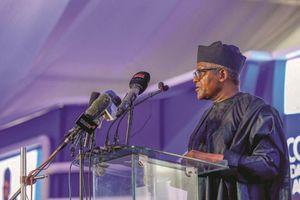
President William Ruto and Dangote Group President and CEO Aliko Dangote during a tour of the Dangote Refinery in Lekki, Lagos State, Nigeria on September 25, 2026.
Photo credit: PCS
What exactly are the strategic reasons behind this?
Two strategic reasons: One is economies of scale. Large refineries produce fuel at a lower cost per litre, making their products globally competitive. The second is regional positioning. Kenya is already a key petroleum gateway for East and Central Africa. A refinery of this scale strengthens Kenya’s role as a regional supply hub.
How does it compare with Dangote's Nigeria refinery?
It is similar in scale, only with few differences in the conversion units. The Dangote Refinery in Nigeria, for instance, is also designed for a capacity in the same range.
How can a refinery run at that capacity daily? What resources are needed apart from the physical infrastructure, e.g electricity, water, etc.?
Economics of refineries worldwide are now determined and differentiated based on size and the level of technology. The main resource for the refinery, apart from utilities such as water and electricity, is the crude oil feedstock, which can be sourced from within and without.
Beyond physical infrastructure, the refinery needs continuous crude oil supply, gaseous fuels to fire furnaces used in processing, Hydrogen for desulphurization (removing sulphur from fuels), water, electricity, and steam systems, specialised catalysts for cracking and treating units and highly trained technical personnel.
Where would these be sourced in Lamu?
Most of these resources are not locally available in Lamu. However, for crude oil, it may be sourced locally now that South Lokichar fields in Turkana are expected to begin production in December 2026. This crude will feed part of the refinery’s needs. Crude oil can also be sourced regionally and internationally. So, the rest will be imported.
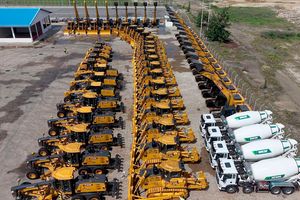
Equipment on site at the Lamu Port on September 28, 2026 ahead of the Dangote East Africa Refinery groundbreaking ceremony set for September 30.
Photo credit: NMG
What can then be sourced from within Lamu?
Utilities such as water and electricity will be sourced locally from Lamu. Lamu’s coastal location makes large-scale seawater desalination the proposed principal industrial-water solution rather than placing the full refinery demand on local freshwater resources.
The project concept includes desalination plants, industrial-water systems, wastewater treatment and extensive water recycling. Power: The concept combines a dedicated 1,000 MW captive generating facility with grid connection and potentially petcoke, renewable generation, waste-heat recovery and, over time, hydrogen-based systems. This redundancy matters because refinery process units cannot tolerate prolonged uncontrolled power interruptions.
Gaseous fuels: These are produced within the refinery itself as part of the refining process. Once operations begin, the refinery becomes largely self‑sufficient for furnace fuel. Hydrogen and other inputs will initially be imported, then increasingly produced on‑site as part of integrated petrochemical operations.
On matters of transport of finished products from the East African Refinery, what should we expect?
Finished products would move through marine export terminals, pipelines, roads and eventually rail connections. Integration with LAPSSET and the national petroleum distribution system is therefore central to the project’s economics.
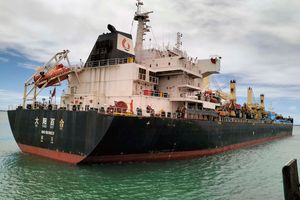
First caller vessel MV DA YANG BAI HE arrives at Lamu Port in Kililana, Lamu West on Saturday, September 26, 2026. The vessel was laden with 2930.295 metric tonnes of project cargo for the construction of the East African Oil Refinery by Aliko Dangote.
Photo credit: Kalume Kazungu | Nation Media Group
The project seems to be closely connected to the wider development of the Lamu Industrial City and Metropolitan region. Why?
Remember, mega ventures always require people and services. This project, now that it involves manpower as well, also needs things like housing, hospitals, training centres, security, workshops, warehouses, telecommunications, laboratories and logistics services. This is one reason the refinery is closely connected to the proposed wider development of the Lamu Industrial City and metropolitan region.
Exactly what will happen during the mentioned three years of project construction in Lamu? What activities entail project construction?
This period is the Engineering, Procurement, and Construction (EPC) phase. Key activities include: One, the Installation of Core Machinery; Crude distillation units, Catalytic crackers, Hydrotreaters, Reformers and Blending and finishing units. Second is Infrastructure Buildout.
This involves Steel structures and pipe racks, Large storage tanks, Internal pipeline networks, Utility systems (steam, power, water treatment), Control rooms and safety systems and Marine and jetty facilities for crude import and product export. In a nutshell, this particular period entails Front End Engineering Design, Detailed Engineering Design, site preparation and civil engineering works, construction of the refining complex, storage tanks and pipelines, installation of electrical systems and completion plus commissioning.
What does the Sh2 trillion Dangote East African Refinery in Lamu contribute in terms of the country’s (Kenya) Gross Domestic Product (GDP)?
The Dangote refinery investment equates to about 12 per cent of the country’s GDP and is projected to have a serious multiplier effect during the construction and operation phases.
When operations start, what else should we expect beyond fuel?
Beyond producing fuels, the refinery will generate petrochemicals, specifically Olefins, Ethylene, Propylene, Aromatics, Benzene, Toluene, Xylene (BTX). These petrochemicals are the foundation of modern manufacturing. They support: