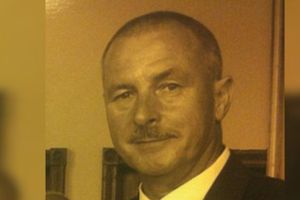
Ms Alexandra Veevers gives her testimony at Mombasa Law Courts on May 3, 2017 during an inquest into the death of her father Harry Roy Veevers.

The widow of the late British businessman Harry Roy Veevers and his two daughters have moved to the High Court seeking orders to compel Mombasa County and Coast General Teaching and Referral Hospital to release his body, which has been lying in the mortuary for more than 12 years.
Ms Azra Parveen Din and her daughters, Hellen Veevers and Alexandra Veevers, argue that it is unlawful to continue detaining the remains over unpaid bills.
“A dead body has no property value and cannot in law be held as collateral or security for payment of hospital or mortuary charges,” the family states in court papers.
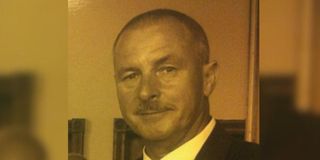
Harry Roy Veevers, 64, from Rochdale, UK died at his home in Kenya in 2013.
Through their lawyers, they say they have been presented with a mortuary bill of more than Sh2.6 million, which the hospital is demanding be settled before releasing the body, a move they term illegal.
“The county and the hospital are demanding payment of mortuary charges said to be in excess of Sh2.6 million, notwithstanding that the law does not permit a dead body to be held as security for a debt,” reads part of the documents filed under a certificate of urgency.
The High Court has certified the case as urgent and ordered that all defendants in the case, including DCIO Kisauni, the Office of the Director of Public Prosecutions (ODPP), Mombasa, the county, and the hospital be served with the documents.
Din, Alexandra, Hellen and Richard Michael Thacker, the administrator of the estate of Alison Christine Thacker, argue that the continued detention of the remains is causing distress and indignity.
“The continued detention of the deceased’s remains causes ongoing indignity to the deceased, serious mental distress to the plaintiffs, and continuing prejudice through delay in re-interment,” they state.
In a supporting affidavit, Alexandra told the court that the body had been held at the Coast General Teaching and Referral Hospital mortuary since it was exhumed in 2014 following a court order issued in 2013.

British national Richard John Veevers walks past the remains of his father Harry Roy Veevers who was exhumed following court order obtained by the family in this picture taken on January 31, 2014.
She notes that a public inquest into the death was concluded in August last year, effectively bringing the criminal inquiry to an end.
“Any claim for hospital or mortuary charges, if at all, lies through ordinary civil proceedings and not through continued detention of the remains,” she states.
The family insists that no court has determined liability for the mortuary fees and that the inquest did not create a legal basis to hold the body. They now want the court to compel the immediate and unconditional release of the remains for reburial at Sapphire Muslim Cemetery in Mombasa.
“This is a clear and exceptional case for urgent intervention so that the deceased may be reinterred without further unlawful delay,” they state.
According to the family, there is a real and immediate risk that, unless preservatory orders are issued in the first instance, the remains may continue to be withheld indefinitely or may be released to persons other than them before the matter can be heard with all parties present.
They argue that although the ruling closing the inquest referred to the release of the remains after payment of necessary mortuary charges, no party applied during the inquest for the assessment or recovery of such fees, and no civil issue of liability for those charges was heard or determined in that process. They say the direction is therefore invalid, null, and void.
“Pending the hearing and determination of this suit, a mandatory injunction should issue compelling the county and the hospital, whether by themselves, their servants, officers or agents, to forthwith and unconditionally release and deliver the remains of the late Roy to the plaintiffs or their appointed agents for immediate re-interment at Sapphire Muslim Cemetery within Mombasa,” they state.
Waiving charges
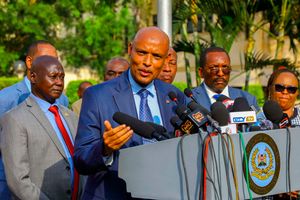
The widow and her children have also based their application on a declaration by Mombasa Governor Abdulswamad Shariff Nassir on March 2, in which he publicly announced that charges for all bodies lying at the mortuary would be waived and that they were to be released free of charge forthwith, with new cases enjoying seven days of free storage thereafter.
They lament that, notwithstanding the directive, the county and the hospital have continued to demand payment before releasing the remains, which they describe as arbitrary and unlawful.
According to the family, any claim for hospital or mortuary charges, if at all due, should be pursued separately through ordinary civil proceedings against any person lawfully liable, including the Government of Kenya, the Attorney General or the Office of the Director of Public Prosecutions, and not through detention of the body.
“The prolonged detention of the remains has caused my family immense anguish, denied the deceased a dignified and final resting place, and perpetuated a state of grief and uncertainty for years,” Alexandra states in her supporting affidavit.

Prosecutor Alexander Muteti (left) interrogates Alexandra Veevers during an inquest into the death of her father, Harry Veevers, at the Mombasa Law Courts on May 2, 2017.
An invoice dated February 24, 2026 and issued to Alexandra indicates that the mortuary charges are based on a daily storage fee of Sh600. The bill was calculated over 4,380 days that the body has remained in the morgue, bringing the total to more than Sh2.6 million.
The body was preserved in the morgue to allow for an inquest into Roy’s death after his sons, Richard John Veevers and Philip David Veevers, suspected foul play. They raised concerns over the manner in which the deceased had been hurriedly buried after dying under mysterious circumstances.
This prompted the exhumation of the body for pathological examination and toxicological procedures aimed at obtaining evidence for the judicial process. The family argued that the delay in reburial resulted from the slow judicial process and should not be visited upon them.
In concluding the inquest, the court did not specify which side of the family should collect the body. It only directed that the remains be released to the family for burial after payment of the required mortuary charges.
No will was produced indicating his burial wishes, nor was there evidence of strained relations with any of his close family members that would justify excluding them from claiming the body.

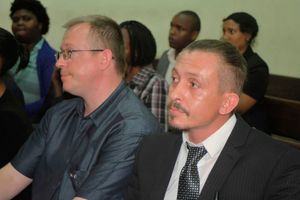
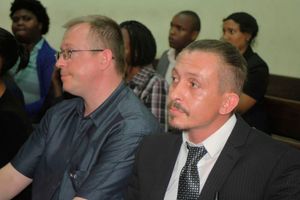
Richard John Veevers (right) and his brother Philip Veevers (left) listen attentively during the inquest into the death of their father Harry Roy Veevers at the Mombasa Law Courts on May 4, 2017.
Roy died in Mombasa in 2013 while preparing to celebrate Valentine’s Day. The court heard that Roy’s widow, Azra Parveen Din, with whom he had lived for 36 years, organised the burial without a postmortem because she believed he was a Muslim.
The court found that there was no evidence linking her to his death and ruled that nothing she did or failed to do could be considered reckless or careless enough to have caused it.
Experts who gave evidence in the case gave conflicting findings, leaving the court without a definitive answer on the cause of death.
Follow our WhatsApp channel for breaking news updates and more stories like this.