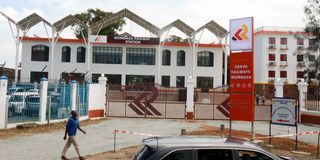
Visitors arriving at the Miritini SGR station will enjoy a seamless, affordable connection to the heart of Mombasa, thanks to a new railway link.
Covering a stretch of more than 10 kilometres, the project, scheduled for commissioning by President William Ruto on Wednesday, September 17, marks a win for the National Government’s last-mile connectivity efforts. However, for hundreds of matatus and taxis that benefited from ferrying passengers to and from the SGR station at exorbitant prices, this launch will be the beginning of a nightmare.
Matatu Owners Association official, Mr Salim Mbarak, confessed that Public Service Vehicles will incur losses following the commencement of the railway transport.
"We had some 100 matatus at Miritini SGR terminus ferrying passengers to other parts of the county. Now that the government is launching a direct link to the CBD, we will be forced to come wait for passengers within the town," said Mr Mbarak.
Picking up passengers within the CBD will mean that the taxis will have to compete with other regular PSVs, including the popular tuk-tuks, at lower fares.
Tourism stakeholders led by the Kenya Association of Hotelkeepers and Caterers official, Dr Sam Ikwaye, said the infrastructural facility will transform and add value to the destination. They called on the public to view it from a positive perspective.
"We are very excited because for once the county and the region will get another infrastructural investment. Accessibility was a big challenge in Mombasa for travellers who were travelling for the experience. It will now be possible to do city tours and embark with wildlife tourism," said Dr Ikwaye.
However, the hotelier urged Mombasa Governor Abdulswamad Nassir to reorganise and reorient the county's experiences for maximum benefit. According to him, the numerous passengers who will be boarding or disembarking the train within the CBD, rather than taking direct taxis to and from the SGR, will boost vibrancy in the city centre, which has been rapidly losing its allure to areas like Nyali, Bamburi and Mtwapa.
"We will start seeing restaurants back in town. Vibrancy of the city will return. Visitors coming through Mombasa must feel the city. We can't have such investment while the county isn't beautiful," he added.
He urged the county to address insecurity and garbage challenges, and called on investors to set up 24-hour businesses in readiness for the expected positive outcomes of the infrastructure.
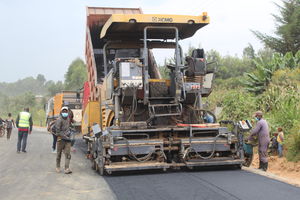
The Sh6 billion project includes the rehabilitation of a 13.8-kilometre section of the century-old metre gauge railway between Mombasa CBD and Miritini, plus a new 2.8-kilometre spur line directly linking to the SGR terminus.
The service offers two commuter-friendly options: Park and Ride and Drop and Ride, supported by a parking facility for more than 100 vehicles at the Mombasa station. It is expected to serve more than 1,000 passengers daily, with potential to expand based on demand.
Kenya Railways has set the price at Sh50, whereas taxis charge between Sh350 and Sh1,000—amounts that are too high for many commuters. Mr Mainga confirmed that all the project's logistical and infrastructure requirements are ready.
The revamped line features several key stations: Mombasa Island (main station), Changamwe West, Changamwe East, and Miritini. Kenya Railways plans to operate three daily trips, catering to commuters during morning and evening peak hours. Initially, the service will run in sync with SGR arrival and departure times, with possible expansion depending on demand.
“What we’ve done is ensure passengers can step off the SGR and onto a commuter train straight to town. No delays, no hustle,” added Mr Mativo.
The project also represents a broader government strategy to reduce traffic congestion, promote environmentally sustainable transport, and enhance Mombasa’s economic potential, particularly in tourism and logistics.
At the Makupa Bridge, Mr Mativo revealed that the railway was constructed adjacent to a new road bridge, replacing the old causeway that had disrupted marine life and tidal flow between Tudor Creek and Kilindini Port.
“There was a government directive to reconnect the waters of the Indian Ocean and preserve marine life. So, Kenya National Highways Authority and Kenya Railways built separate road and rail bridges, then removed the old causeway,” he said.
The new bridge allows free circulation of water, marine navigation, and supports the survival of aquatic ecosystems, aligning infrastructure with environmental preservation goals.
Another unique structure is the locomotive turning table located at the terminus—the only one of its kind in Kenya. The mechanism enables trains to reverse direction without needing loop tracks.
“The locomotive is lifted onto a rotating table, turned, and repositioned at the head of the train for the return journey. It’s time-saving, fuel-efficient, and very unique,” said Mr Mwania Mativo, Kenya Railways project manager.
Kenya Railways Managing Director Philip Mainga added that the decision to rehabilitate the old rail line was driven by the need to address transport inefficiencies in the port city.
“We needed a system that serves both port clients and local commuters, something efficient, convenient, and a boost to Mombasa’s tourism,” said Mr Mainga.
However, he noted that the project’s success came after overcoming major hurdles, including encroachment and vandalism along the old railway corridor.
“People had settled on the railway line and much of the infrastructure had been stolen or removed. We had to collaborate with security agencies to evict encroachers and reclaim our corridor,” he said.
Last month, the county government of Mombasa suffered a setback after its petition challenging the project was struck out. The county had accused Kenya Railways Corporation (KRC) and China Road and Bridge Corporation (CRBC) of carrying out the construction works without first seeking and obtaining the necessary approvals.
This, the devolved unit claimed, was in disregard of the law and provisions of the Physical and Land Use Planning Act. However, the Environment and Land Court (ELC) in Mombasa ruled that the petition by the county government did not contain any specific allegations or particulars of constitutional infringement or threat. Thus, the ELC struck out the petition against KRC and CRBC, saying there was no constitutional question or issue for determination.
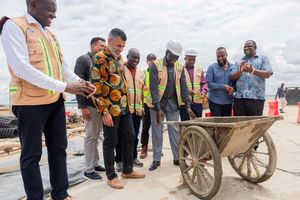
Transport Cabinet Secretary Davis Chirchir, during a planning meeting with KR staff on September 16, reaffirmed the government’s commitment to improving last-mile connectivity and decongesting Mombasa roads.
“This commuter line will move over 4,000 people daily, reduce traffic congestion, and support business in high-density areas like Miritini,” he said.
The railway link adds to Mombasa's key new infrastructure projects in operation so far, after the Dongo Kundu bypass was partially opened in August 2024. The infrastructure eases congestion in Mombasa by providing an alternative to the Likoni Ferry, cutting travel time to the South Coast, boosting trade, tourism, and investment, and supporting regional connectivity to Tanzania through Kwale County.