When Peter entered the Mombasa Remand Prison eight months ago, he was full of fear.
“I thought I would lose my mind. You see these walls and you feel like everything is closing in on you,” the prisoner, whose real name is hidden for privacy concerns, recalls quietly. But he found unexpected comfort in the corner of the prison library.
“Kitabu ndiyo rafiki yangu hapa ndani (I've befriended books here)," he says in Swahili. "When I read, I feel like I've left this place for a moment. I feel human again,” he adds.
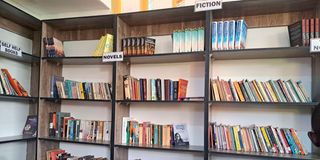
Inside a small room at the Mombasa Remand Prison that serves as a library for the detainees, neat rows of colorful books decorate the shelves. These books have become a lifeline for the hundreds of prisoners.
A tour by the Nation to this library offered a chance for conversations with inmates and prison officers, revealing that religious books and those that deal with legal matters are the most sought after by the persons in custody.
The Bibles and Qurans have become a source of strength in their darkest moments. On the other hand, the books on the laws of the land give them a glimpse into how they can navigate the cases against them in court.
Some say they turn to scripture when fear overwhelms them, others when loneliness becomes too heavy to bear. They describe the quiet moments in the library as times when they reconnect with faith, find forgiveness, and rebuild their sense of worth.
Verses about redemption, patience and second chances give them the courage to face court dates, long sentences and family separation. Many say reading the Bible helps them sleep better, calms their anxiety and reminds them that even behind bars, they are not forgotten.
“When I read the Psalms, I feel like God is speaking directly to me. It gives me peace,” another prisoner said.
A display of some books in the launched library at the Mombasa Remand Prison.
Photo credit: Mishi Gongo|Nation Media Group
Their story mirrors that of other incarcerated persons who now rely on books, from law manuals to motivation guides, not only to pass time, but to understand their rights, fight their cases, rebuild their confidence, and imagine a life beyond the prison walls. It is no wonder that some inmates, upon gaining freedom, often end up becoming evangelists or paralegals.
According to Mr Benson Obeto, the Corporal in charge of welfare and human rights, the hunger for knowledge is universal among prisoners, but their needs vary sharply.
“We have two categories of inmates: those in remand and those serving their sentences. Each group reads for different reasons,” he explains.
For male and female remandees still fighting their cases, books are considered ammunition.
“They really want to understand the law. They look for books that talk about offences, constitutional rights, court procedures, and how to navigate the justice system,” Mr Obeto says.
Many walk in unaware of their rights. Some do not know they can request case documents. Others do not know they can present witnesses.
“But when they read, something changes. They gain confidence,” he says.
A remandee who reads material on law, including the Constitution, he adds, quickly learns why they must appear for mentions, how to request charge sheets, what rights can be infringed, and how to behave in court, something even magistrates notice.
“You can see the confidence in how they speak. They know where to stand, what to say, and when to ask for clarity. Reading empowers them,” he says.
On the other hand, inmates already serving their sentences tend to read for transformation.
“When someone comes in, we carry out assessments to understand what led them to crime. Sometimes, the root cause is a lack of information, low literacy, or limited formal education,” Mr Obeto says.
In such cases, the prison links them to adult education or encourages them to resume formal learning.
“For some, reading becomes therapy. For others, it becomes the turning point,” he says.
Mr Obeto added that there are instances where prisoners discover new interests in skills such as baking, tailoring, carpentry, painting, poetry, among others, simply from reading about them.
“We want them to use their hobbies creatively. If someone loves art, let them learn how to commercialise it. If someone loves cooking, let them learn how to build a small business,” Mr Obeto explains.
He believes financial empowerment is key to reducing repeat offences. But the gap in mental health literature continues to worry him.
“Mental health is a menace here. We have very few books on the topic. If donors can step in, inmates can learn coping skills, stress management, and emotional healing,” he says.
On Monday, the facility received a major boost after the Bohra Dawood community donated 800 books, board games, desks, and 300 pairs of shoes. The donation included law books, motivational titles, English, Maths, science, general knowledge, entrepreneurship guides, and faith-based texts.
“These items may look small from the outside, but inside a correctional facility, they are life-changing tools,” Mr Hamza Tahir, Project Coordinator of the Dawoodi Bohras of Kenya, said. He added that literacy is a pathway to dignity.
“Everyone deserves a chance to learn, even when they have made mistakes,” he stated.
The event was presided over by Dr Salome Muhia, Principal Secretary for Correctional Services, who described the book donation as a transformative step for Mombasa’s correctional system.
(Left standing),Senior Superintendent of Prisons John Omondi Kanyamuok, Officer-in-Charge of Mombasa Remand Prison (extremel Right standing) Patric Kariba officer in charge of Shimo la Tewa prison and assistant commissioner general of prisons Nicholas Mwandau, look on as PS for Correctional Services, Salome Muhia, as she signs the guest book during the launch of the newly furnished prison library at Mombasa Remand Prison.
Photo credit: Mishi Gongo|Nation Media Group
“Today marks an important step in creating pathways of hope for our inmates. This donation reflects the power of partnership in advancing the services we provide in our correctional institutions,” she said. She emphasised that education is a key pillar of rehabilitation.