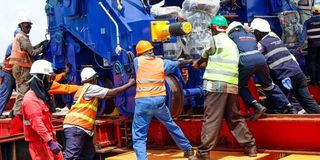
Hundreds of Kenya Ports Authority (KPA) workers have expressed concern over their employment contracts following the publication of a tender for the leasing of equipment and operational services.
The tender, which also includes a request for the recruitment of 4,700 employees with specialised experience in operating different machines and carrying out various duties.
"While other workforce staff might be seconded to the new company, employees remain with KPA as their services are leased to the private company, but the secondment will be voluntary,” read the document.
Some of the striking Kenya Ports Aurhority workers demonstrate outside the KPA head office in 2015. Operations at the port were paralysed for more than eight hours during the workers’ strike called to protest planned privatisation.
Photo credit: File | Nation Media Group
In the document, the deal offers a number of options to workers, including secondment to other government entities.
“All existing agreements between KPA and its employees are transferred to the new company. The government also gives the option of employees either to remain or leave in line with applicable labour laws and agreed consultation outcomes," read the document.
In November last year, the government finalised the repeal of the KPA Act (Cap 3910 to dissolve the authority and reincorporate it as a Public Limited Liability companies under Companies Act to give way for the privatisation of a section of Mombasa port and three Lamu port berths.
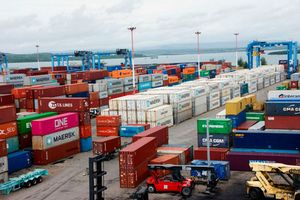
In the Public-Private Partnership in the Kenyan port Sector public disclosure final version seen by Nation , KPA is picking the selection of private parties for the Lamu port Berths 1-3 and the Lamu Special Economic Zone and Mombasa berths 11-14 and Mombasa Container Terminal 1.
In the deal, the private company is expected to rehabilitate Mombasa port Berth 11-14 which currently needs immediate refurbishment at a cost of 45 billion.
The private company will turn around the quay of the berths which was constructed in 1950s into a modern multipurpose terminal and construct a dedicated yard for container storage and a truck waiting area.
In April, Treasury added a new list, including key facilities at the port of Mombasa such as container terminal II at Berths 20–22, container operations at Berths 23–24, cargo handling at Mbaraki Wharfs, and Berths 1–5. It also covers cargo activities at Berths 7–10, as well as the Inland Container Depot in Embakasi and the Inland Container Depot in Naivasha.
This expansion builds on an earlier phase that had identified four assets for PPP investment, including Lamu Port Container Terminal at Berths 1–3, Mombasa Port Berths 11–14, Mombasa Port Container Terminal I at Berths 16–19, and the Lamu Special Economic Zone.
The Treasury said the approach is designed to strengthen domestic financing channels while reducing exposure to external funding risks and global market volatility.
The document stated that entering in the PPP transaction means the next step in the transition to a landlord port which has been in the process since 2002.
Under a landlord model, cargo operations are temporarily transferred to the private sector in exchange for this right to operate the private party pays a concession fee to the KPA. No public infrastructure is sold under the proposed arrangement but the government also retains its regulatory authority.
“The landlord model is expected to provide the private party under taking day-to-day operations the flexibility to make timely decision making while preserving public control over the strategic assets and functions,’ read the document.
According to the government, the enacted Government Owned Enterprises (GOE) Act last year in November, gives room for KPA to transition to a private company which will align it with the Economic Strategy Paper 2003 and the Kenya National Master Plan.
This comes after Managing Director William Ruto stated that under the new State Corporations Act, KPA would remain the owner. However, the workers want to be fully involved in the matter and are demanding clarity on their employment future.
“We do not know our fate after the publication of this tender. Our biggest concern is the details contained in the tender, which give directives on the kind of workers required at the port,” said one employee who requested anonymity.
KPA workers said the plan could resemble the Adani deal, which had proposed the rehabilitation of Jomo Kenyatta International Airport.
Kenya Ports Authority (KPA) Managing Director Capt William Ruto at the Lamu Port site in Kililana, Lamu West on Wednesday, March 18,2026.
Photo credit: Kalume Kazungu | Nation Media Group
On Wednesday, KPA Managing Director Capt William Ruto commended workers for their contribution in improving port efficiency, saying the success of the Port of Mombasa had been driven by the unity, resilience, and dedication of employees.
Speaking after concluding a two-day meeting with workers at the Port of Mombasa, Capt. Ruto elaborated on the authority’s strategic plan and emphasized management’s commitment to improving employee welfare and operational efficiency.
“Workers have strengthened port operations and enabled this port to continue being the leading port in the region. My leadership will continue prioritising workers’ welfare because without employees we cannot achieve our goals,” said Capt. Ruto at the port.
Last month, during an interview with government spokesperson Isaack Mwaura, he dismissed claims that the port was being privatised.
“It is like owning a plot and a building, then renting out the house to you while the house and plot still belong to me. Therefore, there is nothing about privatization. We want support from the private sector to improve port operations,” explained Capt Ruto.
He said many resources at the port are not being fully utilised due to the budget required and that involving the private sector would enhance port operations.
The meeting also provided a platform for employees to engage directly with management and discuss the authority’s plans.
Kenyan Roads and Transport Cabinet Secretary Davis Chirchir has announced that KPA management now has the power to make key decisions, including equipment acquisitions, without interference from the national government, to boost efficiency, accountability, and profitability.
Mr Chirchir said the GOE Enterprises Act, 2025, assented to on November 21, 2025, and effective early December 2025, reforms Kenya's state-owned entities, including KPA, into commercially driven, self-sustaining public companies under the Companies Act.
“The law replaces the previous State Corporations Act with a framework focusing on profitability, accountability, and, in certain cases, allowing for minority shareholder representation on boards,” said Mr Chirchir.
Last year, the Port of Mombasa recorded a total cargo throughput of 45.45 million tonnes, compared to 40.99 million tonnes recorded in 2024.
Similarly, container traffic surpassed 2.11 million TEUs, reflecting continued growth in cargo volumes and operational efficiency.
For now, KPA workers want to know their fate following the publication of the tender. According to the tender, KPA will require workers.
Efforts by Nation to reach the chairman of the national dock workers’ union, Mr Sulman Owuor, were unsuccessful after he sent a message saying he was in a meeting.