Doomsday preacher Paul Mackenzie and his 30 co-accused acted jointly to enforce a fasting regime that resulted in the deaths of children and adults at Shakahola Forest, the High Court has ruled.
In its analysis of 191 counts of murder, Justice Diana Kavedza found that the deaths were caused by unlawful acts and omissions of those who implemented and sustained the regime, rather than being merely unintended consequences of religious practices.
“Having considered the evidence as a whole, this court finds that the accused persons whose individual participation has been established, acted jointly and in concert in furtherance of a common unlawful purpose to implement and sustain the regime that resulted in the mass deaths at Shakahola,” Justice Kavedza ruled.
The judge found that although each of the accused played different roles, their actions formed parts of the same alleged criminal enterprise. However, liability had to be established through evidence of each person's participation and criminal intent.
Justice Diana Kavedza delivers her verdict on the Shakahola mass deaths at the Mombasa Law Courts on October 19, 2026.
Photo credit: Kevin Odit | Nation Media Group
Before analysing the murder charges, the court also observed that the evidence raised questions about whether the conduct disclosed by the prosecution could bear the character of crimes against humanity.
A central finding concerned the children who died after being subjected to the fasting regime. Justice Kavedza rejected the argument that those who complied with the instructions and continued fasting until death had necessarily made an independent decision to do so.
The court observed that children aged between six and 10 lacked the abstract reasoning required to understand the permanence of death. Their imagination, impulsiveness and limited understanding made them particularly vulnerable to manipulation.
“It is therefore possible that the children in this category, going by the excitement of this witness, notwithstanding that he looked like a living skeleton, believed that death was reversible,” the judge observed.
She found that the children could not have given free, informed and legally meaningful consent to starve themselves to death.
“The children did not therefore give free informed and legally meaningful consent to fast to death,” she ruled.
The fact that some children did not resist the instructions, or had embraced the teachings, did not establish that they had autonomously chosen to die. The court considered their conduct within a setting shaped by religious belief, dependence on adults, parental authority, manipulation, fear and coercion.
“In view of the above, it is the finding of the court that the deaths occasioned by starvation were as a result of the unlawful acts and or omissions of those who enforced the fasting regime,” Justice Kavedza stated.
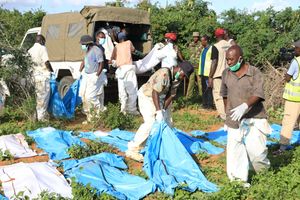
Prosecution witnesses testified that during prayer meetings under trees at Shakahola, Mackenzie told followers that Jesus was not coming and instructed them to fast to death so that they could go to heaven.
The evidence indicated that parents were directed to withhold food from their children, with a subsequent dry fast prohibiting followers from drinking water. The instructions applied to the congregation, including minors who could not fully understand the consequences.
The judge found that the mandatory nature of the instructions coupled with efforts to prevent followers from abandoning the fast, was significant in determining the accused's criminal intent.
“The religious explanations or theological justifications advanced by the accused regarding the fast are legally immaterial to the determination of mens rea (guilty mind),” she ruled.
The court's inquiry, she explained, had to focus on the intention behind the conduct rather than the religious beliefs used to justify it. A spiritual purpose did not automatically negate criminal intent where actions were deliberately calculated to bring about death.
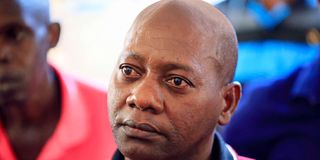
Pastor Paul Mackenzie (left) confers with his lawyer Lawrence Obonyo (right) after the High Court verdict delivered by Justice Diana Kavedza at the Mombasa Law Courts on October 19, 2026.
Photo credit: Kevin Odit | Nation Media Group
The repeated deaths and the continuing physical deterioration of followers were also relevant. The regime continued despite evidence of its fatal consequences, a circumstance the court considered when assessing the state of mind of those involved.
Justice Kavedza also examined evidence that physical force was used to secure compliance and prevent outsiders from reaching those undergoing the fast.
Access to homesteads was obstructed using branches and thorns, while victims weakened by starvation were left beyond the reach of people who might have intervened.
The court considered testimony about an incident on March 23, 2023, when a prosecution witness entered the forest accompanied by journalists. The group was confronted by several accused persons.
The witness testified that Julius Katana threatened him, while another accused grabbed him by the neck and pinned him to the ground. Other individuals allegedly assaulted him, causing injuries to his head and ribs.
A second witness corroborated the incident which was reported at Lango Baya Police Station. The prosecution also presented evidence concerning an assault on a Kenya Wildlife Service officer who had entered the forest.
The judge found that the incidents were material when considered alongside the evidence of enforced fasting and the movement of victims deeper into the forest.
The response to people seeking to establish the welfare of those inside was characterised by threats, obstruction and physical violence. This evidence helped the court assess whether the fasting regime was maintained through coercion and whether those involved understood the consequences of their actions.
Evidence from the Registrar of Societies placed Mackenzie at the head of Good News International Ministries, with the second accused serving as secretary.
Witnesses testified that Mackenzie chaired meetings beneath the trees at Shakahola where instructions governing the congregation were communicated. After the closure of the church and Times Television, he informed followers that the church was relocating to Shakahola, describing the move as “Kanisa Jangwani”, or the church in the wilderness.
The court heard that Mackenzie was instrumental in directing followers to relocate and participate in the fasting regime. Witnesses also linked him to instructions that those who resisted should be forced into compliance, with testimony describing beatings and the use of whips.
The judge cautioned, however, that the prosecution's investigative responsibility matrix could not independently prove the allegations recorded in it. Its contents had to be assessed against witness testimony and documentary evidence.
The second accused was described in the evidence as a senior operational figure under Mackenzie. Witnesses placed him at the scene of grave digging and burials, while other testimony linked him to the enforcement of the regime. The court considered these actions in the context of his alleged broader role in the organisation.
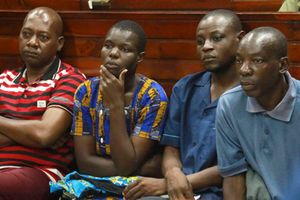
Pastor Paul Mackenzie (third right) with his co-accused persons after the High Court verdict delivered by Justice Diana Kavedza at the Mombasa Law Courts on October 19, 2026.
Photo credit: Kevin Odit | Nation Media Group
Justice Kavedza emphasised that church membership, attending a funeral, driving a vehicle or performing an isolated task could not, on its own, establish murder liability.
The prosecution was required to prove that each accused personally possessed the intention or knowledge necessary for the offence. Criminal intent could not simply be transferred from one member of an organisation to another.
The prosecution presented records indicating that Good News International Ministries had 25 branches across Kenya and used television broadcasts, YouTube, seminars, crusades, workshops and religious publications to communicate its teachings.
Evidence relating to Times Television and Mackenzie's YouTube channels showed that his sermons reached audiences well beyond those attending church services in person. One sermon reviewed by a prosecution witness had attracted 213,000 views.
The judge considered this material relevant to understanding the organisation's reach and how followers from different parts of the country came to settle at Shakahola.
In its overall assessment, the court found that the evidence against the accused had to be examined collectively, while maintaining the distinction between membership of the organisation and participation in the criminal conduct.
The judge concluded that the accused whose individual involvement had been established acted together to implement and sustain the fasting regime that resulted in the deaths.
“I am satisfied that the prosecution has proved its case beyond the reasonable doubt. Each of the accused persons are consequently found guilty on all 191 counts of murder and are convicted as charged,” the judge declared.