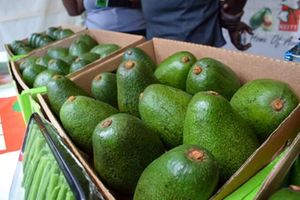
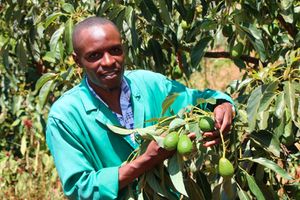
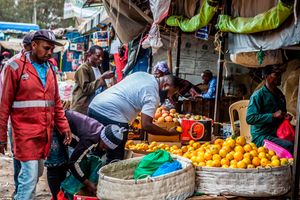
Murang’a has long been a major producer of coffee, avocado and other agricultural commodities, but much of the wealth generated from these products is captured beyond the farm gate.
The county is now looking abroad for investors willing to put money into manufacturing, create jobs and bring technology and skills that can help process more of its produce locally.
The shift marks a departure from last year’s investment drive, which was largely dominated by local investors, attracting revenue of Sh120 million.
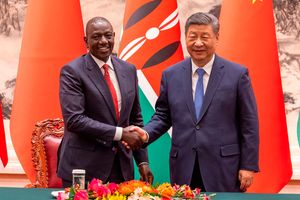
Governor Irungu Kang’ata told investors that the county is targeting companies from the United States, United Kingdom, Japan and China, hoping to attract not just capital but manufacturing expertise that can help build a more industrial economy.
“We want to bring foreign companies with established manufacturing expertise into Murang’a, allow local workers to learn from them and eventually build a workforce capable of running its own industries,” Dr Kang’ata explained.
He argues that attracting foreign manufacturers should not end with the establishment of factories. The county requires the knowledge that comes with those investments to remain after the investors and their expatriate workers have moved on.
“The strategy is to allow these companies to come here, send their people to work here. After 10-15 years, they will then get the know-how,” he emphasised. “They will then create jobs like ours.”
The Governor pointed to South Korea, China and Japan as examples of countries that built manufacturing capacity through industrialisation and the acquisition of expertise.
“We look strategically for countries that are very strong in research and manufacturing. We attract them. We send our people inside there,” he said. “They learn the truth. Then in 15-20 years, they will be able to work in companies that are connected to the work of others.”
The ambition is anchored on the proposed industrial city, a massive development that the county says could eventually create a new urban and economic centre in Murang’a.
According to Dr Kang’ata, investors who responded to last year’s initiative have so far generated about Sh120 million in revenue for the county through payments and allotments.
“This is a continuation of marketing that industrial city,” he said.
The proposed city is expected to occupy about 1,400 acres, compared with about 350 acres occupied by Nairobi’s central business district.
“Basically, to have another city,” he emphasised. “A new city in Murang’a. That’s the whole rationale.”
However, getting investors onto industrial land is only one part of the equation.
Murang'a Governor Irung’u Kang’ata.
Photo credit: Dennis Onsongo | Nation Media Group
Speaking to Daily Nation , the Governor said that the county continues to face delays in processing land titles, a hurdle that has slowed the allocation of land to prospective investors.
“Land processing of the title was an issue. It involves the National Lands Commission. They take their time,” he said. “But how I wish it would be faster.”
Mr Stanley Macharia, the Executive Director of the Intellectual Property (IP) Initiative, told Nation that his organisation is interested in investing in Murang’a’s existing industrial capacity and building a model that allows businesses to manufacture products without each having to establish its own production plant.
According to him, the concept is contract manufacturing, where different brands, trademarks and patents can be produced by one entity.
“That reduces the operation costs for each and every one of these ownership entities,” he said.
He said lower production costs would free entrepreneurs to focus on distribution and intellectual property. His organisation is also working with the European Investment Bank on a proposed Sh8.2 billion facility for infrastructure and upgrades to cooperative-owned factories in Murang’a.
“We are going to invest heavily in scaling up their production capacity, allowing now for the proper supply chain to be built for these new uptakers of the IP,” Mr Macharia said. “The wider objective is to ensure Kenyan agricultural products do not remain trapped at the lower end of the value chain.”
He used coffee to illustrate the problem, arguing that although Kenya produces high-quality coffee, many of the brands found in supermarkets are licensed or operated by foreign entities.
A farmer harvests coffee berries in Muranga County on November 16, 2015.
Photo credit: File | Nation
“We produce some of the best coffee in Kenya,” he said. “Why then do we have majority of the biggest brands on supermarket shelves not Kenyan-owned?”
He believes that Kenya has limitations around ownership and commercialisation of intellectual property.
“We facilitate the environment for the entrepreneur, we facilitate the farmer to extract most value for his or her produce, but also allow the county government to raise revenues in a way that does not affect the unique economics of the investors involved,” he said.
For Marie Gesare of Wewin Consultants, who is also a potential investor, the focus is similarly on creating an environment in which businesses can manufacture, grow their brands and extract more value from Kenyan products.
“My interest is linked to the wider investment proposition around Murang’a’s industrial capacity, including the potential for contract manufacturing, infrastructure development and stronger supply chains,” she explained.
Murang’a’s GDP per capita is currently about $2,000, according to the governor, who said successful implementation of the industrial programme could double that figure.
“A resident from Murang’a will be twice richer in the next five years once this journey ends,” he said.