A new report by Auditor-General Nancy Gathungu has exposed irregularities in the award of bursaries and scholarships in Nairobi County where some beneficiaries received money up to nine times instead of once in an academic year.
The damning audit report lays bare how the awards were made without assessment of applicants’ financial needs and vulnerability.
For instance, some 4,919 learners irregularly received multiple bursary allocations between the financial years ending June 2021 and 2024, exposing the rot in award of some Sh2.06 billion in bursaries and scholarship during the period under review.
During the financial year ending June 2022, some 2,102 learners were awarded bursaries two times from different wards within the county, while another 86 received the money three times.
In the same fiscal year, 14 students were allocated bursaries four times and another four received the funds five times.
According to the performance report tabled before the Senate last month, the multiple allocation trend continued in the following year where 1,196 students received the funds twice, 55 were allocated three times, 11 four times and four five times.
In the financial year ending June 2024, a student received the bursary nine times collecting Sh45,000 in the process, while some two learners were awarded the money seven times.
A further audit of the fiscal year revealed even more irregularities where 1,344 were awarded bursaries twice, some 82 students received it thrice and 16 learners were issued bursaries four times. Moreover, some two learners benefited five times from the kitty.
“Review of the list of beneficiaries for the financial years 2021/2022 to 2023/2024 revealed that 4,919 beneficiaries had multiple allocation from different Wards within the County,” said Ms Gathungu.
“Further, review of fee statements in two sampled schools for the 2023 and 2024 academic years revealed that forty bursary and scholarship beneficiaries received multiple allocations from various bursary providers, resulting in fee overpayments totaling Sh179,086,” added the report.
The report attributed the multiple allocations to lack of independence in the vetting process, where informal social networks exerted undue influence over the selection, lack of an information system to integrate beneficiary data across the various Wards, and lack of a coordination framework among the various bursary and scholarship providers in the public sector.
The mandate for provision of bursaries and scholarships in Nairobi City County is vested in the Executive Bursary and Scholarship Co-ordination Committee.
The two kitties are meant to support needy and vulnerable learners in accessing education. However, the audit identified gaps that affected the effectiveness, and efficiency of the programmes.
Painting a grim picture of the dirty dealings, the report indicated that most of the bursary application forms lacked birth certificates and parents’ identification documents.
On the other hand, scholarship application forms mostly did not have outstanding balance, guardian declaration and family information.
During the period under audit, the county government cumulatively spent a total of Sh2.06 billion on bursaries and scholarships where 211,337 students benefited across the 85 Wards.
The budget allocation for the two kitties during the financial year ending June 2022 was Sh332.5 million, which then increased to Sh640 million in the following fiscal year and Sh765.3 million in the financial year ending June 2024 and Sh663.4 million in 24/25 financial year.
However, the county government did not disburse bursary and scholarship funds during the financial year ending June 2025 following a decision by the Controller of Budget to suspend approvals of requests for withdrawals of bursary and scholarship funds by county governments.
The scholarship process begins with the issuance of application forms to head teachers of public primary schools, who then nominate bright and needy students.
Selected students receive and submit filled forms with the required documents including admission letter, fee structure, birth certificate, Kenya Certificate of Primary Education results, head teacher recommendation, and leaving certificate.
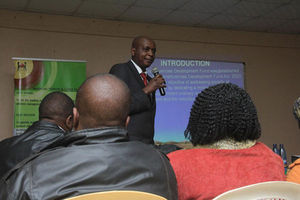
Some bursary beneficiaries in Nairobi received money up to nine times instead of once in an academic year.
Photo credit: Pool
An ad-hoc committee then vets the applications, and the Executive bursary and scholarship coordination committee further verifies the application, preparing a spreadsheet of successful applicants with institutional and student details.
However, the report revealed that eight of the 13 sampled Ward bursary committees did not conduct any verification exercises, citing lack of guidelines and inadequate facilitation.
Further, the Executive bursary and scholarship coordination committee also failed to verify the beneficiaries as well as confirm whether they received the funds.
“This was attributed to the absence of a standardised framework guiding monitoring, follow-up, and reporting on the programme’s implementation at both levels,” said Ms Gathungu.
The findings of the audit by the Auditor-General corroborates revelations made by the Senate Public Investments and Special Funds Committee’s report on oversight of county governments in the management of bursary and scholarship funds.
The report highlighted instances of mismanagement and corruption across several counties with cross-cutting issues affecting the operation of the funds including instances of multiple allocations of bursaries to a single beneficiary.
Further, there was also lack of acknowledgment of receipts by the benefiting institutions and cheques that remained unrepresented leading to stale cheques.
“The counties cannot give a valid list of institutions where they gave bursaries or students who have benefited and there is no acknowledgment. In some of the counties, for example, Bungoma County, we had serious concerns and we have referred that matter to the EACC for further investigation,” said former chairperson of the committee, Senator Godfrey Osotsi while tabling the report in April 2024.
The audit report agrees with the Senate’s findings, saying a review of financial records for the financial years ending June 2023 and 2024 revealed that the county disbursed bursaries and scholarships amounting to Sh714 million and Sh956.2 million, respectively. However, only Sh36.4 million, representing four percent of the total funds disbursed, was acknowledged by the learning institutions.
The low acknowledgement was attributed to inadequate monitoring and a failure by the fund management to follow up with learning institutions undermining the accountability over the bursary and scholarship disbursements, increasing the risk of diversion and misappropriation of funds.
“Consequently, the intended beneficiaries may not have fully benefited from the bursary allocations as learners could have been incorrectly recorded as having fee arrears despite bursary payments having been made on their behalf, exposing them to penalties such as exclusion from classes, or other school activities,” said Ms Gathungu.
At the same time, the report also flagged runaway administrative costs of managing the two kitties, which went contrary to the law.
According to regulation 197 (1) (d) of the Public Finance Management (County Governments) Regulations, 2015, administration costs of a Fund shall be a maximum of three percent of the approved budget.
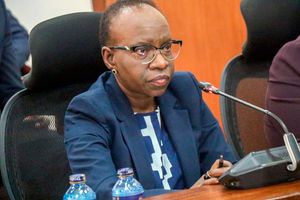
Auditor-General Nancy Gathungu.
Photo credit: Wilfred Nyangaresi | Nation Media Group
However, analysis of financial records established that in 2021/2022 and 2O22/2023 financial years, the scholarships administrative expenses exceeded the three percent limit by Sh12.3 million. Sh4.21 million in the following fiscal year and Sh19 million in the 2023/2024 financial year.
The excess administrative expenditure was attributed to high bank charges resulting from a high number of unsuccessful or unpaid Electronic Fund Transfer (EFT) transactions, the printing of bursary application forms and payment voucher booklets, conference costs, and expenses related to the launch of bursaries and scholarships.
Nevertheless, Ms Gathungu said the excess expenditure represented a lost opportunity to cover additional needy students under the Programme.
A review of sampled bank statements for the four financial years under focus revealed unpaid EFTs, unpaid cheques and additional costs relating to the unpaid cheque transactions totaling Sh203.7 million.
The inefficiencies in funds disbursement through EFT were attributed to errors occurring during voucher processing. Further, cheques were deposited with insufficient funds in the bursary or scholarship accounts, resulting in missed payments and resultant bank charges.
The audit also revealed that the Nairobi County disbursed bursaries and scholarships to secondary schools, universities and colleges, which was outside their mandate.
The County was fingered for not prioritising the needs of learners in institutions that fall under the devolved functions such as pre-primary education centres, village polytechnics, home craft centres, and childcare facilities.
“When you look at the bursary fund and the way it is being managed in a county, you wonder why governors are putting money in bursary funds when bursary is a national Government function. Most of these monies cannot be accounted for,” said Senator Osotsi.