For five months, Jane Wangui Naika cared for her husband, bathing him, feeding him, changing his diapers and helping him through a life he could no longer live independently.
Then, on September 22, the routine that had defined her days since Jeremiah Mwaura’s injury came to an abrupt end.
At about 4am, Mwaura woke his wife and asked for drinking water before going back to sleep. A short while later, he called her again complaining of diarrhoea.
Ms Wangui, a resident of Kiratina Estate in Nakuru County, said she changed his diapers three times before he told her he was feeling better and wanted to sleep. She went back to bed.
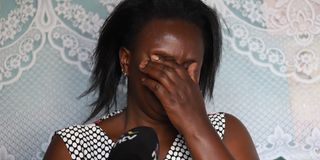
Jane Wangui overwhelmed with emotions during an interview at her home in Kiratina estate in Nakuru County on September 23, 2026. Her husband Jeremiah Mwaura Naika was allegedly assaulted by police officers during the May 18, 2026 fuel price protest.
Photo credit: Mercy Koskei | Nation
At about 6.45 am, she woke up to begin her day. Her first task was always to wash her husband, a routine she had performed every morning since he was injured in May.
But this time, Mwaura did not respond when she called him. She tried waking him three times before raising the alarm.
“I touched him. He was still warm but he was not responding. I got concerned and had to call the neighbours and I realised my husband was dead,” she said in an interview with Daily Nation.
Mr Mwaura, 43, died about five months after he was allegedly assaulted by police officers during protests over fuel prices along the Nakuru-Nairobi highway at Free Area on May 18.
The alleged assault left him with a spinal injury that confined him to a bed at home and robbed him of his ability to work.
It also transformed the life of his wife. Previously, Ms Wangui relied on casual jobs to supplement the family’s income. After her husband was injured, she became his full-time caregiver.
Before his death, she had been planning to take him for physiotherapy, and they had hoped to begin the sessions on Monday, but she was held up by work, and they postponed the trip to Tuesday.
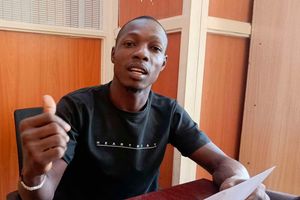
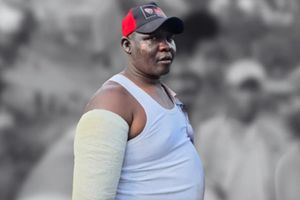
Jeremiah Mwaura, a father of three, recounts from his couch at his home in Kiratina, Nakuru County, on September 2, 2026, how police officers beat him with batons during a May 2026 matatu strike protest over rising fuel prices, leaving him paralysed.
Photo credit: Boniface Mwangi | Nation
“I fought for my husband when he was alive and I am still fighting for him even in his death. I do not know if I will ever get justice for his assault, which has now turned into death,” she said.
Ms Wangui said her husband had been looking forward to the physiotherapy sessions because he believed they would help him recover.
“He was looking forward to the planned physiotherapy since he knew it would help him. He died due to the injuries he sustained following the assault by police officers,” she said.
His death has left his wife and their three children facing not only grief but also a mountain of medical expenses incurred during his treatment.
The pain is compounded by what she describes as the failure to obtain justice for her husband while he was alive.
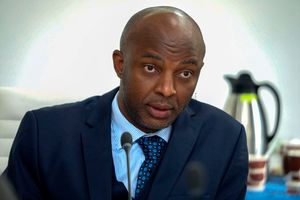
In a statement, Independent Policing Oversight Authority (IPOA) chairperson Dr Duncan Ojwang’ Oburu confirmed that Mwaura’s case had been formally reported and registered with the commission under Case Management Number IPOA/CMU/2341/2026.
Following his death, Dr Ojwang’ said IPOA would amend the case category once it received formal notification and the necessary medical documents.
He said the matter had been reclassified from an assault investigation to one involving death resulting from police action.
“The authority’s complaint management system allows for the existing complaint to be updated and reclassified to reflect the new circumstances. The investigation will therefore continue under the existing case, with the changes in the circumstances duly reflected in the case management process,” he said.
Dr Ojwang’ said the matter remained under active investigation and was being treated with utmost seriousness under IPOA’s statutory mandate to investigate deaths and serious injuries resulting from police action.
The chairperson said IPOA cases do not have a uniform processing timeline, as the time required depends on factors including the nature and complexity of each case, the availability of evidence and the investigative processes involved.
On compensation, Dr Ojwang’ said the process was being independently undertaken by the Panel of Experts on Compensation of Victims of Demonstrations and Public Protests.
“The authority received Mr Mwaura’s documents as an injury victim and processing of his claim is ongoing. However, once the documents confirming his demise are received, the widow will be advised on the process to enable compensation as a fatality victim through the Panel. We urge her to reach out to the Panel also and we will forward supporting documents,” he said.
According to Dr Ojwang’, the panel has so far processed compensation for 1,080 victims following IPOA’s independent investigations and documentation.
He said there were also ongoing discussions on establishing a mechanism to compensate future victims of police abuse through IPOA, while stressing that compensation should not be treated as a substitute for accountability.
The authority also said reparation should not be limited to financial compensation, noting that victims may require other remedies, including reconciliation and support.
Jane Wangui assisted her bedridden husband, Jeremiah Mwaura, to turn on a couch at their home in Kiratina, Nakuru County, on September 2, 2026.
Photo credit: Boniface Mwangi | Nation
In an interview with the Daily Nation on September 2, Mr Mwaura recalled the events that changed his life.
He had woken up with a plan to go to town, buy raw materials for his carpentry work and return home to his wife and three children.
Public service vehicles were scarce, he said, forcing him to pay Sh100 for a journey that normally cost Sh40.
After buying the materials, he boarded a tuk-tuk to return home.
When they reached Free Area, where protesters had lit bonfires and traffic had been disrupted, the driver asked him to alight, fearing the vehicle could be torched.
Instead, he found himself caught in the chaos as police moved to disperse protesters.
He said police officers descended on him, beating him and knocking him to the ground despite his attempts to explain that he was not part of the demonstrations and had only gone to town to purchase materials for his business.
Unable to move, Mwaura remained on the ground as protesters and other people fled the scene.
He was eventually spotted by a Red Cross team in an ambulance passing through the area. Medics stopped and rushed him to Nakuru County Teaching and Referral Hospital, where he underwent an MRI scan and was admitted.
He spent three weeks at the hospital before doctors recommended specialised surgery to support his neck, forcing the family to take him to AGC Tenwek Hospital in Bomet County.
Ms Wangui said she spent more than Sh500,000 on his treatment and sold her poultry project to raise money.
Jane Wangui being comforted by a relative after she was overwhelmed with emotions during an interview at her home in Kiratina estate in Nakuru County on September 23, 2026.
Photo credit: Mercy Koskei | Nation
Even at the time of his death, she was struggling to raise money for his next hospital appointment.
“We have suffered a lot since my husband was injured and became incapacitated. Even our friends who helped us came to a point where they felt there was nothing they could do. There was no hope,” she said.
Before the alleged assault, he was the family’s breadwinner. After the injury, he could no longer work and became completely dependent on his wife.
Ms Wangui, who earns a living through hairdressing and casual jobs, became his full-time caregiver, making it difficult for her to work. The family increasingly depended on extended relatives and friends for support.
Now, she must plan her husband’s funeral while caring for their three children and dealing with debts accumulated during his treatment.
She remains determined to pursue justice through IPOA, despite her husband’s death.
“I am not employed. He has left me with young children. I am pleading with well-wishers to come to my aid and help me give my husband a befitting send-off. I fought for my husband when he was alive and I am still fighting for him even in his death,” she said.