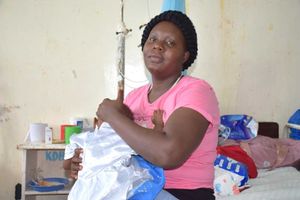
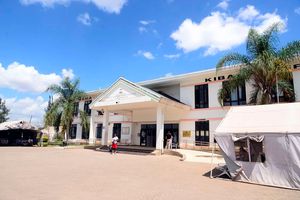
35-year-old Ann Njeri arrived at JM Memorial Hospital in Nyandarua on January 3, unaware that it would be her home for more than three months.
The mother of seven was taken to the hospital by her mother and an aunt after giving birth at home in Rurii village, Ol Kalou constituency.
The detention was not because of her sickness or that of the baby, but because the family could not afford the medical bill.
Even so, Ms Njeri considers herself lucky as she was detained with her child, unlike her bedmate Nancy Wangui, whose baby died two days after delivery.
The two were among 16 mothers detained in the maternity ward and 10 other patients in other wards until the intervention by Nyandarua Governor Kiarie Badilisha.
The patients had enrolled with the Social Health Authority (SHA) but were unable to pay the Sh500 monthly subscription, which they said was unaffordable.
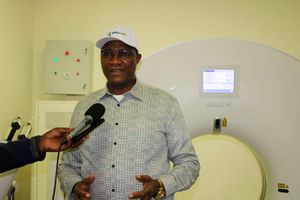
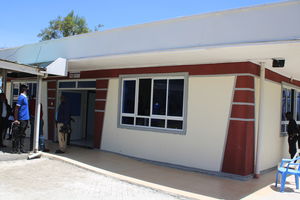
The newly opened CT Scan department at JM Memorial Hospital in the photos taken on January 21, 2026.
Photo credit: Waikwa Maina | Nation Media Group
Ms Njeri was abandoned by her relatives at the hospital where she was admitted due to excessive bleeding.
“I thank the doctors for saving my life. I was discharged from the hospital two days after admission and waited for my relatives to come. They did not show up,” Ms Njeri said.
“My mother sent word that I should remain in hospital as she had no money. My relatives and friends feared arrest if they came.”
Ms Njeri was to pay Sh29,000, which had accumulated to Sh105,000 by the time Governor Badilisha intervened on April 16.
The patients said detaining them was cruel, adding that they suffered mental anguish.
“I even attempted suicide but was saved by the guards and health workers. The idea of suicide came after I had made fruitless efforts to escape. I had also pleaded with hospital security to let me go but they refused,” Ms Njeri said.
At some point, the medical workers gave her anti-depressant drugs.
“It is a terrible experience to be detained at hospital after discharge. I was getting crazy, thinking about my other children and wondering why my relatives had abandoned me,” she said.
Before admission, Ms Njeri’s mother had picked her from Nakuru, where she had collapsed after an illness.
“When my mother learnt of my condition, she came and took me to the village where I delivered at home a month later,” she said.
Nancy, who was admitted to the hospital on March 24, gave birth the same day but lost her baby two days later.
She was in the hospital for almost a month, a period she describes as the most tormenting in her life.
“It was a very painful moment, losing a child and then being detained in the hospital. With time, my blood pressure became almost uncontrollable. To think about the death of my child and others at home under the care of my neighbour. It's not that we are opposed to paying SHA, but I am required to pay Sh680 per month, which I can't afford,” She said.
She added “I tried to make a three-month payment, but the system demands I clear the whole year. I can't afford that; I have other children to feed and pay school fees”
“I appeal to the Health Ministry of Health to review the payment system and conditions so that we are able to do it the way we paid under the defunct National Hospital Insurance Fund (NHIF)” She stated.
She said the current system under SHA only favours those in formal employment or have steady income as they can pay for the whole year’s subscription fees, but those who can hardly put food on the table for their families are disadvantaged.
She says it's impossible for casual workers who earn Sh300 in a day to pay the high SHA tariffs, yet the casual jobs are not available daily.
"How can a casual worker earning Sh300 in a day and having a family to feed raise over Sh8,000 annual SHA subscription? The NHIF payment model was better,” said Nancy.
The newly opened CT Scan department at JM Memorial Hospital in Nyandarua County on January 21, 2026.
Photo credit: Waikwa Maina I Nation Media Group
Governor Badilisha said it cost his administration over Sh1 million to release the detained patients and called for a review of SHA payments model so that Kenyans of humble backgrounds can afford the cover.
“All the patients detained in the hospitals complain that the SHA monthly payments are too high for them to afford. We admit that SHA is a good idea, but it’s operations needs to be reviewed so as not to make it look like a club of the well off in the society” Mr Badilisha, said.
The Governor said “Civil servants are deducted a lot of money for the scheme; there should be no reason why the poor can't be reviewed to pay what they can afford. There is no reason why the government can't pay for the poor”
“It is painful to see mothers detained in hospitals just because they cannot afford to pay the SHA monthly fees which is paid once a year”
Governor Kiarie said “It's even more complicated because SHA does not remit hospital claims on time; JM Hospital alone is owed Sh103 million for the last three months. We are unable to buy drugs and other essentials,”
Dr Joram Muraya, the JM Memorial Hospital Superintendent, says it's costly to detain a patient in a health facility, and it's equally detrimental to their health. But due to high bills, the hospital was forced to push the patients to pay their pending bills.
“It's a painful experience that does not add value to the patient or the health facility, since in most cases, the detained patient is most unlikely to be able to afford to pay. It’s a very traumatizing experience for the patients; they are a burden to the health facilities that are already understaffed and with limited resources” Dr Muraya said.
Dr Muraya added “Most detained patients end up contracting other diseases, resulting in additional costs to the hospital. The patients are forced to share beds, further exposing them to more diseases,”
He adds that the health facilities incur additional costs, including cleaning of the bedding and feeding the patients who are detained.
“Some patients move from stress to depression. Most of those detained are single mothers; they worry about the other children at home. They are the sole breadwinners; this leads them to physiological distress. It's a painful experience when a mother is detained in a hospital, going for months without seeing her other children. The patients and children are exposed to infectious diseases on top of the psychological trauma,” says Dr Muraya.