Controller of Budget Margaret Nyakang’o says county governments will no longer be able to divert statutory deductions to finance other expenditure following the integration of payroll and financial management systems, in a reform aimed at preventing further accumulation of arrears estimated at Sh100 billion.
During hearings by the Senate Labour Committee chaired by West Pokot Senator Julius Murgor on unremitted statutory deductions, Dr Nyakang’o said the system became operational on July 1, allowing taxes, pension contributions and other mandatory deductions to be remitted automatically when counties process employees’ salaries.
She said the reform would close a loophole that previously allowed counties to pay employees their net salaries while withholding statutory deductions to meet other recurrent expenses, leaving pension schemes and other institutions with billions of shillings in outstanding remittances.
“What has happened is that IFMIS has been mapped to the payroll system. So that the moment the county presses pay, the net pay goes to the employee, PAYE goes to KRA, pensions go to the respective schemes, and all the statutory payments are already mapped and are already being paid,” Dr Nyakang’o told the committee.
The system was integrated following improvements to the Human Resource Information System, with the Ministry of Public Service playing a key role in making it possible to link payroll processing to the Integrated Financial Management Information System (IFMIS).
She said the immediate impact would be to prevent the creation of new arrears, but cautioned that the reform would not settle the liabilities accumulated before the integration took effect.
“What we are dealing with here is what happened before July 1 of this year,” she said, referring senators to a report detailing county salary arrears and statutory deductions, classified according to how long the liabilities had remained unpaid.
She said the aging of the debts offered a way to establish which counties were still defaulting and which liabilities dated back to earlier administrations or the pre-devolution period.
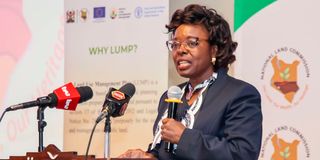
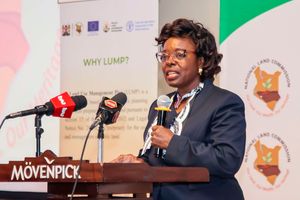
Controller of Budget Dr Margaret Nyakang’o.
Photo credit: Wilfred Nyangaresi | Nation Media Group
By the end of the 2026/27 financial year, the CoB said, counties should have no new outstanding liabilities in the category covering arrears of less than one year, provided the automated system operates as intended.
“We should not be having any figures in this column called under one year. Because as each payroll is being done, the statutory deductions are being paid automatically,” she said, adding that any failure would likely arise from system malfunctions.
Dr Nyakang’o said counties sometimes budgeted for net salaries rather than the full cost of employment, including statutory contributions, creating funding gaps that contributed to the withholding of deductions.
She cited Murang’a as an example of a county with substantial outstanding liabilities, saying its own returns showed a total of about Sh1.096 billion in salary arrears and statutory deductions.
The figure included liabilities accrued in the past three years and debts dating back to the pre-devolution period.
Nairobi, meanwhile, had a significant portion of its outstanding liability dating back to the former city council, she said, illustrating the extent to which historical debts continue to complicate the settlement of statutory deductions.
Dr Nyakang’o warned that the overall liability could continue rising as interest and penalties accumulate on unpaid amounts, making it harder for counties to clear the principal debt.
“Unless that principal amount is cleared so that they stop approving the penalties, the graph will only be going up; it will never come down,” she said.
She welcomed discussions around possible negotiations on penalties and interest, noting that the Retirement Benefits Authority had indicated that incentives were available to encourage early settlement of outstanding pension-related obligations.
A report by the Controller of Budget shows that county governments had accumulated Sh100.24 billion in outstanding salary arrears and statutory deduction trade payables as of June 30, 2026, with Sh98.44 billion attributed to county executives and Sh1.80 billion to county assemblies.
Nairobi had the highest reported liability among county executives, at Sh44.36 billion, far exceeding other counties. It was followed by Machakos, with Sh1.95 billion, and Mombasa, with Sh1.33 billion. Murang’a had outstanding liabilities of about Sh1.1 billion, while Meru and Kiambu owed Sh901.21 million and Sh686.71 million, respectively.
The figures reveal wide disparities in the accumulation of salary arrears and statutory deductions across counties, with the report indicating that some of the liabilities date back to the pre-devolution period, when former local authorities were responsible for the obligations.
The Senate Labour Committee said it would summon county governments with the highest outstanding deductions to explain the failure to remit funds withheld from employees and outline measures to clear the arrears.
The planned summons are expected to put county administrations under scrutiny over their budgeting decisions, the diversion of statutory deductions to other recurrent expenditure and the measures they have taken to settle outstanding obligations.
Dr Nyakang’o told senators that the new payroll integration would prevent counties from withholding fresh statutory deductions to meet other expenses, but the outstanding liabilities remain a separate challenge.
The committee is expected to examine how the affected counties intend to settle the accumulated debt, particularly as interest and penalties continue to increase the amounts owed.