A network of private recruitment agencies and intermediaries allegedly channelled Kenyan job seekers into Russia’s war against Ukraine by promising lucrative civilian employment, arranging travel and ultimately exposing some recruits to military service, investigations and accounts from survivors show.
The recruitment chain has come under renewed scrutiny following the United States Department of State’s 2026 Trafficking in Persons Report, which says some Kenyan officials colluded with recruitment agencies and Russian government officials to facilitate the fraudulent recruitment of more than 1,000 Kenyan men to fight for Russia.
The report says some recruits were lured by promises of well-paying jobs in security and construction before being pressured into signing contracts with Russia’s Ministry of Defence.
The investigation, published in the report Death Benefits: the industry selling Russia’s war as a job, identified 289 digital assets used to recruit foreign nationals systematically into military service for the Russian Federation.
The assets include 197 websites and web pages, 19 social media accounts and 73 messaging accounts or channels on platforms including WhatsApp, Telegram, VK and MAX.
Investigators said some of the sites are built as disposable “burn-and-replace” pages that can be taken down and replaced when exposed.
Billboards advertising the Russia-based Alabuga Start programme have been erected in Nairobi, offering young people a chance to relocate to Russia for employment.
Photo credit: Shutterstock
The report says the recruitment industry operates through a number of competing operations rather than a single organisation, with investigators identifying at least 14 and possibly as many as 33 separate recruitment operations.
“The recruitment funnel does not belong to one organisation,” the report says, adding that the core brands include Military Staff Agency (MSA), Work in Russia (WiR), IRC Russian Bear and Work Crew Agency (WCA).
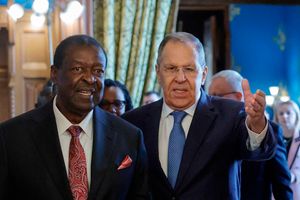
Beyond the recruitment of Kenyans to fight in Ukraine, Russia is also seeking to expand its influence in Africa through conferences, political networks and platforms promoting a new global order, according to Head of the Middle East and Africa Programme, Polish Institute of International Affairs (PISM) Jędrzej Czerep.
The analyst said Russia’s engagement with African political figures, youth leaders, public commentators and other influential personalities was part of a sustained effort to cultivate relationships and promote its geopolitical interests.
He cited a series of conferences held in Russia that bring together African opinion leaders, including representatives of political parties, journalists and prominent personalities, arguing that the events form part of a continuing cycle of engagement.
“If you look at the conferences in Russia, they, in one way or another, involve African opinion leaders. It is the youth wings of political parties, journalists and people with famous names. They are always in the loop, and they are always invited to those events. It is a never-ending chain of conferences. One morphs into another, and I do not know where one ends and another starts. There is always this exchange,” he said.
He said the gatherings offered Moscow an opportunity to present itself as a partner in the push to end Western dominance of international affairs, a message that resonates with African countries that have long demanded greater representation in global institutions.
“The strong message Russia has is that we are for a multipolar order, which, if you think about it, is better than unilateral American global dominance,” he said
While appearing before the Senate, Foreign Affairs Cabinet Secretary Musalia Mudavadi said the government had documented 354 Kenyans involved in the conflict, compared with 289 reported recruited by the State Department for Diaspora Affairs in July.
“The Ministry has records of 354 Kenyan nationals involved in the Russian-Ukraine crisis,” Mr Mudavadi said.
Prime Cabinet Secretary and CS for Foreign and Diaspora Affairs, Musalia Mudavadi during an interview in his office in Nairobi on May 22, 2025.
Photo credit: Dennis Onsongo | Nation Media Group
The latest records list 77 Kenyans on the frontline, 38 in military camps, 52 whose whereabouts are unknown or unclassified and 34 who are hospitalised. Another 62 have been repatriated, five are prisoners of war in Ukraine, one is in detention and another has completed a military contract.
An investigation by Journalists for Justice (JFJ) found that Kenya had the largest documented contingent, with 873 cases, followed by Egypt with 407, Cameroon 383, Ghana 337, Nigeria 214 and Uganda with 108.
The findings, contained in the August 2026 report The Death Contract: How Russia Recruits Africans to Fight and Die in Ukraine , reveal a recruitment system that has expanded from prison recruitment to employment agencies, universities, military networks, corporate structures and political connections.
“The model did not remain fixed. It moved from prison recruitment to the exploitation of student populations, from informal brokers to licensed labour agencies. The cross-border movement of recruiters into new jurisdictions mirrors the pipeline’s own logic: when one channel closes, the system finds another,” read the Report.
According to the investigation, recruiters changed their methods as governments and authorities in several African countries began increasing scrutiny of the recruitment of their nationals into Russia’s military.
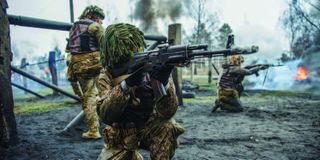
Some Kenyans have been recruited to fight for Russia in Ukraine.
Photo credit: Pool
JFJ said it compiled the figures by cross-checking Ukrainian military intelligence data with interviews with recruits, prisoners of war, returnees and relatives of dead and missing men.
The investigation also examined military contracts, recruitment-agency records, financial documents, visa records, WhatsApp communications, government statements and parliamentary proceedings.
This comes after Amnesty International, the rights organisation said recruiters were targeting economically vulnerable people, particularly from countries in the Global South, with promises of lucrative jobs, high salaries and Russian citizenship.
In a new briefing, the human rights organisation said economically vulnerable people from countries in the Global South were being lured into the Russian Armed Forces through false promises of civilian employment, lucrative salaries and opportunities to obtain Russian citizenship.
Amnesty said some recruits were targeted while already in Russia, particularly migrants and refugees in precarious legal situations.
“Recruiters have developed a system of coercion, fraud and deception, including false promises of civilian or non-combat employment, to enlist foreigners in the military,” Amnesty Secretary General Agnès Callamard said.