An American freelance journalist who was deported from Kenya to Dubai instead of her home country has sued the government, seeking to have her removal declared illegal and to be allowed back into the country.
The State cited an intelligence report alleging that she was involved in activities detrimental to Kenya’s moral fabric and national security. However, Ms Jones argued that the government had not produced the report or evidence to support the allegations.
“The respondents have merely relied on generalised allegations without disclosing any factual basis upon which this Court can independently determine the legality or reasonableness of their decision,” she stated in an affidavit.
Through her lawyer, Ms Jones said she had never been served with the declaration barring her from Kenya or the removal order authorising her deportation. She said she only learnt of the documents after the government filed its response in the case.
“By failing to notify me of the decision, the respondents effectively denied me my constitutional right to challenge the decision before its implementation,” she said.
She also questioned why the government had allowed her to remain in Kenya for about six months after declaring her a prohibited immigrant if she posed a serious security threat.
“If indeed I posed such a serious threat to national security as alleged, there is no explanation why the respondents permitted me to remain freely within the country for six months,” she argued.
Ms Jones said the government had violated her right to fair administrative action by failing to notify her of the intended decision, disclose the evidence against her or allow her to be heard.
She was deported to Dubai on March 8, 2026, despite being an American citizen. She argued that sending her to the United Arab Emirates, amid regional armed conflict and travel advisories, had exposed her to foreseeable safety risks as a lone traveller without accommodation or contacts.
The journalist also challenged the government’s decision to issue her a three-year Class K residency permit on February 5, 2026, four months after declaring her a prohibited immigrant. She argued that the permit either superseded the earlier declaration or created a legitimate expectation that she was lawfully entitled to remain in Kenya.
The State attributed the issuance of the permit to a misspelling of her surname in its Personal Identification Secure and Evaluation System (PISCES), which allegedly prevented her name from being captured during security clearance.
Ms Jones maintained that the error was the government’s responsibility and argued that the authorities could not rely on an undisclosed intelligence report while withholding the evidence needed to challenge their decision.
She asked the court to declare her deportation and the decision to classify her as a prohibited immigrant unconstitutional, unlawful and procedurally unfair.
She is also seeking orders compelling the government to facilitate her return to Kenya or preventing authorities from obstructing her re-entry without following due process. She is also seeking to have immigration authorities, border officials, and carriers notified not to block her entry pending further court orders.
In addition, she wants the State to preserve and disclose immigration records relating to her, including intelligence advisories, watch-list entries and internal communications. She is also seeking damages for alleged constitutional violations, emotional distress, safety risks and disruption of her professional engagements, as well as legal costs.
The Directorate of Immigration Services, the Ministry of Interior and the Attorney-General defended the deportation, arguing that Ms Jones had already been declared a prohibited immigrant before her latest entry into Kenya and was therefore ineligible for a work permit.
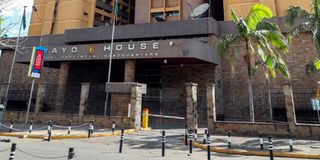
Directorate of Criminal Investigations headquarters on Kiambu Road.
Photo credit: Bonface Bogita | Nation
The respondents said the declaration was based on an intelligence report indicating that she was involved in activities detrimental to Kenya’s moral fabric and national security.
They relied on Sections 33(1)(h) and 33(1)(p) of the Kenya Citizenship and Immigration Act, which provide grounds for declaring a person a prohibited immigrant. They also cited Sections 33(5) and 34, arguing that a prohibited immigrant could not lawfully enter or reside in Kenya, even with immigration documents.
The State further relied on Section 43(1) and (2), saying a removal order had been lawfully issued, and Section 41, under which a work permit could be invalidated if its holder was declared a prohibited immigrant or an inadmissible person.
“The process laid down by law was followed in removal of the petitioner from the country,” the respondents argued.
They maintained that Ms Jones had been informed of the reasons for her removal and allowed to collect her belongings before leaving Kenya.
“The petitioner was notified of the reasons of her removal and she had no defence to the same,” the State said.
The respondents argued that the journalist had failed to demonstrate how her constitutional rights were violated, insisting that she had to provide evidence and specify the alleged violations.
They maintained that her presence in Kenya after the prohibited immigrant declaration had resulted from an administrative error rather than a lawful entitlement to remain in the country.
The State urged the court to dismiss the petition with costs, arguing that the immigration authorities had acted within the law and that Ms Jones was not entitled to the orders she sought.