Nairobi and Nakuru are owed Sh75.7 billion in revenue, a sum that exceeds the combined arrears owed to the remaining 45 counties and accounts for more than two-thirds of the Sh113.3 billion owed to all 47 second-tier governments.
According to the County Governments Implementation Review Report for the 2025/26 financial year by Controller of Budget Margaret Nyakang’o, Nairobi had the highest revenue arrears at Sh59.09 billion as of June 30 this year, followed by Nakuru at Sh16.64 billion.
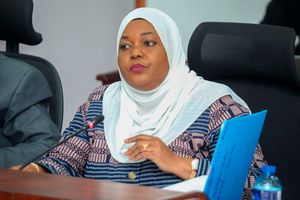
Controller of Budget Dr Margaret Nyakang’o.
Photo credit: Wilfred Nyangaresi | Nation Media Group
Nairobi’s arrears accounted for 52.15 per cent of the total outstanding revenue for the counties, while Nakuru’s represented 14.69 per cent.
“As of June 30, 2026, Nairobi City County had the highest arrears, totalling Sh59.09 billion, representing 52.15 per cent of the overall unpaid revenue. Nakuru County had Sh16.64 billion (14.69 per cent) of the total revenue arrears,” the report states.
Much of the outstanding revenue comprises unpaid land rates, house rent and other levies, with some debts dating back more than a decade. The figures point to persistent weaknesses in revenue collection, enforcement and financial management.
The report shows that all 47 county governments had accumulated Sh113.29 billion in revenue arrears by June 30 this year. Of this, Sh100.4 billion comprised ordinary own-source revenue arrears. The rest included amounts owed by the Social Health Authority (SHA), the defunct National Hospital Insurance Fund (NHIF) and other debtors.
“The situation highlights persistent challenges in revenue mobilisation, constraining liquidity, delaying service delivery and undermining fiscal sustainability in the counties,” the report states.
The outstanding money could finance major development projects, including building and equipping of level four and level five hospitals, as well as water and road infrastructure.
Governance expert David Ngugi said recovering the arrears would significantly expand counties’ capacity to finance essential services and reduce their dependence on transfers from the national government.
“The Sh113.3 billion can significantly transform healthcare in several counties. It can fund and equip modern hospitals in several counties. The amount is nearly 35 per cent of the total equitable share to counties. It can finance dozens of major water projects in several counties to ensure Kenyans access clean water,” he said.
Despite the mounting debts, the report indicates that many counties have made inadequate efforts to recover the outstanding revenue even as they struggle to meet their collection targets.
This has left them heavily dependent on National Treasury disbursements, which are sometimes delayed, disrupting operations and slowing essential services.
The National Treasury in Nairobi.
Photo credit: File I Nation Media Group
The outstanding amounts include unpaid land rates and property rent, health-related reimbursements and other levies, including market stall fees.
The report also raises concerns about debts that have existed for between five and 10 years, with some dating back to the era of the defunct local authorities. Rather than recover the money, some counties continued to allow arrears to accumulate.
“A review of the county governments’ records revealed that the devolved units had shown a lack of commitment and had not put in place strict measures to collect the arrears,” the report states.
The problem has been compounded by political decisions to waive debts, with some governors offering relief to defaulters ahead of the 2027 elections.
Such waivers deny the counties revenue that would otherwise finance development and essential services, thus entrenching their reliance on national government transfers.
In Nairobi, land rates account for the bulk of the outstanding revenue, with property owners owing City Hall Sh51.34 billion.
The county is also owed Sh5.64 billion in wayleave fees, Sh440.6 million in house rent and market stall fees, and Sh283.7 million from outdoor advertisements and billboards.
Nairobi Governor Johnson Sakaja.
Photo credit: File | Nation Media Group
The report identifies Kenya Power as a major debtor, owing Sh5.6 billion in wayleave fees. It also raises concerns about county houses occupied by tenants who have accumulated rent arrears, with some occupants remaining in the properties without paying rent.
In Nakuru, the outstanding revenue is more than three times the amount the county collected from its own sources in the 2025/26 financial year, raising concerns about its ability to finance development and meet its obligations.
The county collected Sh5.4 billion in own-source revenue during the year, up from Sh3.6 billion in 2024/25. However, its arrears stood at Sh16.64 billion as of June 30 this year.
Land rates accounted for Sh11.8 billion of the arrears, while house rent accounted for Sh782 million.
The report also identifies Sh456.9 million owed by the Social Health Authority and Sh432.9 million by the defunct NHIF. The accumulation of unpaid revenue has left the county increasingly dependent on national government transfers, which are sometimes delayed.
Nakuru, whose capital was granted city status in December 2021, has struggled to raise sufficient own-source revenue to meet its financial obligations.
Its collections have generally ranged from Sh3 billion to Sh5 billion annually, while salaries and allowances alone consume about Sh8 billion, according to the figures cited in the report.
The situation threatens to constrain investment in infrastructure and other developments needed to support the growth of the young city.
Governor Susan Kihika’s administration is also under scrutiny for its decision to waive more than half a billion shillings in rent arrears.
Nakuru Governor Susan Kihika delivers her speech during the launch of the second phase of Sh500 million trauma centre at Nakuru County Referral and Teaching Hospital on November 12, 2025.
Photo credit: Boniface Mwangi | Nation Media Group
Last year, the county issued a Sh693 million waiver on rent arrears owed by residents occupying county houses in areas such as Kivumbini, Bondeni and Flamingo. The beneficiaries included tenants who had defaulted on rent payments since the advent of devolution.
The waiver reduced the sum the county could recover from the affected tenants, limiting its ability to increase own-source revenue. However, Nakuru has outlined measures to recover outstanding debts in the 2026/27 financial year.
The county’s measures include enforcing existing legal frameworks such as the Housing Estates Tenancy and Management Bill, the Revenue Administration Act and the Rating Act, to recover unpaid land rates, house rent and market stall fees.
The county also plans to issue demand notices, establish a debt collection unit, pursue legal and administrative action against defaulters and collaborate with the national government to recover significant arrears owed by public entities.
Mombasa had the third-highest outstanding revenue at Sh13.68 billion, including Sh11.8 billion in unpaid land rates and Sh1.5 billion owed by SHA. The defunct NHIF also owed Mombasa Sh322.8 million.
Mombasa Governor Abdulswamad Nassir.
Photo credit: Kevin Odit | Nation Media Group
Kiambu had revenue arrears of Sh5.63 billion, with land rates accounting for Sh4.64 billion and property rent contributing Sh486.6 million.
Other counties with substantial arrears include Kitui at Sh2.2 billion; Busia and Kakamega at Sh1.7 billion each; Laikipia at Sh1.4 billion; Kisii at Sh1.3 billion; and Nyeri and Bomet at Sh1.2 billion each. Makueni was owed Sh954 million, Meru Sh830 million, Nandi Sh684.4 million and Kajiado Sh684 million.
Several counties have pledged to introduce stricter measures to recover outstanding revenue in 2026/27. These include engaging debt collectors, taking legal action against defaulters, and denying business permits to those who fail to settle their debts.
The arrears come against a backdrop of persistent underperformance in own-source revenue collection, with more than three-quarters of counties struggling to meet their targets 13 years after the advent of devolution. According to a recent report by the Commission on Revenue Allocation, the counties have the potential to collect at least Sh260 billion annually but continue to raise less than Sh100 billion.
In 2025/26, the 47 counties collected Sh96 billion in own-source revenue, compared with Sh60 billion in 2024/25 and Sh41.4 billion in 2023/24.
Ms Nyakang’o recommends that they strengthen their revenue collection frameworks, improve enforcement mechanisms, adopt automated revenue management systems, and address institutional weaknesses that undermine collections, particularly in areas with high revenue potential, such as Nairobi and Nakuru.
The counties have also been advised to work with SHA and other agencies to ensure outstanding payments are settled.