The counties of Mandera, Wajir and Garissa have reported an increase in terror incidents during the month of July, leaving security agencies in the region searching for a new strategy.
Mandera recorded the highest number of incidents at nine, followed by Garissa with four and Wajir with two, an intelligence report shared with local security agencies and seen by the Nation shows.
The latest attack was on Thursday night when 10 people narrowly escaped death after the vehicle they were travelling in hit an explosive along the Takaba–Wargadud–Elwak road in Mandera.
The Thursday evening incident occurred near Odole village at about 6pm, according to a police report filed at Elwak Police Station.
Speaking to the Nation on condition of anonymity for fear of his security, one of the victims said all was well after they left Takaba town in Mandera West at about 2pm, heading for Elwak.
He said the Toyota Land Cruiser, which is commonly used as a public service vehicle, was travelling at a normal speed when it hit the landmine.
"We were all engaged in discussing the current political happenings in Mandera when we heard the explosion. Within seconds there was silence. I realised blood was running down my face. I suffered a deep cut on my face," he said.
Confirming the incident, Mandera South Deputy County Commissioner Tobias Otunga said investigations had been launched.
"There was an incident last evening where a vehicle transporting about 10 people from the general direction of Wargadud towards Elwak was hit by an explosive. We still do not know who was behind the incident or the motive, but we have launched investigations," Mr Otunga said by phone.
A senior security officer in the region, who requested anonymity, said "we are currently experiencing increased movement of suspected members of the Al-Shabaab group”.
He added: “Our intelligence has shown high levels of infiltration by the militants into our communities. This remains a high risk to our security."
On July 31, intelligence reports indicated that local pastoralists operating along the border had spotted heavily armed suspected Al-Shabaab militants.
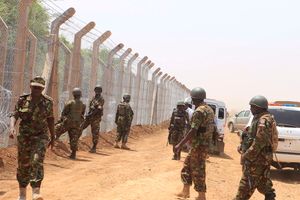
Mandera recorded the highest number of incidents at nine, followed by Garissa with four and Wajir with two.
Photo credit: File
They further told security agencies that the militants had set up temporary camps along the common border.
According to the report, the militants warned local pastoralists to stay away from the border areas.
In their recommendations, security agencies concluded that the militants' intentions were unclear and advised all concerned to remain alert and exercise heightened vigilance.
In Mandera, suspected Al-Shabaab militants ambushed security officers on patrol in the Quraqura-Wante area, killing at least five officers.
Among the victims were four officers drawn from the Special Operations Group and a police reservist.
Later, an explosive device planted by the militants targeting a reinforcement team detonated, destroying a police vehicle, although no casualties were reported.
According to the Armed Conflict Location and Event Data (ACLED), an independent global monitor that collects, analyses and maps data on conflict and protest, the Mandera incident reflects a broader surge in Al-Shabaab attacks in North Eastern counties and, by extension, Lamu County during June and July.
ACLED is a non-profit organisation that provides detailed information to help identify, understand and track patterns and trends in conflict and crisis situations around the world.
Within the past two months, ACLED recorded at least 25 political violence incidents, including two defused explosive devices, involving Al-Shabaab in Mandera, Garissa, Wajir and Lamu counties amid the ongoing multi-agency security operation against the militants.
"The surge could partly be attributed to the events just across the border in Jubaland State of Somalia. Al-Shabaab uses remote strongholds in Lower Juba, such as the Lag-Badanna area in Badhaadhe District, as safe havens to assemble fighters, store heavy weaponry and plan their operations," ACLED said in a statement released on July 3, 2026.
From these bases, the Al-Qaeda-linked terror group's fighters move through border towns such as Kolbiyow and easily slip into the dense cover of Kenya's Boni Forest.
The forest serves as a natural hideout, providing militants with a secure launching pad to plant roadside improvised explosive devices (IEDs) and raid security posts within Kenya.
"In this regard, the surge in Kenya can be attributed to heightened security operations inside Somalia, pushing more Al-Shabaab fighters into the Kenyan side," ACLED said.
According to Mandera Deputy County Commissioner Festus Chepkwony, increased terrorist activity by Al-Shabaab in Mandera County is driven by the porous border with Somalia, active local recruitment into underground terror cells, spill over from military operations inside Somalia and regional geopolitical tensions.
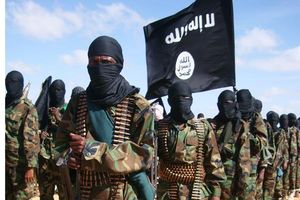
Al-Shabaab fighters.
Photo credit: File | AFP
Mr Chepkwony said local security agencies were doing everything possible to suppress the terror cells.
Garissa Member of County Assembly (MCA) Hajir Dahiye agreed, calling on the Kenyan government to review its security policy towards Somalia's Jubaland region.
He warned that it would remain impossible to stabilise areas along the Kenya-Somalia border while militants continued to control territory across the frontier.
"Kenya cannot achieve lasting security along its border while vast areas across the frontier remain under the control of Al-Shabaab. We must rethink our approach because the security of Garissa is inseparable from the security situation inside Jubaland," he said.
On July 26, suspected Al-Shabaab militants raided Abakaile village in Dadaab, Garissa County, and extensively damaged a communication mast.
The assailants reportedly hurled a hand grenade at the facility's main gate before spraying a power generator with bullets, causing extensive damage and disrupting communication services in the area.
Security officers from Dadaab and Saretho responded swiftly, forcing the attackers to flee on foot towards the Fafi area. No injuries or fatalities were reported.
According to Mr Dahiye, many of the recent incursions into Dadaab appear to originate through the Fafi corridor.
On July 17, 2026, suspected Al-Shabaab militants launched coordinated attacks on the towns of Fino and Arabia in Lafey Sub-County, Mandera County.
The first attack occurred in Fino at about 6 pm before a similar assault was reported in Arabia about an hour later.
The two incidents triggered panic among residents, who reported that the attackers were heavily armed.
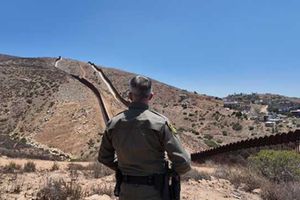
Both Arabia and Fino are located near the Kenya-Somalia border along the Elwak-Lafey-Mandera road, which has remained closed to the public since 2015.
The Kenyan government closed the road because of persistent security threats, including repeated attacks and improvised explosive device explosions by Al-Shabaab militants.
Back in Garissa, Mr Dahiye said Jubaland President Ahmed Mohamed Islam Madobe's administration had failed to suppress the Al-Shabaab threat.
"It is time for Kenya to reassess its strategic partnership with the Jubaland administration. Fifteen years is a long time to wait for meaningful change while our communities continue to suffer repeated attacks. Change has become necessary," Mr Dahiye said.
He argued that while other parts of Somalia have made progress in reclaiming territory from Al-Shabaab through joint operations between the Federal Government of Somalia and regional administrations, Jubaland has lagged behind, leaving border communities vulnerable to frequent militant incursions.
ACLED recorded at least 50 offensives in June and July, mainly armed clashes and shelling or artillery missile attacks involving Jubaland security forces and Danab forces in Afmadow District, which have squeezed Al-Shabaab out of its traditional strongholds in recent months.
"To avoid being wiped out, commanders, including foreign fighters, are escaping towards the porous Kenyan border, turning the region into a secondary battleground," ACLED observed.
"We have locals working with the enemy by sharing information about the presence of our officers on patrol, security installations, our strength and even our movements in the area," revealed the security source, who requested anonymity as he is not allowed to comment publicly.
The source further said some locals had joined the terror group and were either sent back to carry out attacks or lead operations because they understood the geography.
Police have been hunting for Yahya Osman Shale, a resident of Hulugho believed to have joined Al-Shabaab after crossing into Somalia in 2018.
Shale is suspected of leading the January 26, 2026 attack on Hulugho Primary School in which Boma Location Chief Abdifatah Mohamud and teacher Stephen Vundi Musili were killed.
Recently, Shale allegedly coordinated the movement of his two sons from Garissa town to Somalia through his brother, who picked them up from a local school.
According to a police report at Garissa Police Station made on July 8, the boys are believed to have joined their father and uncle in the terror group.
"We have a complicated situation in this region. Many youths continue to be recruited into terror groups because of unemployment and ignorance. We need a proper public engagement programme from the grassroots to the national level to educate our youth about the dangers of terrorism," said Hassan Abdullahi, a resident of Wajir.
Meanwhile, in Garissa, a group of residents is preparing a petition to be presented to National Assembly Speaker Moses Wetang'ula on the security situation along the Kenya-Somalia border and the reopening of the Liboi-Harhar border point.
The group wants the Kenyan government to map out the current territorial and operational reach of Al-Shabaab within Jubaland and assess the extent to which territories under the group's control or influence serve as staging grounds, logistical corridors, revenue sources or operational bases for attacks.
They also want Parliament to examine the human, security, economic and developmental costs borne by residents of Garissa County and other North Eastern counties as a result of continued cross-border terrorism and insecurity.
They are further demanding a review of whether Kenya's current policy towards Jubaland and southern Somalia adequately safeguards the country's national interests, and whether a recalibration of Kenya's diplomatic and security strategy is necessary to promote effective governance, territorial stability and sustainable security along the international frontier.