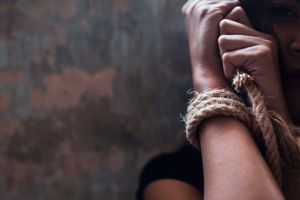
The first step may not look like trafficking. It may be a message on Facebook, a promise of money or M-Pesa payment for transport, an offer that, to a child growing up in a struggling household, can sound less like a trap than an escape.
In one case documented by researchers, a child from Subukia was contacted through social media, promised money and sent transport fare with instructions on where to go.
In another case, a girl from Butere reportedly met a trafficker through Facebook, where gifts and emotional attention drew her closer before she travelled to Nakuru and was allegedly subjected to sexual exploitation.
That is the unsettling picture emerging from the National Crime Research Centre’s preliminary (NCRC) study on child trafficking in Kenya: a network that can begin with a promise and end with a child being passed between recruiters, transporters, intermediaries and exploiters, sometimes across counties and national borders.
The NCRC report depicts trafficking as an adaptable chain in which children are identified according to their vulnerabilities, recruited through personal, community or online networks and moved into exploitation.
The NCRC cautions that the accounts are allegations from respondents and do not establish criminal liability against individuals, institutions or organisations mentioned in its report.
Taken together, however, they show how difficult it can be for a child to escape the network once the journey begins, when weaknesses meant to make children safer can be exploited.
Recruitment starts long before a child boards a vehicle. A school dropout may be promised a job, while a child from a poor household may be offered employment or sponsorship. An orphan may be promised shelter and care, while a child fleeing FGM or forced marriage may be offered safety, education or relocation. Children with disabilities may be promised treatment, while street-connected children may be offered food, shelter or work.
It says traffickers also use social and religious connections and social media to groom victims. Respondents in Kisumu, Kiambu and Kakamega identified school holidays and January and February, when families face pressure over school fees and other educational expenses, as periods when trafficking may increase.
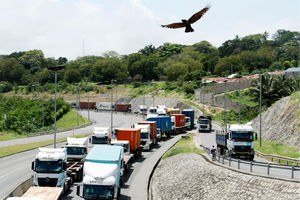
Once recruited, a child may enter a transportation system designed to make the journey difficult to trace. The study identifies a western corridor running from Bondo through Nyironge, Uriri, Ulanda, Kopanga, Kogaja, Aganga, Kisii and Sotik towards Nairobi and Mombasa, while another passes from Moyale through Marsabit, Isiolo and Meru to Nairobi.
In Turkana, researchers described a route from Lodwar towards Kainuk, where children may travel on foot to avoid roadblocks before joining public transport towards Kitale and Nairobi. Traffickers use “panya” routes alongside established roads and may move children on motorcycles, in Proboxes, buses, public service vehicles, lorries and private cars.
In Busia, a respondent described a child entering Kenya through the Sofia “panya” route, changing clothes and then boarding a vehicle that passed through a police roadblock after an alleged payment of Sh100.
Using several vehicles, routes and holding points also makes investigations harder. By the time a child is rescued, investigators may struggle to reconstruct where the child came from, who transported them and who handled them along the way. The report describes the system as elusive, adaptive and clandestine.
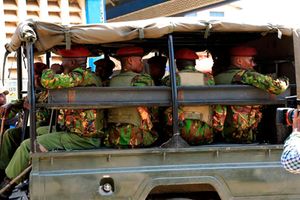
The study becomes more troubling when it turns from the people moving children to the institutions meant to stop them. Respondents in Migori, Narok, Wajir and Garissa reported allegations of rogue police and immigration officers accepting bribes to facilitate the movement of children into or out of Kenya without identification documents.
In Kuria West, Migori County, a human rights officer recounted the case of a 12-year-old boy allegedly trafficked to Tanzania.
The officer told researchers that police had allegedly colluded with a trafficker, leading to the suspect’s release, abandonment of the case and the child’s unprocedural repatriation to Tanzania.
The report also records allegations involving medical officers who may have helped traffickers remove children from hospitals without following security procedures.
In Nairobi, Kilifi, Nakuru, Narok and Kisii, respondents reported cases in which relatives preferred informal dispute-resolution mechanisms, including Maslaha systems and local “kangaroo courts”, instead of formal proceedings.
In Narok, researchers were told children could be pressured to withdraw complaints through gifts, emotional pressure, threats or warnings about cultural consequences.
Another less visible vulnerability is children without birth notifications or birth certificates. Without reliable documentation, their identity and age can be manipulated, making it harder for State agencies to protect them or establish where they belong.
Age can also determine what form of exploitation a trafficker seeks. Children aged one to five are identified as particularly vulnerable to illegal adoption, while older boys may be exploited for labour and criminal activities and girls face heightened risks of sexual exploitation, domestic work and forced marriage.
Children with disabilities are reported to be particularly vulnerable to forced begging in urban centres such as Nairobi, Kiambu and Kisumu.
The trafficking network therefore does not operate around one commodity or destination. It matches different vulnerabilities to different forms of exploitation, with a child’s circumstances helping determine the promise made to them and eventually the market into which they are delivered.
For many children, Nairobi is both destination and transit point. The study says children arriving from different parts of the country may be exploited in domestic work, agriculture, manufacturing, street hawking, begging, sexual exploitation and criminal activities.
Kakamega was frequently identified as a source of young girls trafficked for domestic servitude in Nairobi.
A religious leader from Kisii told researchers that numerous informal recruitment agencies operate from commercial buildings and target underage girls for domestic work in Nairobi and other urban centres. Some, the study says, allegedly receive commissions for supplying children to employers and intermediaries involved in labour exploitation and domestic servitude.
Stopping child trafficking
Researchers identified about 70 unregistered institutions in Kisii suspected by respondents of harbouring children for trafficking; the report cautions that being unregistered does not mean an institution is involved in trafficking. The challenge eventually reaches the courts, where the study identifies prosecution as the weakest of the three pillars of the anti-trafficking response, alongside prevention and protection.
Respondents said suspects are sometimes charged with lesser offences, including child neglect, exploitation, immigration violations or defilement, rather than trafficking in persons.
Cases can remain unresolved for up to three years, according to the report, beyond the six months it describes as reasonable for child-sensitive proceedings.
Kenya National Bureau of Statistics figures cited by the study show reported trafficking cases rising from 1,947 in 2022 to 2,322 in 2025, but State Department for Children Services figures cited in the same report show 911 cases in 2024 and 1,314 in 2025. The different datasets underline how difficult it is to obtain one picture of trafficking in Kenya.
And that uncertainty matters because rescuing a child does not necessarily dismantle the network that moved them.
The NCRC study recommends that investigators go beyond individual rescues and follow the money: identify recruiters and transporters, establish who controls holding points, examine the role of border officials and trace the people who ultimately benefit from exploitation.
The real journey to stopping child trafficking may therefore begin where the child’s journey ends — by working backwards through every person, payment, vehicle and institution that helped move a vulnerable child from a promise to a market.